Aglianico grape variety

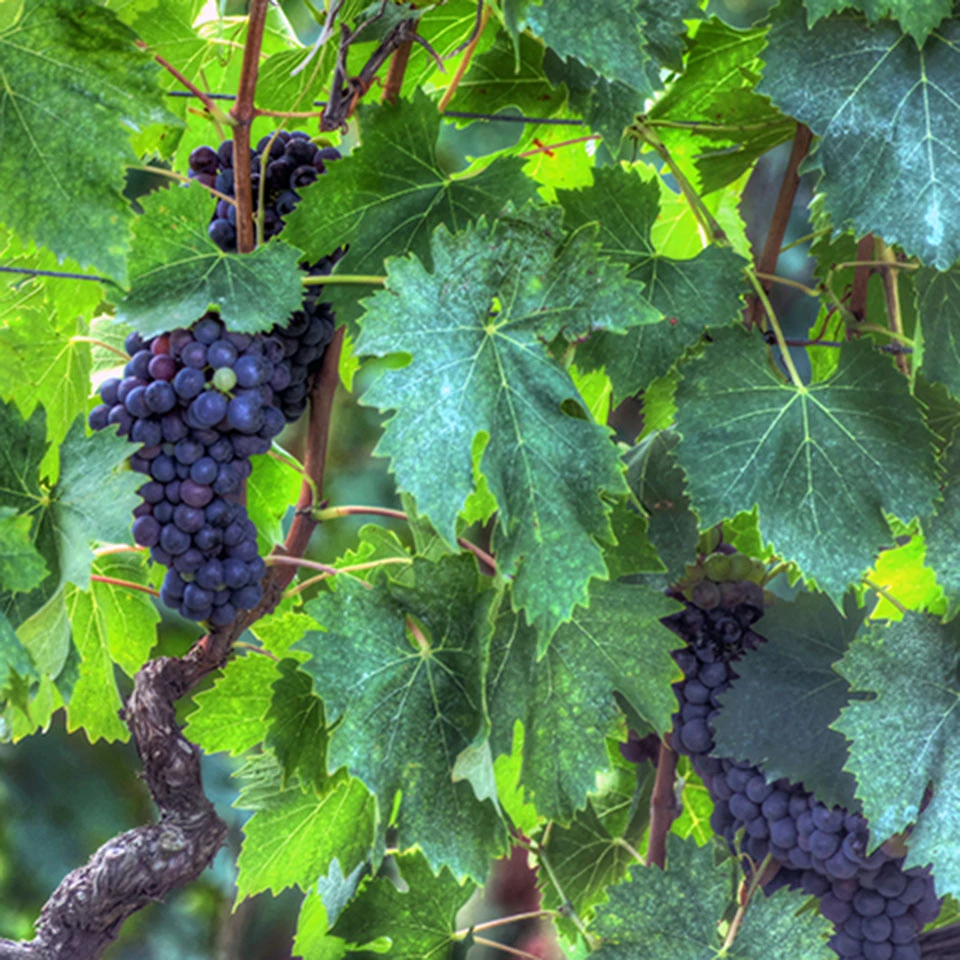
Aglianico is one of the oldest grape varieties from southern Italy. The first written evidence of its cultivation dates back to the 16th century. It produces high-quality wines with a deep ruby to garnet red colour and a rich, multi-layered bouquet. Typical flavours include dark fruits such as fully ripe plums and violets, as well as chocolate, leather and tobacco. Aglianico wines are powerful on the palate, with distinctive tannins that require some ageing and present acidity. It develops its qualities particularly well on barren, volcanic soils. It is relatively resistant to powdery mildew, but is susceptible to botrytis.
Frequently asked questions (FAQ) about Aglianico wine

How can the typical flavour profile of the Aglianico grape variety be described?

Aglianico is a wine for explorers. It is characterised by an intense aroma of dark forest fruits such as blackberry and black cherry. This is often accompanied by complex notes of leather, white pepper, smoke and mineral notes reminiscent of graphite or tar. As it matures, it develops wonderful tones of dried figs and tobacco.

What role do tannin and acidity play in an Aglianico?

This is where Aglianico shows its true colours: it is known for its pronounced, strong tannins and high acidity structure. This often makes the wine somewhat "wild" and demanding in its youth. However, it is precisely this structure that is the secret of its incredible freshness and longevity.

Is the Aglianico grape variety more fruit-orientated or spicy?

Although the fruit (cherry, plum) is present, Aglianico clearly tends towards the spicy and savoury side. The mineral notes, which often come from the volcanic soils on which it grows, give it an almost salty, earthy depth that you will look for in vain in many other southern Italian wines.

Where in Italy does the Aglianico grape variety grow best?

Aglianico is native to the south of Italy, particularly the regions of Campania (known for the famous Taurasi) and Basilicata (known for Aglianico del Vulture). Here it finds the perfect conditions to develop its full complexity.

What influence does the climate have on the late-ripening Aglianico grape variety?

Aglianico is one of the latest harvested grape varieties in Italy - it is often not harvested until November. It needs the warm Mediterranean sun to ripen the hard tannins, but benefits enormously from cooler night-time temperatures at higher altitudes to preserve its characteristic acidity.

What dishes harmonise perfectly with a strong Aglianico?

Due to its strong tannin structure, Aglianico calls for rich food. Braised meat dishes (ossobuco, wild boar ragout) or strongly flavoured lamb are perfect. Vegetarian dishes with truffles, mushrooms or dark lentils also stand up to the power of this wine.

Why is the Aglianico grape variety often referred to as the "Barolo of the south"?

This comparison stems from the fact that Aglianico - just like the Nebbiolo grape in Barolo - has extremely high acidity and massive tannins. Both wines are very austere in their youth, but develop an unrivalled elegance and complexity with age.

How does Aglianico differ from the Primitivo grape variety?

This is an important point for beginners: while the popular Primitivo is usually soft, fruity-sweet and high in alcohol ("everybody's darling"), Aglianico is the opposite: structured, tart, dry and aristocratic. Those looking for "jam" in a glass will be disappointed with Aglianico; those looking for "structure and character" will love it.

Discover more grape varieties for red wines.

Dornfelder

The Dornfelder grape variety is the most successful new red variety from Germany. Dornfelder is known for its medium body and soft tannins - as well as its deep dark colour. However, it should not be confused with the similar-sounding Dunkelfelder variety.

Read more

Gamay

Gamay is a red grape variety that is mainly cultivated in the French region of Beaujolais. The wines are light to medium-bodied, with low tannins and lively acidity. Gamay wines show flavours of red fruits such as strawberry, red cherry or raspberry, complemented by floral notes.

Read more

Lemberger/Blaufränkisch

Lemberger, better known as Blaufränkisch in Austria, is a red grape variety that is mainly grown in southern Germany and Austria. The wines are medium to full-bodied, with moderate to strong tannins and fresh acidity. Lemberger wines have great finesse and the potential to reflect the terroir from which they originate.

Read more

Mourvèdre/Monastrell

Mourvèdre is a red grape variety that is mainly grown in the south of France and Spain, where it is known as Monastrell. The wines are deep-coloured, medium to full-bodied, with high, often rough tannins when young and moderate to high acidity.

Read more

Negroamaro

Negroamaro is a red grape variety from the south of Italy. The wines are usually powerful, full-bodied and tannic, with rich aromas of dark fruit such as blackcurrant or fully ripe cherry. The full-bodied aroma spectrum is often complemented by notes of spices and chocolate.

Read more

Pinotage

Pinotage is a cross between Hermitage (a synonym for Cinsault) and Pinot Noir, which originated in South Africa in the 1920s. The red grape variety produces powerful wines with high tannins and moderate acidity. It is early-ripening and typically displays red berry fruit flavours, which are complemented by spicy notes and often an unmistakable smoky or smoked bacon aroma.

Read more

Discover more grape varieties for white wines.

Pinot Gris

Pinot Gris, also known as Pinot Gris or Pinot Grigio, is a white grape variety grown in many wine regions such as France, Italy and Germany.

Read more

Gewürztraminer

Hardly any other grape variety polarises as much as Gewürztraminer. Its name alone reveals what it is all about: intensity, spice and an unmistakable spectrum of flavours ranging from lychee, bitter orange and rose petals to marzipan. It is not a subtle wine, nor is it meant to be. Some like it, others reject the cloud of flavours.

Read more

Müller-Thurgau)

Müller-Thurgau is a white variety that is mainly cultivated in Germany and Austria. The wines are light to medium-bodied, with moderate acidity and a strong flavour, usually with a typical muscat tone. Müller-Thurgau wines are usually dry or semi-dry and vinified in steel tanks.

Read more

Scheurebe

in 1916, the Swiss vine researcher Georg Scheu bred a new variety at the State Institute for Vine Breeding in Alzey, which he initially thought was a cross between Riesling and Silvaner.

Read more

Sauvignon Blanc

Sauvignon Blanc is one of the best-known white grape varieties in France. It actually originated in the Loire - but is now cultivated worldwide as the second most important noble variety after Chardonnay. New Zealand in particular has become the second home of Sauvignon Blanc.

Read more

Weißburgunder

The Pinot Blanc grape - called Pinot Blanc in France and Pinot Bianco in Italy - is the lightest-coloured member of the large Burgundy family. The variety produces fresh, fruity wines whose acidity can vary from moderate to strong depending on the style and which develop delicate fruit flavours such as apples, pears or citrus fruits, often complemented by nutty notes such as almonds.

Read more

You can find information on other grape varieties here.

Yout cart is empty.

Added to shopping cart
Subtotal
Go to shopping cart

Prices incl. VAT plus shipping costs.