Bobal grape variety

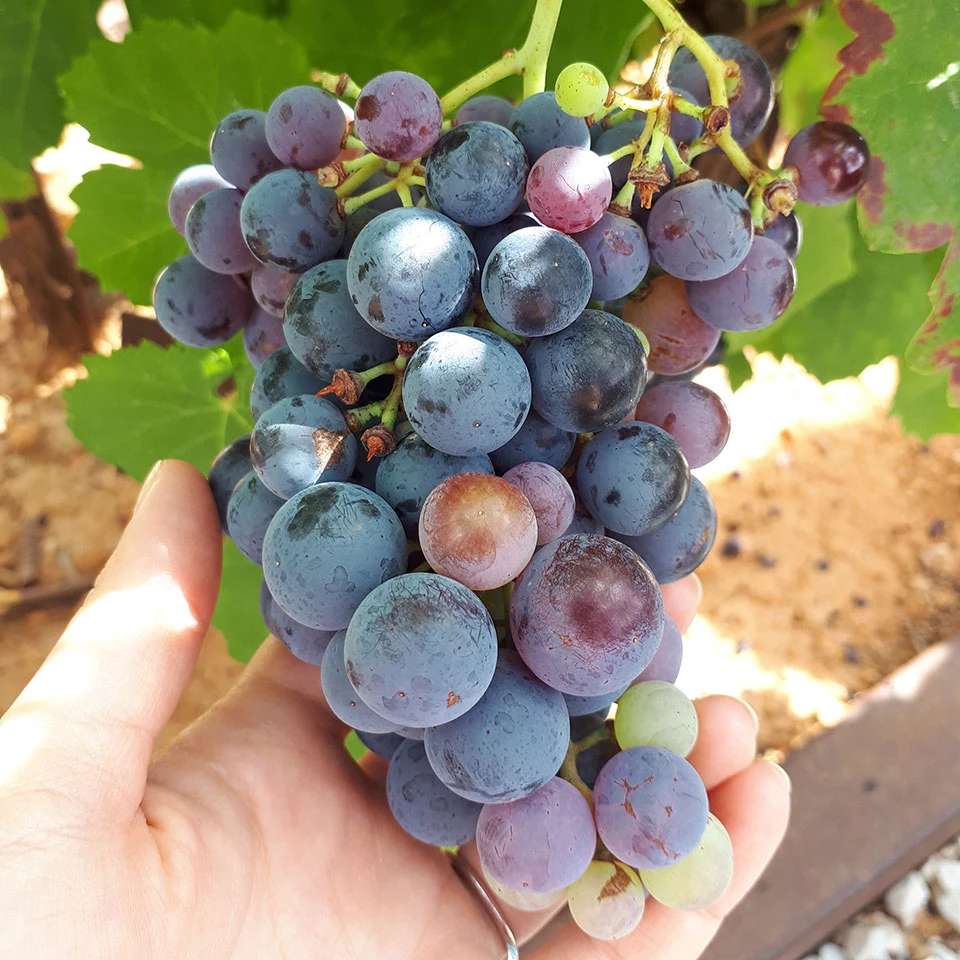
The Spanish Bobal comes from the Utiel-Requena wine-growing region near Valencia. Its thick-skinned grapes make it resistant to drought. They are also responsible for the almost opaque purple colour, high tannins and plenty of structure. Typical flavours are dark berries, such as cherry and plum, accompanied by spicy and herbal notes. The variety is often blended with Tempranillo or Garnacha to give the cuvées more colour and structure. In recent years, however, there has also been an increase in single-varietal Bobals, as they reflect the terroir of their origin well. In keeping with its strong character, the variety shows its strengths above all with appropriate dishes. Intensive braised beef, lamb or game dishes are its domain.
Frequently asked questions (FAQ) about Bobal wine

How can the typical flavour profile of the Bobal grape variety be described?

Bobal is known for its intense, dark fruit flavours. You will primarily find aromas of blackcurrants, blackberries and dark cherries. Spicy components such as liquorice, dark chocolate and a fine earthy note are often added. When matured in wood, it also develops wonderful nuances of dried herbs and toasted notes.

What structure does the Bobal grape variety have in terms of tannin and acidity?

The special thing about Bobal is its structure: it naturally has a high proportion of anthocyanins (colouring agents) and strong tannins. However, what sets it apart from many other southern grape varieties is its remarkably high acidity. This combination makes the wines fresh and lively even with a high alcohol content - a truly unique selling point for wines from warm regions.

Is a red wine made from the Bobal grape variety rather light or full-bodied?

As a rule, a wine made from the Bobal grape is full-bodied and powerful. It has a "firm flesh" on the palate. However, thanks to modern cellar technology, top winemakers today manage to tame this power so that the wine is intense but not heavy.

Which region is home to the Bobal grape variety?

Bobal is the undisputed queen of the Utiel-Requena region in the hinterland of Valencia (Spain). There, it is perfectly adapted to the harsh, continental climate. It is also frequently found in neighbouring regions such as Manchuela.

Which climate does the Bobal grape variety prefer for optimum results?

Bobal is an extremely resilient vine. It loves hot days, but needs cool nights to retain its characteristic acidity. As the Utiel-Requena region is located on a high plateau (600-900 metres), it finds precisely these temperature differences there, which are so important for the development of flavours.

What food goes best with a strong red wine from the Bobal grape variety?

It can be rustic and hearty! Bobal loves meat: grilled lamb, beef steak or typical Spanish meat dishes such as chuletón. An absolute insider tip is the combination with a classic Paella Valenciana (with meat and beans) - the acidity of the Bobal cuts perfectly through the fat structures.

What is the ideal drinking temperature for wines made from the Bobal grape variety?

I recommend serving a red Bobal at 16 to 18 degrees Celsius. If you have one of the rare but excellent Bobal rosés in your glass, it can be enjoyed much cooler at around 8 to 10 degrees Celsius.

How does the Bobal grape variety differ from the better-known Tempranillo?

Compared to Tempranillo, Bobal is often more intense in colour and has a significantly higher acidity. While Tempranillo is more characterised by elegance and red fruit (strawberry), Bobal is darker, wilder and has a stronger "backbone".

Discover more grape varieties for red wines.

Petit Verdot

Petit Verdot is a red grape variety that originates from Bordeaux, but is now mainly cultivated in Australia and South America due to its high climatic requirements. The wines are full-bodied, with high tannins and high acidity.

Read more

Pinot Noir

Pinot Noir, or Pinot Noir, is a red grape variety that is widely grown around the world today and is also the basis for some of the rarest and most exquisite wines in the world. The variety has a very long tradition of excellence, particularly in France (especially in Burgundy) and Germany (in the Ahr and Baden regions).

Read more

Sangiovese

Sangiovese is one of Italy's best-known red grape varieties and is mainly grown in Tuscany. The wines are known for their not too angular tannins, their strong acidity and their fruity, spicy flavour. Sangiovese wines typically show notes of cherries, red berries, leather and spices.

Read more

Saperavi

Saperavi means "dyer" - and it is indeed one of the few red wine varieties whose skin and flesh are coloured. This explains the almost inky black colour and the intense personality of its wines.

Read more

Tempranillo

Tempranillo is a red grape variety that is mainly grown in Spain and forms the basis of many well-known Spanish wines, such as in Rioja and Ribera del Duero. The early-ripening vine usually produces wines with a strong, deep red colour and aromas of red fruits such as cherries and plums as well as spices such as cinnamon and cloves.

Read more

Syrah

The French Rhone Valley is the home of Syrah, a red grape variety that can also be found in the USA and especially in Australia, where it is usually known as Shiraz. The two names are as different as the respective styles with which the genetically identical grape varieties are vinified.

Read more

Discover more grape varieties for white wines.

Chardonnay

Chardonnay is the most widely cultivated white premium grape variety. Its origins probably lie in Burgundy, but today it is grown all over the world. One of the reasons for its success is its enormous ability to adapt to a wide range of conditions.

Read more

Grüner Veltliner

Grüner Veltliner is a white grape variety grown mainly in Austria and is the country's best-known grape. The wines are light to medium-bodied, with moderate acidity and a characteristic pepper aroma that is often compared to white peppercorns or radishes.

Read more

Muscat/Muskateller

Muscat, also known as Muscat or Moscato, is not so much a single grape variety as a fairly large family of grape varieties that is widespread throughout the world and includes both wine grapes and table grapes.

Read more

Riesling

Riesling is one of the best-known white grape varieties and is cultivated all over the world - first and foremost in Germany, of course. It is more flexible and versatile than almost any other grape.

Read more

Sauvignon Blanc

Sauvignon Blanc is one of the best-known white grape varieties in France. It actually originated in the Loire - but is now cultivated worldwide as the second most important noble variety after Chardonnay. New Zealand in particular has become the second home of Sauvignon Blanc.

Read more

Welschriesling

Welschriesling is a white grape variety that is mainly cultivated in Austria and the wider Danube region of the former Austro-Hungarian Empire. Despite its name, it is not related to Riesling.

Read more

You can find information on other grape varieties here.

Yout cart is empty.

Added to shopping cart
Subtotal
Go to shopping cart

Prices incl. VAT plus shipping costs.