Carmenère grape variety

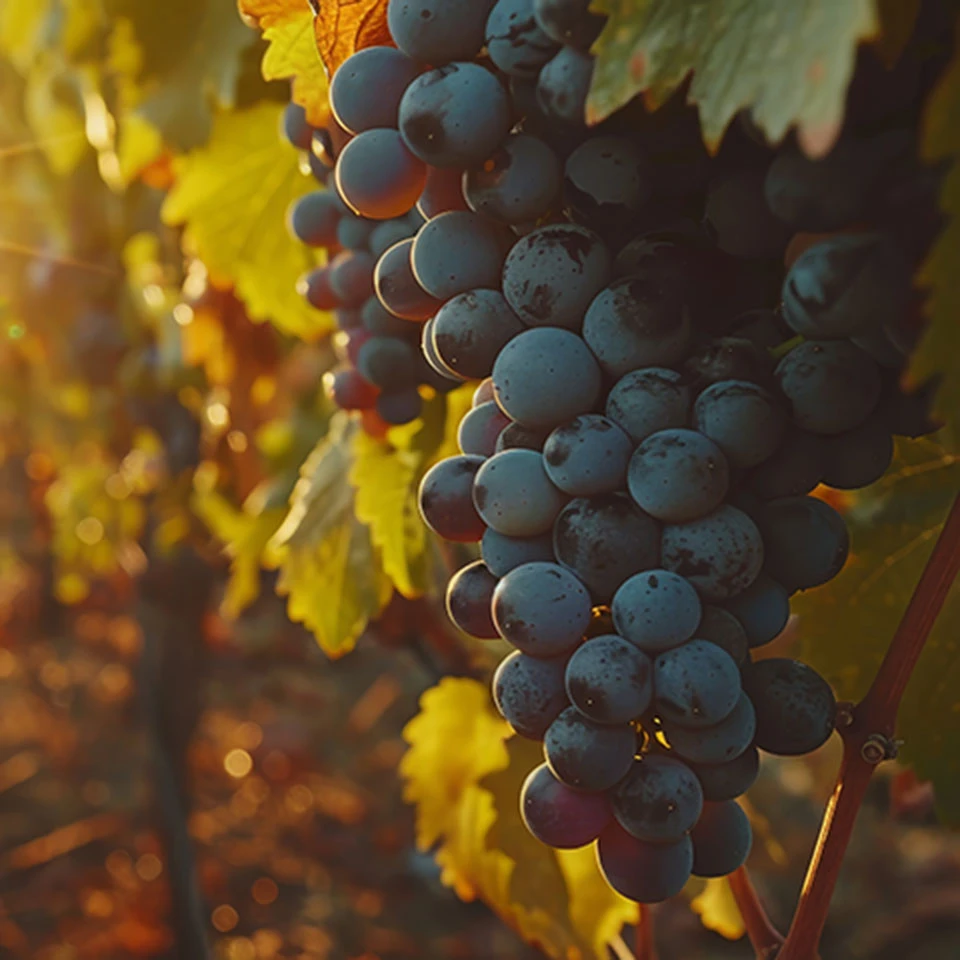
Carmenère is considered Chile's "signature grape". Almost half of the world's stocks grow there. However, the variety originally comes from Bordeaux, where it was widespread before the phylloxera catastrophe. It produces medium-bodied wines with soft tannins, pronounced acidity and a deep ruby red colour. Dark fruits such as blackberry, cherry and plum, complemented by notes of paprika, spices and earthy undertones characterise the aroma. Carmenère is vinified as a single variety but also in cuvées with other Bordeaux varieties such as Cabernet Sauvignon or Merlot. Almost wiped out by phylloxera in its homeland, it has been cultivated again in the Bordeaux region for several years. It harmonises well with grilled meat, stews and spicy dishes.
Order Carmenère wines online

Filter & Sort
Wine style
Country
Region
Winery
Vintage
Bottle size
Rating
Special features
Show results
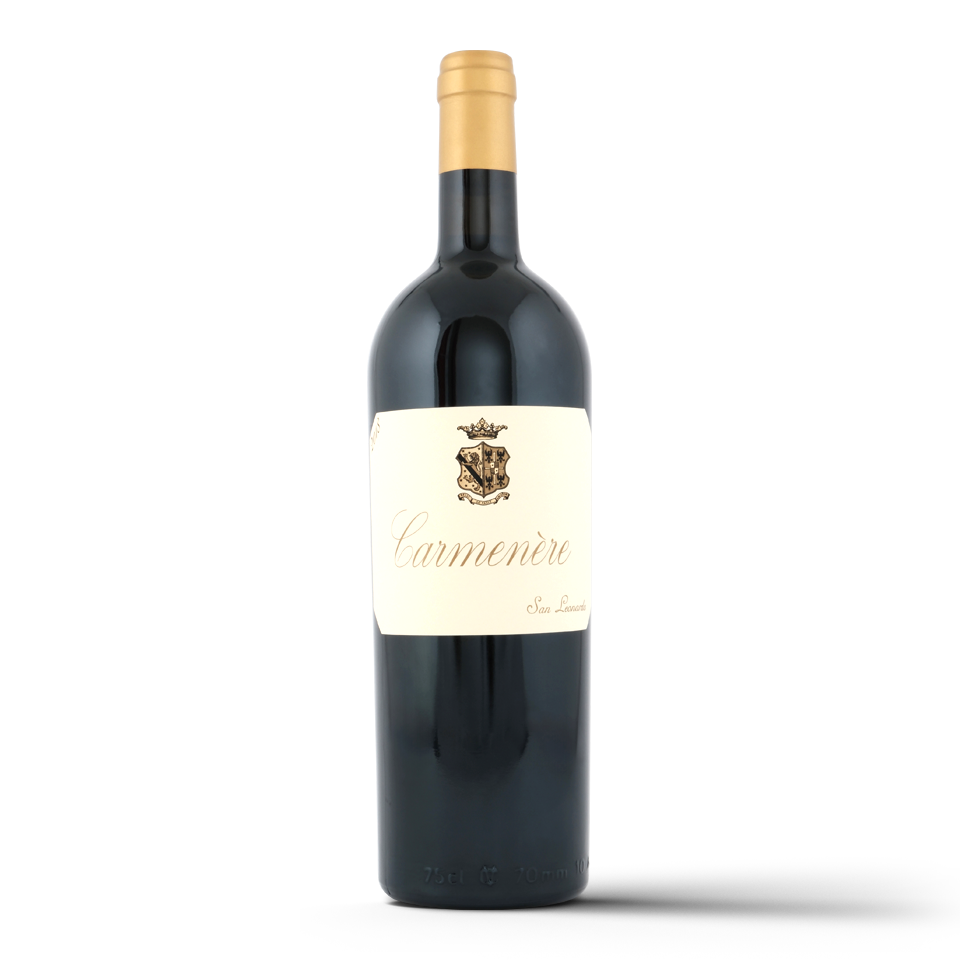
Carmenère San Leonardo Vigneti delle Dolomiti IGT 2018
94 Suckling
Carmenère San Leonardo Vigneti delle Dolomiti IGT 2018
Trentino and Southtirol, Italy
74.90 €
0.75 l,  99.87 €/l
in stock

Frequently asked questions (FAQ) about Carmenère wine

What does a typical Carmenère taste like and which flavours are characteristic?

A Carmenère is known for its opulent fruitiness paired with a unique spiciness. You will find flavours of ripe blackberries, plums and dark cherries. However, the most striking feature is the herbal notes: Hints of green pepper, black pepper, eucalyptus or even tobacco and dark chocolate give the Carmenère its unmistakable depth.

How can the tannin and acidity structure of Carmenère be described?

Carmenère is particularly popular with wine lovers for its velvety texture. It generally has a very soft, round tannin (tannins) that is less aggressive than Cabernet Sauvignon. The acidity is moderate, which makes Carmenère a very harmonious and "cuddly" red wine that literally coats the palate.

Where does Carmenère get its name from and what does it say about the wine?

The name Carmenère is derived from the French word carmin (carmine red). This refers to the splendid colouring of the leaves in autumn, but also to the deep dark, almost violet colour of the wine in the glass. When you pour a Carmenère, you can expect a visually very dense and colourful wine.

Why is Chile considered the most important home for Carmenère today?

After the Carmenère had almost completely disappeared in Europe, it survived in Chile, where it was mistaken for a variant of Merlot. Chile's dry, sunny climate provides the ideal conditions for Carmenère to complete its very long ripening period (it takes much longer than other varieties) without being damaged by early rain.

What are the perfect food pairings for a Carmenère?

Due to its spicy nature, Carmenère is a dream with savoury dishes. It goes perfectly with herb-crusted meat, lamb or game. My special tip: Try Carmenère with Chilean empanadas or dishes with smoked paprika (pimentón). Indian or Mexican cuisine also harmonises surprisingly well with the spice of this grape.

How does Carmenère differ from a classic Merlot?

For a long time they were confused, but the difference is clear in the glass: while Merlot usually has softer, purely fruity notes (plum), Carmenère always has that characteristic spice and herbal note. In addition, Carmenère ripens in the vineyard around two to three weeks later than Merlot.

What is the difference between Carmenère and Cabernet Sauvignon?

Cabernet Sauvignon has significantly stronger, often more angular tannins and a higher acidity. In direct comparison, Carmenère appears softer, fleshier and less austere, without losing its aromatic complexity.

Why is Carmenère often perceived as "spicier" than other grape varieties?

This is due to the so-called pyrazines. These are natural flavouring substances that are also found in paprika. Carmenère has a genetic predisposition for a higher content of these substances. In the right dosage, this is precisely what makes Carmenère so appealing and unique.

Discover more grape varieties for red wines.

Caberlot

Caberlot promises to be exactly what its name suggests and is one of the most unusual grape varieties in Italy - and perhaps also one of the most exclusive.

Read more

Syrah

The French Rhone Valley is the home of Syrah, a red grape variety that can also be found in the USA and especially in Australia, where it is usually known as Shiraz. The two names are as different as the respective styles with which the genetically identical grape varieties are vinified.

Read more

Saperavi

Saperavi means "dyer" - and it is indeed one of the few red wine varieties whose skin and flesh are coloured. This explains the almost inky black colour and the intense personality of its wines.

Read more

Zweigelt

Zweigelt is a highly successful new red variety from Austria, whose parents are Blaufränkisch and St. Laurent. It produces violet/red wines with a deep colour and intense aromas such as cherry, red and blackcurrant or blackberry, as well as spicy notes such as vanilla or cinnamon.

Read more

Barbera

Barbera is the most widely cultivated red grape variety in the northern Italian region of Piedmont - but is also widespread in Lombardy and Emilia-Romagna. It produces fruity, accessible red wines with an intense ruby red colour and aromas of red fruits, cherries, plums and spices. They are medium-bodied on the palate, with moderate tannins and lively acidity even when fully ripe.

Read more

Carignan

Carignan originally comes from Spain - but today it is mainly at home in the neighbouring south of France, Languedoc-Roussillon. It is characterised by a deep dark colour, strong tannins and high acidity.

Read more

Discover more grape varieties for white wines.

Chardonnay

Chardonnay is the most widely cultivated white premium grape variety. Its origins probably lie in Burgundy, but today it is grown all over the world. One of the reasons for its success is its enormous ability to adapt to a wide range of conditions.

Read more

Garganega

Garganega is a white grape variety that is mainly grown in the Italian region of Veneto. As little known as the variety is, as famous is the wine made from it: Soave. It is usually light to medium-bodied, with moderate acidity and plenty of finesse. The wines show flavours of citrus fruits, green apples, pears and flowers, complemented by almond and mineral notes that come from the volcanic terroir.

Read more

Riesling

Riesling is one of the best-known white grape varieties and is cultivated all over the world - first and foremost in Germany, of course. It is more flexible and versatile than almost any other grape.

Read more

Scheurebe

in 1916, the Swiss vine researcher Georg Scheu bred a new variety at the State Institute for Vine Breeding in Alzey, which he initially thought was a cross between Riesling and Silvaner.

Read more

Verdicchio

Verdicchio is a very old white grape variety from Italy, which is mainly cultivated in central Italy. The grapes produce dry to semi-dry white wines with a light yellow colour and a fresh, fruity taste. The flavours are reminiscent of green apples, pears, citrus fruits and hay meadows.

Read more

Welschriesling

Welschriesling is a white grape variety that is mainly cultivated in Austria and the wider Danube region of the former Austro-Hungarian Empire. Despite its name, it is not related to Riesling.

Read more

You can find information on other grape varieties here.

Yout cart is empty.

Added to shopping cart
Subtotal
Go to shopping cart

Prices incl. VAT plus shipping costs.