Chasselas grape variety

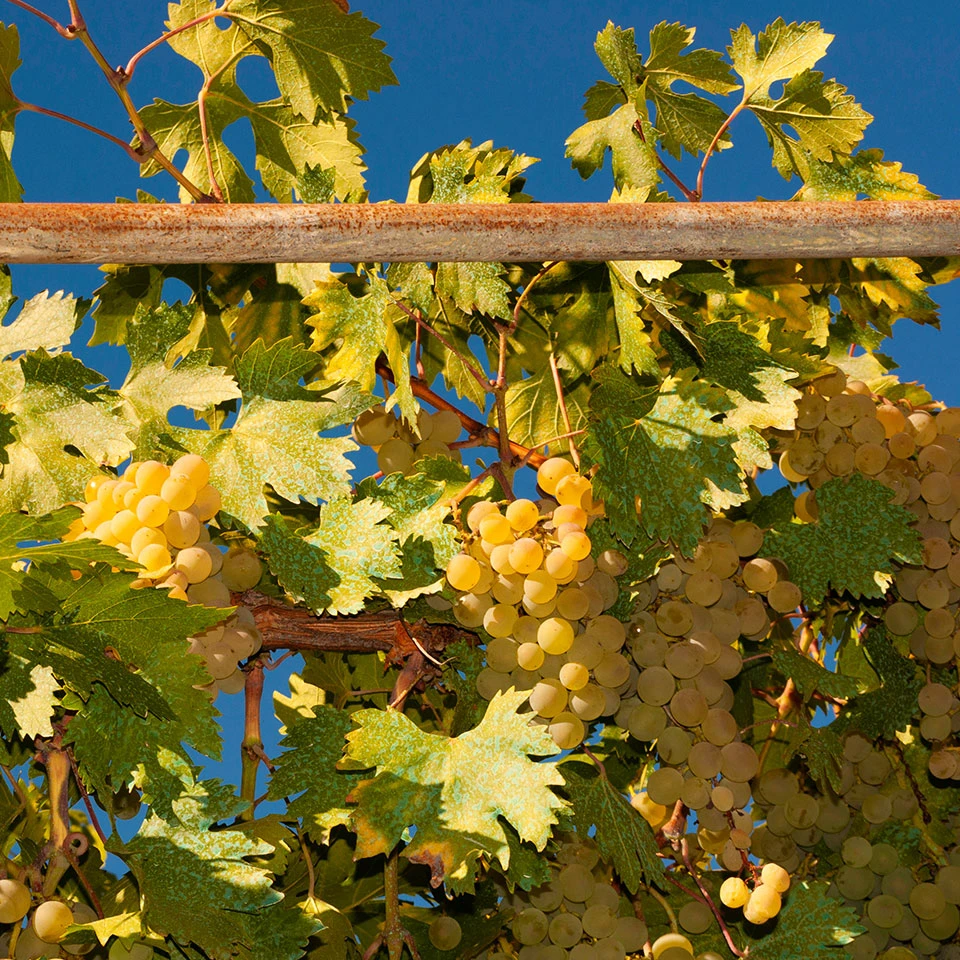
Chasselas is a white grape variety that is mainly cultivated in Switzerland, particularly in the Vaud region. It is also found in France and in Germany and Austria under the name Chasselas. The wines are characterised by lightness, freshness and moderate acidity. The flavour is dominated by aromas of citrus fruits, green apples, pears and floral notes, complemented by a subtle minerality. They should usually be drunk young to preserve their freshness and fruitiness. Chasselas is appreciated as an uncomplicated, refreshing wine that is well suited as an aperitif or accompaniment to light dishes. In Switzerland, Chasselas is vinified in a slightly different style under the name "Fendant". With nutty and buttery notes, it is an ideal partner for cheese fondue and raclette.
Frequently asked questions (FAQ) about Chasselas wine

What does a wine made from the Chasselas grape variety actually taste like?

Chasselas is not a "noisy grape variety" with overpowering fruity flavours. It is more characterised by its subtlety and elegance. It often tastes delicately mineral, with a fine texture and a very harmonious, almost creamy mouthfeel. There is often a very light, natural carbonic acid (the "tingle") that makes the wine lively.

What flavours are typical of Chasselas?

Chasselas is rather restrained on the nose. Typical flavours are nuances of fresh meadow flowers, white peach, pear and sometimes a hint of lime blossom. Depending on the soil, it can also develop pronounced flint notes or a subtle nuttiness.

How should the acidity structure of the Chasselas grape variety be assessed?

A great advantage for many wine lovers: Chasselas is naturally rather low in acidity. This makes it particularly easy to digest and mild. Nevertheless, it is not boring, as its minerality and fine structure provide the necessary freshness.

Where does the Chasselas grape variety originally come from?

Its origin was long disputed (it was even thought to be Egyptian), but DNA analyses have shown that Chasselas originates from the Lake Geneva region (Leman), i.e. the border area between Switzerland and France.

What is the classic food pairing for the Chasselas grape variety?

Chasselas is the ultimate accompaniment to cheese! It is the classic wine for cheese fondue and raclette, as its mild acidity harmonises perfectly with the fatty cheese. But it is also unbeatable with light starters, freshwater fish (such as whitefish or trout) or simply as an elegant aperitif.

What is the difference between Chasselas, Chasselas and Fendant?

They are the same grape variety, just under different names. Chasselas is the German name, Fendant the name in the Swiss Valais (because the berries "split" when pressed between the fingers when ripe - French: fendre). Chasselas is the internationally used French name.

Does the Chasselas grape variety also have ripening potential?

Absolutely, and this is often underestimated! High-quality single-vineyard wines (e.g. from the Lavaux region) can age fantastically. After 5, 10 or even 20 years, they develop fascinating flavours of honey, beeswax and roasted nuts, similar to a mature Riesling or Chenin Blanc.

Do Chasselas wines always have to be drunk young?

Most Chasselas wines (especially the simple Chasselas or Fendants) are intended for young consumption within the first 1-3 years. They thrive on their freshness and lightness.

Discover more grape varieties for white wines.

Riesling

Riesling is one of the best-known white grape varieties and is cultivated all over the world - first and foremost in Germany, of course. It is more flexible and versatile than almost any other grape.

Read more

Chenin Blanc

Chenin Blanc is a white grape variety that originated in the French Loire Valley and is known for its versatility. Chenin can be vinified both dry and sweet, still and sparkling. Its flavour is characterised by high acidity and lots of fruit such as green apple, pear or quince, often complemented by honey notes. Depending on the terroir and vinification, the grape can also show both mineral and floral tones.

Read more

Sauvignon Blanc

Sauvignon Blanc is one of the best-known white grape varieties in France. It actually originated in the Loire - but is now cultivated worldwide as the second most important noble variety after Chardonnay. New Zealand in particular has become the second home of Sauvignon Blanc.

Read more

Welschriesling

Welschriesling is a white grape variety that is mainly cultivated in Austria and the wider Danube region of the former Austro-Hungarian Empire. Despite its name, it is not related to Riesling.

Read more

Weißburgunder

The Pinot Blanc grape - called Pinot Blanc in France and Pinot Bianco in Italy - is the lightest-coloured member of the large Burgundy family. The variety produces fresh, fruity wines whose acidity can vary from moderate to strong depending on the style and which develop delicate fruit flavours such as apples, pears or citrus fruits, often complemented by nutty notes such as almonds.

Read more

Kisi

Kisi is one of the oldest indigenous grape varieties in Georgia - and yet it had almost disappeared. It was not until the 1990s that it was rediscovered and systematically recultivated in the Kakheti region. Today, it is regarded as a symbol of the renaissance of Georgian viticulture and combines tradition, originality and modern elegance.

Read more

Discover more grape varieties for red wines.

Dornfelder

The Dornfelder grape variety is the most successful new red variety from Germany. Dornfelder is known for its medium body and soft tannins - as well as its deep dark colour. However, it should not be confused with the similar-sounding Dunkelfelder variety.

Read more

Gamaret

Gamaret is a new Swiss variety from the 1970s. The red variety is mainly cultivated in Valais and Vaud. The grape is a cross between Gamay and Reichensteiner and was developed for the particular challenges of the Swiss climate.

Read more

Grenache

Grenache is a red grape variety grown mainly in southern France and Spain (where it is known as Garnacha). The wines are typically medium to full-bodied, with low tannins and high acidity.

Read more

Lambrusco

Lambrusco is both a wine and a generic term for a group of grape varieties. In view of the high genetic variance, one cannot really speak of a grape variety family. What all Lambrusco varieties have in common, however, is the fact that they were selected from wild vines.

Read more

Malbec

Malbec is a red grape variety that originally comes from France and is now mainly cultivated in Argentina. The wines are deep red in colour and full-bodied, with medium to high tannin and acidity. Malbec wines typically show flavours of dark fruits such as plum and blackberry, complemented by spicy and chocolate notes.

Read more

Mourvèdre/Monastrell

Mourvèdre is a red grape variety that is mainly grown in the south of France and Spain, where it is known as Monastrell. The wines are deep-coloured, medium to full-bodied, with high, often rough tannins when young and moderate to high acidity.

Read more

You can find information on other grape varieties here.

Yout cart is empty.

Added to shopping cart
Subtotal
Go to shopping cart

Prices incl. VAT plus shipping costs.