Dolcetto grape variety

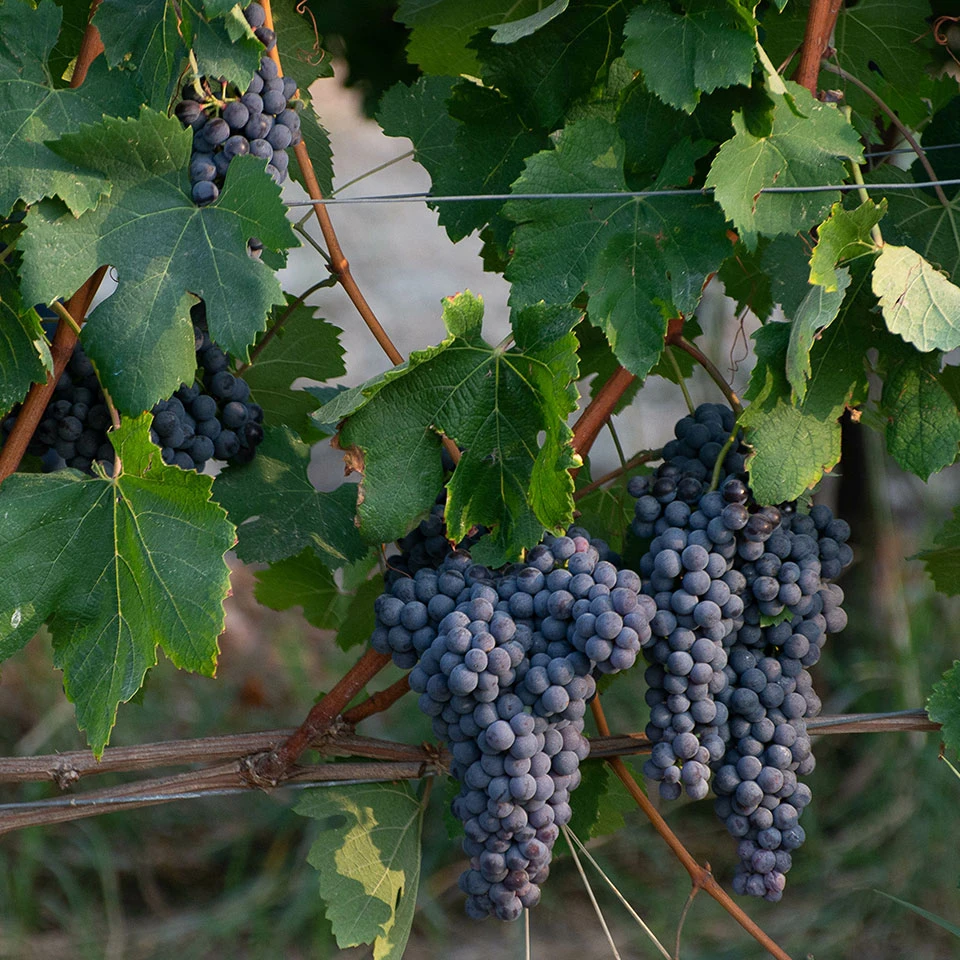
Dolcetto is a red grape variety that is mainly grown in the Italian region of Piedmont. The wines made from Dolcetto are light to medium-bodied, with soft tannins and fresh acidity. Dolcetto wines are characterised by their deep purple colour and aromas of dark fruits such as black cherry or plums, complemented by notes of almonds, liquorice or even violets. Dolcetto is usually drunk young and is considered an uncomplicated, fruity wine that is well suited as an accompaniment to a variety of dishes, such as antipasti, pasta, pizza and lighter meat dishes. Especially when an alternative to stronger Piedmontese red wines such as Barolo or Barbaresco is required.
Order Dolcetto wines online

Pecchenino Dolcetto Dogliani San Luigi DOCG 2023
Piemont, Italy
12.90 €
0.75 l,  17.20 €/l
in stock

Frequently asked questions (FAQ) about Dolcetto wine

What does a typical Dolcetto taste like and which flavours dominate?

A classic Dolcetto impresses with its intense, deep purple colour. On the nose and palate, you will primarily encounter fruity notes of black cherries, blackberries and plums. What makes it special, however, is its characteristic finish: a hint of bitter almond or liquorice on the finish is absolutely typical and gives it its unmistakable identity.

Why is Dolcetto called "the little sweet one" if the wine is vinified dry?

The name Dolcetto is derived from the Piedmontese word for "little sweet one". However, this does not refer to the sugar content of the wine, but to the berries on the vine: compared to Nebbiolo or Barbera, the grapes have very little acidity and therefore taste particularly sweet and pleasant when sipped straight from the vineyard.

How should the tannin and acidity structure of a Dolcetto be assessed?

This is where Dolcetto shows its true colours: in contrast to Barbera, it has very little acidity, but has a very distinctive tannin structure (tannins). However, these tannins are usually soft and velvety, provided the wine is well made. This makes it a very "drinkable" yet structured red wine.

Where does Dolcetto originally come from and where does it grow best?

The home of Dolcetto is Piedmont in north-west Italy. The appellations (growing regions) of Dogliani, Dolcetto d'Alba and Dolcetto di Diano d'Alba are particularly noteworthy. While in Alba it often grows on the less exposed sites (as the best sites are reserved for Nebbiolo), in Dogliani it is the undisputed star and achieves its greatest complexity there.

What influence do the climate and soil in Piedmont have on Dolcetto?

Dolcetto is an early-ripening variety. It loves calcareous marl soils and white clay soils. As it ripens earlier than Nebbiolo, winegrowers like to plant it in somewhat cooler locations or at higher altitudes, where it can still fully ripen. The terroir ensures that the Dolcetto retains its fresh fruit and does not become too alcoholic.

What dishes is Dolcetto the perfect accompaniment to?

Dolcetto is a real all-rounder at the table. Its mild acidity makes it an excellent accompaniment to antipasti, air-dried salami or vitello tonnato. It is also unbeatable with a classic pizza or pasta with meat sauces (ragù). My insider tip: try Dolcetto with regional cheeses such as Castelmagno.

How does Dolcetto differ from Barbera in terms of flavour?

That's the classic question! Remember the "rule of opposites": Barbera has a lot of acidity and little tannin. Dolcetto has little acidity and noticeable tannin. While Barbera tends to be tangy and fresh, Dolcetto is softer, rounder and a little "furrier" on the palate (in a positive, structured sense).

How does Dolcetto differ from the noble Nebbiolo?

While Nebbiolo (Barolo/Barbaresco) impresses with its light colour, extreme tannins and aromas of tar and roses, Dolcetto is the intensely coloured, fruity counterpart. A Dolcetto is "less complicated" and ready to drink more quickly, while Nebbiolo often needs years of rest.

Discover more grape varieties for red wines.

Cinsault

Cinsault is a red grape variety that is mainly cultivated in southern France, particularly in Languedoc-Roussillon, where it most likely originated. It is heat-resistant and produces wines with a light body, low tannins and a rather light colour. Typical flavours are red fruits such as strawberry, raspberry and cherry, often surrounded by floral tones.

Read more

Dornfelder

The Dornfelder grape variety is the most successful new red variety from Germany. Dornfelder is known for its medium body and soft tannins - as well as its deep dark colour. However, it should not be confused with the similar-sounding Dunkelfelder variety.

Read more

Lambrusco

Lambrusco is both a wine and a generic term for a group of grape varieties. In view of the high genetic variance, one cannot really speak of a grape variety family. What all Lambrusco varieties have in common, however, is the fact that they were selected from wild vines.

Read more

Merlot

Merlot is a red grape that is one of the three major Bordeaux varieties. It is cultivated worldwide, but is particularly widespread in France and California. The wines are medium to full-bodied, with rather soft tannins and moderate acidity. Merlot wines typically show aromas of red and black fruits such as cherry, plum and blackcurrant, complemented by notes of vanilla, chocolate and spices. The grape is often used in cuvees such as Bordeaux wine.

Read more

Petit Verdot

Petit Verdot is a red grape variety that originates from Bordeaux, but is now mainly cultivated in Australia and South America due to its high climatic requirements. The wines are full-bodied, with high tannins and high acidity.

Read more

Pinot Noir

Pinot Noir, or Pinot Noir, is a red grape variety that is widely grown around the world today and is also the basis for some of the rarest and most exquisite wines in the world. The variety has a very long tradition of excellence, particularly in France (especially in Burgundy) and Germany (in the Ahr and Baden regions).

Read more

Discover more grape varieties for white wines.

Airén

The Spanish grape variety Airén is one of the most widely cultivated white grapes in the world. It is particularly adaptable and resistant to drought, robust against most vine diseases and is considered to be high-yielding even on poor soils.

Read more

Aligoté

In Burgundy, Aligoté was overshadowed by its "siblings" Chardonnay and Pinot Noir for centuries.

Read more

Chardonnay

Chardonnay is the most widely cultivated white premium grape variety. Its origins probably lie in Burgundy, but today it is grown all over the world. One of the reasons for its success is its enormous ability to adapt to a wide range of conditions.

Read more

Garganega

Garganega is a white grape variety that is mainly grown in the Italian region of Veneto. As little known as the variety is, as famous is the wine made from it: Soave. It is usually light to medium-bodied, with moderate acidity and plenty of finesse. The wines show flavours of citrus fruits, green apples, pears and flowers, complemented by almond and mineral notes that come from the volcanic terroir.

Read more

Riesling

Riesling is one of the best-known white grape varieties and is cultivated all over the world - first and foremost in Germany, of course. It is more flexible and versatile than almost any other grape.

Read more

Sauvignon Blanc

Sauvignon Blanc is one of the best-known white grape varieties in France. It actually originated in the Loire - but is now cultivated worldwide as the second most important noble variety after Chardonnay. New Zealand in particular has become the second home of Sauvignon Blanc.

Read more

You can find information on other grape varieties here.

Yout cart is empty.
Added to shopping cart
Subtotal
Go to shopping cart

Prices incl. VAT plus shipping costs.