Home Watch Compare Cart Account

Dornfelder grape variety

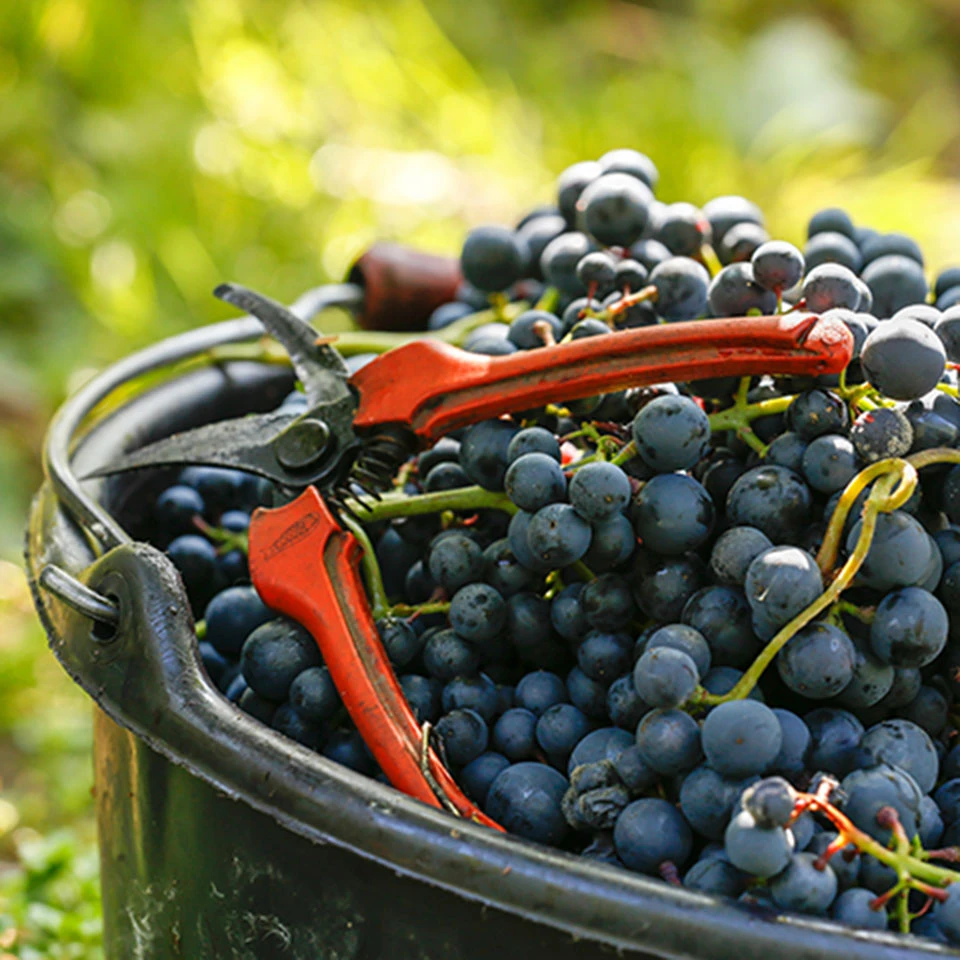
The Dornfelder grape variety is the most successful new red variety from Germany. Dornfelder is known for its medium body and soft tannins - as well as its deep dark colour. However, it should not be confused with the similar-sounding Dunkelfelder variety. Dornfelder usually has a lot of dark fruit such as cherry, blackcurrant or elderberry, often accompanied by notes of spice and oak if the wine has been matured in wooden barrels. It is well suited as an uncomplicated and accessible accompaniment to a variety of dishes, such as roasted or grilled meat, sausages and savoury stews. Dornfelder wines are usually drunk young to enjoy their fruity freshness, but can also have a certain ageing potential if vinified carefully.
Frequently asked questions (FAQ) about Dornfelder wine

How can the typical flavour profile of the Dornfelder grape variety be described?

Dornfelder is a true berry explosion. The nose and palate are dominated by intense notes of sour cherry, blackberry and elderberry. There are also often floral hints reminiscent of violets. If the wine has been matured in wooden barrels, subtle nuances of vanilla and roasted flavours are added.

What is the structure of the Dornfelder grape variety in terms of acidity and tannins?

The secret of the Dornfelder grape variety's success is its mild structure. It has a rather moderate acidity and very soft, harmonious tannins (tannins). This makes the wine particularly smooth and prevents the "furry" feeling on the palate that is often perceived as annoying.

Why does the Dornfelder grape variety have such an intense dark colour?

Dornfelder is one of the so-called colouring grape varieties (although strictly speaking it is not a true colouring grape). Its skins are extremely rich in colouring agents. As a result, the wine often shines in the glass in a deep purple or black-red colour, which gives it a very high-quality and powerful appearance.

Where does the Dornfelder grape variety originally come from?

The Dornfelder grape variety is a new German variety that was created in 1955 by August Herold at the State Training and Research Centre for Viticulture and Fruit Growing in Weinsberg. Incidentally, it was named after Immanuel Dornfeld, a treasurer who strongly supported the founding of the viticultural school in the 19th century.

In which growing regions does the Dornfelder grape variety feel most at home?

Dornfelder is the most successful new German red wine variety. Its main home is in the Palatinate and Rheinhessen. There it finds the nutrient-rich soils (loess, loam, limestone) that it needs to develop its full strength and depth of colour.

What influence does the climate have on the cultivation of the Dornfelder grape variety?

The Dornfelder grape variety is quite robust, but appreciates warm locations to allow the grapes to fully ripen. As it sprouts early, it is somewhat susceptible to late frost, but its resistance to rot makes it very popular with winegrowers, as it produces healthy grapes even in wetter autumns.

Which food pairing goes best with the Dornfelder grape variety?

Due to its fruity flavour and mild structure, Dornfelder is an all-rounder. It goes perfectly with savoury roasts, game dishes or a classic snack platter with strong cheese and ham. My insider tip: Try a dry, fruity Dornfelder with pizza or pasta with meat sauces - the wine's fruit harmonises wonderfully with tomato sauces.

How does the Dornfelder grape variety differ from the classic Pinot Noir?

While PinotNoir is the "diva" - light-coloured, elegant, rich in tannins and complex - Dornfelder is the "powerhouse". Dornfelder is much darker, has less acidity, softer tannins and a much simpler but very inviting fruit structure.

Discover more grape varieties for red wines.

Pinot Noir

Pinot Noir, or Pinot Noir, is a red grape variety that is widely grown around the world today and is also the basis for some of the rarest and most exquisite wines in the world. The variety has a very long tradition of excellence, particularly in France (especially in Burgundy) and Germany (in the Ahr and Baden regions).

Read more

Regent

Regent is a new red variety from Germany. It was developed in the late 1960s, primarily with the aim of creating a high-yielding and disease-resistant red variety - and it was quite successful.

Read more

Malbec

Malbec is a red grape variety that originally comes from France and is now mainly cultivated in Argentina. The wines are deep red in colour and full-bodied, with medium to high tannin and acidity. Malbec wines typically show flavours of dark fruits such as plum and blackberry, complemented by spicy and chocolate notes.

Read more

Merlot

Merlot is a red grape that is one of the three major Bordeaux varieties. It is cultivated worldwide, but is particularly widespread in France and California. The wines are medium to full-bodied, with rather soft tannins and moderate acidity. Merlot wines typically show aromas of red and black fruits such as cherry, plum and blackcurrant, complemented by notes of vanilla, chocolate and spices. The grape is often used in cuvees such as Bordeaux wine.

Read more

Carignan

Carignan originally comes from Spain - but today it is mainly at home in the neighbouring south of France, Languedoc-Roussillon. It is characterised by a deep dark colour, strong tannins and high acidity.

Read more

Bobal

The Spanish Bobal comes from the Utiel-Requena wine-growing region near Valencia. Its thick-skinned grapes make it resistant to drought. They are also responsible for the almost opaque purple colour, high tannins and plenty of structure. Typical flavours are dark berries such as cherry and plum, accompanied by spicy and herbal notes.

Read more

Discover more grape varieties for white wines.

Albariño

Alvarinho, Albariño in Spanish, comes from the north-west of the Iberian Peninsula, where it grows on both sides of the River Minho - in Portugal's Vinho Verde region and in Spain's Galicia, particularly in the Rías Baixas DOP.

Read more

Catarratto

Catarratto is an indigenous white grape from Sicily, Italy. It is one of the most widely cultivated grapes there. Catarratto wines are generally fresh and fruity, with a medium body and good acidity. Typical flavours are citrus fruit, green apple and floral notes, often accompanied by a hint of almond and minerality.

Read more

Chasselas

Chasselas is a white grape variety that is mainly cultivated in Switzerland, particularly in the Vaud region. It is also found in France and in Germany and Austria under the name Chasselas.

Read more

Garganega

Garganega is a white grape variety that is mainly grown in the Italian region of Veneto. As little known as the variety is, as famous is the wine made from it: Soave. It is usually light to medium-bodied, with moderate acidity and plenty of finesse. The wines show flavours of citrus fruits, green apples, pears and flowers, complemented by almond and mineral notes that come from the volcanic terroir.

Read more

Grüner Veltliner

Grüner Veltliner is a white grape variety grown mainly in Austria and is the country's best-known grape. The wines are light to medium-bodied, with moderate acidity and a characteristic pepper aroma that is often compared to white peppercorns or radishes.

Read more

Weißburgunder

The Pinot Blanc grape - called Pinot Blanc in France and Pinot Bianco in Italy - is the lightest-coloured member of the large Burgundy family. The variety produces fresh, fruity wines whose acidity can vary from moderate to strong depending on the style and which develop delicate fruit flavours such as apples, pears or citrus fruits, often complemented by nutty notes such as almonds.

Read more

You can find information on other grape varieties here.

Yout cart is empty.

Added to shopping cart
Subtotal
Go to shopping cart

Prices incl. VAT plus shipping costs.