Grape variety
Furmint

Hardly any other grape variety is as closely associated with a country and its most famous wine as Furmint is with Hungary and Tokaj. The white variety is considered the heart and soul of the legendary sweet wine - and is also experiencing a remarkable renaissance as a dry wine.
Furmint is old, rich in tradition and has long been shrouded in myth, with stories suggesting that it was once brought to Hungary from abroad. But DNA analyses show: Furmint is a genuine Hungarian native. It originated from a natural cross between the white Heunisch (Gouais Blanc) and a Romanian variety that is hardly known today.
The vine sprouts early and ripens late, is sensitive to late frost and mildew, but is resistant to drought. Its loose-berried, thick-skinned grapes predestine it for botrytis - the noble rot that makes the great Tokaj wines so unique.
In addition to the legendary sweet Aszú wines, more and more dry Furmints are being produced today: powerful, mineral and with flavours of apple, quince and honey. Its existence is growing, not least in Austria, where the grape variety was once common as a royal grape variety and then gradually became rarer and rarer. However, the Austrians have long since recognised that Furmint is one of the best white grape varieties in the wine world.

Order Furmint wines online

Filter & Sort
Wine style
Country
Region
Winery
Vintage
Bottle size
Rating
Special features
Show results
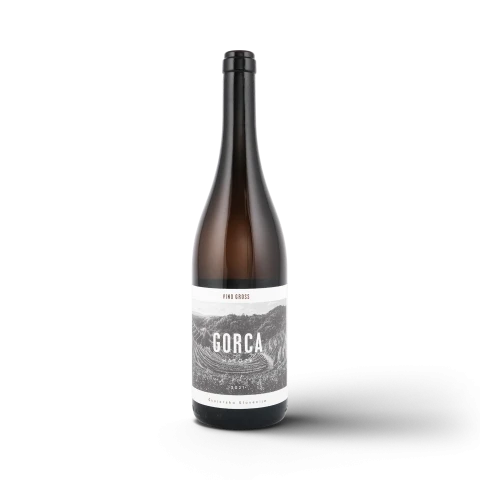
Vino Gross Gorca Haloze 2021
Slovenia
29.95 €
0.75 l,  39.93 €/l
in stock
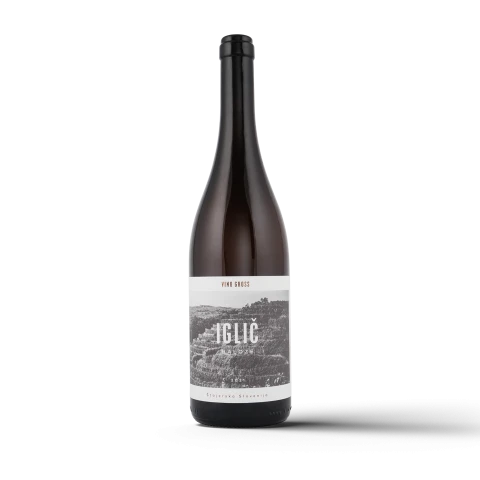
Vino Gross Iglic Haloze 2021
95 Falstaff
94 Parker
BIO
Vino Gross Iglic Haloze 2021
Slovenia
49.00 €
0.75 l,  65.33 €/l
in stock

Frequently asked questions (FAQ) about Furmint wine

What does a typical dry wine from the Furmint grape variety taste like?

A dry Furmint is an experience! It is intense, fiery and mineral. The most recognisable characteristic is the note of quince, accompanied by pear, lime and white flowers. There is also often a smoky, salty minerality that comes from the volcanic soil. It is not a "quiet" wine, but one with presence and character.

Is the Furmint grape variety always sweet (as in Tokaj) or is it also available dry?

This is the biggest change in the last 20 years! Although Furmint is the main grape for the legendary sweet Tokaji Aszú (one of the best sweet wines in the world), today top winemakers are increasingly focussing on dry Furmint ("Furmint Dry"). These wines are crisp, complex and a real alternative to high-quality Riesling or Chablis.

How do you describe the acidity and body of the Furmint grape variety?

Furmint has an extremely high, racy acidity (similar to Riesling). This gives it an enormous backbone. In contrast to Riesling , however, Furmint often has more alcohol and body ("shoulders"). In addition, the wines often have a fine, phenolic grip (tannin) on the palate, as the grape skins are quite thick.

Which region is considered the absolute home of the Furmint grape variety?

Without a doubt: Tokaj in Hungary. It is the oldest classified wine region in the world and the spiritual home of Furmint. Here it achieves a complexity like nowhere else. However, excellent qualities can also be found in the Austrian Burgenland (e.g. in Rust) and in Slovenia (called Šipon there).

Why does "noble rot" (botrytis) play such an important role for Furmint?

Furmint has a thin skin that bursts open easily in the damp autumn weather on the Bodrog river. This allows the fungus Botrytis cinerea to enter. The berry dries into a sultana and concentrates sugar and acidity to an extreme degree. This is the basis for the world-famous sweet wines made from Furmint.

What is the ideal food pairing for a dry Furmint?

A dry Furmint is an ingenious accompaniment to food because it combines strength and acidity. It goes perfectly with pork (e.g. roast pork with a crust), fatty poultry (goose) or even slightly spicy Asian dishes.

What influence do volcanic soils have on the flavour of Furmint?

In Tokaj, Furmint often grows on pure volcanic rock (tuff, zeolite). This gives the wine a cool, taut structure and a "fiery" minerality. You often have the feeling that you can literally taste the stone in the glass. This distinguishes it from fruitier white wines.

What are the sweet versions (Tokaji) made from the Furmint grape variety served with?

There are two ways to find happiness here:

  • The classic: foie gras. The fat of the liver and the acidity/sweetness of the wine are a perfect marriage.
  • Dessert: A Tokaji Aszú from Furmint is a great match for desserts with apricots, caramel or strong blue cheese (Roquefort).

Which glass best brings out the flavours of Furmint?

  • For dry Furmint, I recommend a universal glass or a Chardonnay goblet that is not too wide. It needs a little air, but not too much.
  • For sweet Furmint (Aszú), please use a smaller sweet wine glass so that the intense aromas reach the nose in concentrated form.

How does Furmint differ from Riesling?

This is the most common comparison. Both have extremely high acidity and the ability to reflect the terroir.

Discover more grape varieties for white wines.

Chenin Blanc

Chenin Blanc is a white grape variety that originated in the French Loire Valley and is known for its versatility. Chenin can be vinified both dry and sweet, still and sparkling. Its flavour is characterised by high acidity and lots of fruit such as green apple, pear or quince, often complemented by honey notes. Depending on the terroir and vinification, the grape can also show both mineral and floral tones.

Read more

Chasselas

Chasselas is a white grape variety that is mainly cultivated in Switzerland, particularly in the Vaud region. It is also found in France and in Germany and Austria under the name Chasselas.

Read more

Viognier

Viognier is a white grape variety that originally comes from the Rhône region in south-east France, but is now cultivated in many countries. It produces complex and aromatically dense wines with a strong alcohol content and moderate acidity.

Read more

Sémillon

Sémillon is a noble white grape variety that originates from France, but has now also found a home in the New World. The wines are known for their fruity flavours and full body. Dry Sémillon wines typically show flavours of lemon or lime, while the sweet and noble sweet varieties have apricot, peach, honey, candied fruit or nutty tones.

Read more

Müller-Thurgau)

Müller-Thurgau is a white variety that is mainly cultivated in Germany and Austria. The wines are light to medium-bodied, with moderate acidity and a strong flavour, usually with a typical muscat tone. Müller-Thurgau wines are usually dry or semi-dry and vinified in steel tanks.

Read more

Muscat/Muskateller

Muscat, also known as Muscat or Moscato, is not so much a single grape variety as a fairly large family of grape varieties that is widespread throughout the world and includes both wine grapes and table grapes.

Read more

Discover more grape varieties for red wines.

Petit Verdot

Petit Verdot is a red grape variety that originates from Bordeaux, but is now mainly cultivated in Australia and South America due to its high climatic requirements. The wines are full-bodied, with high tannins and high acidity.

Read more

Portugieser

Portugieser, also known as Blauer Portugieser, is a red grape variety that originates from former Austro-Hungarian territories in north-west Slovenia and is now mainly cultivated in Germany and Austria. However, it has nothing to do with the country it bears in its name.

Read more

Lambrusco

Lambrusco is both a wine and a generic term for a group of grape varieties. In view of the high genetic variance, one cannot really speak of a grape variety family. What all Lambrusco varieties have in common, however, is the fact that they were selected from wild vines.

Read more

Lemberger/Blaufränkisch

Lemberger, better known as Blaufränkisch in Austria, is a red grape variety that is mainly grown in southern Germany and Austria. The wines are medium to full-bodied, with moderate to strong tannins and fresh acidity. Lemberger wines have great finesse and the potential to reflect the terroir from which they originate.

Read more

Merlot

Merlot is a red grape that is one of the three major Bordeaux varieties. It is cultivated worldwide, but is particularly widespread in France and California. The wines are medium to full-bodied, with rather soft tannins and moderate acidity. Merlot wines typically show aromas of red and black fruits such as cherry, plum and blackcurrant, complemented by notes of vanilla, chocolate and spices. The grape is often used in cuvees such as Bordeaux wine.

Read more

Barbera

Barbera is the most widely cultivated red grape variety in the northern Italian region of Piedmont - but is also widespread in Lombardy and Emilia-Romagna. It produces fruity, accessible red wines with an intense ruby red colour and aromas of red fruits, cherries, plums and spices. They are medium-bodied on the palate, with moderate tannins and lively acidity even when fully ripe.

Read more

Here you can find information on other grape varieties.

Yout cart is empty.

Added to shopping cart
Subtotal
Go to shopping cart

Prices incl. VAT plus shipping costs.