Grape variety
Lagrein

Lagrein is the oldest documented grape variety in South Tyrol - first mentioned in 1318. Its name is probably derived from Vallagarina, the southern Adige Valley. Originally, there was both a white and a blue Lagrein; it was not until the 17th century that the red wine variety became established, when classic mash fermentation came into use. The white Lagrein almost completely disappeared. Genetically, the blue Lagrein can be traced back to a cross between Teroldego and an unknown variety related to Vernatsch. Its high yield and robustness made it economically attractive early on. It still thrives best in the Bolzano valley basin in particular, where warm, gravelly soils offer ideal conditions. The variety is cultivated on around 540 hectares in South Tyrol - mainly around Bolzano, Caldaro, Termeno, Appiano and Ora. Other areas are cultivated in Trentino and in small trials in Germany, Australia, the USA and Argentina. Traditionally, Lagrein was used to make Kretzer - a salmon-coloured, strong rosé. It was not until the 1960s that the red wine began to gain in importance, gaining international recognition from the 1980s onwards when it was matured in barriques. Lagrein is characterised by its dark, garnet-red colour and aromas of cherries, violets, blackberries, dark chocolate and fresh black bread. Good wines show freshness, density and velvety tannins - an expression of a grape variety that has characterised the identity of South Tyrol for over 700 years.

Order Lagrein wines online

Filter & Sort
Wine style
Country
Region
Winery
Vintage
Bottle size
Rating
Special features
Show results
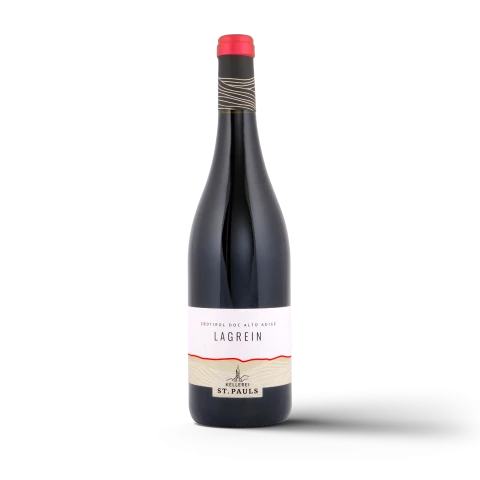
Kellerei Sankt Pauls Lagrein Südtirol 2023
Trentino and Southtirol, Italy
13.90 €
0.75 l,  18.53 €/l
in stock
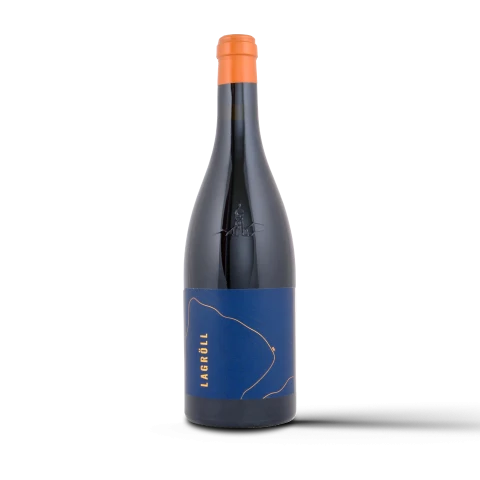
Kellerei Sankt Pauls Lagröll Lagrein Riserva Südtirol 2021
91 Falstaff
Kellerei Sankt Pauls Lagröll Lagrein Riserva Südtirol 2021
Trentino and Southtirol, Italy
29.90 €
0.75 l,  39.87 €/l
in stock

Frequently asked questions (FAQ) about Lagrein wine

What does a classic red wine from the Lagrein grape variety taste like?

A typical Lagrein impresses with its dark, almost violet colour. The nose and palate are dominated by aromas of dark wild berries, blackberries and sour cherries. A fine note of violets is particularly characteristic, paired with tart accents of dark chocolate and liquorice.

How can the tannin and acidity structure of Lagrein be described?

Lagrein is known for its robust tannin structure. In the past, it was often considered somewhat "furry", but modern winemakers now know how to make these tannins velvety and soft through skilful ageing (often in small wooden barrels). The acidity of Lagrein is rather moderate, which makes it very drinkable and round despite its strength.

Are there other styles of wine made from the Lagrein grape variety besides red wine?

Yes, absolutely! One speciality is the Lagrein Kretzer. This is a strong, salmon-coloured rosé wine. It is the fresh, fruity answer to the heavy red wine and impresses with its energising berry fruit - ideal for the summer.

How does Lagrein differ in flavour from Syrah?

Although both are dark and spicy, Lagrein has a very specific alpine freshness. While a Syrah often has a peppery spiciness, the Lagrein scores more with its dark cocoa flavour and a certain "earthy" rusticity that makes it unmistakable.

Where does the Lagrein grape variety originally come from?

Lagrein is an autochthonous grape variety from South Tyrol(Italy). It has been documented there for centuries and is closely related to the history of the provincial capital of Bolzano. Genetically, it is closely related to Syrah and Teroldego.

Which climate and soils does the Lagrein grape variety prefer?

Lagrein is a "sun worshipper". It needs warmth to allow its tannins to fully ripen (phenolic ripeness). It thrives best in the deep, warm basin locations around Bolzano on alluvial soils (quartz and gravel soils) that store heat well.

Which growing area is considered the "Grand Cru" for the Lagrein grape variety?

If you are looking for the best Lagrein, there is no way around Gries near Bolzano. The microclimate and sandy soils there produce the most concentrated and long-lasting wines of this variety.

What dishes go best with a full-bodied Lagrein?

Lagrein loves savoury cuisine. It is the ideal accompaniment to South Tyrolean speck, game dishes such as venison stew or classic braised meat. It also harmonises perfectly with strong cheeses or Alpine dishes such as Schlutzkrapfen with lots of brown butter.

What distinguishes Lagrein from the second major South Tyrolean variety, Vernatsch?

They are two completely different worlds! While Vernatsch is light red in colour, light, acidic and almost tannin-free, Lagrein is the exact opposite: deep dark, full-bodied, more alcoholic and tannic.

Discover more grape varieties for red wines.

Dolcetto

Dolcetto is a red grape variety that is mainly grown in the Italian region of Piedmont. The wines made from Dolcetto are light to medium-bodied, with soft tannins and fresh acidity.

Read more

Syrah

The French Rhone Valley is the home of Syrah, a red grape variety that can also be found in the USA and especially in Australia, where it is usually known as Shiraz. The two names are as different as the respective styles with which the genetically identical grape varieties are vinified.

Read more

Schwarzriesling

Schwarzriesling, also known as Pinot Meunier or Müllerrebe, is a red grape variety that is mainly native to France and Germany. In France, it plays an important role as a traditional component of the cuvée in Champagne in particular, while in southern Germany it is also often found as a rather simple, single-varietal still wine.

Read more

Zweigelt

Zweigelt is a highly successful new red variety from Austria, whose parents are Blaufränkisch and St. Laurent. It produces violet/red wines with a deep colour and intense aromas such as cherry, red and blackcurrant or blackberry, as well as spicy notes such as vanilla or cinnamon.

Read more

Mourvèdre/Monastrell

Mourvèdre is a red grape variety that is mainly grown in the south of France and Spain, where it is known as Monastrell. The wines are deep-coloured, medium to full-bodied, with high, often rough tannins when young and moderate to high acidity.

Read more

Portugieser

Portugieser, also known as Blauer Portugieser, is a red grape variety that originates from former Austro-Hungarian territories in north-west Slovenia and is now mainly cultivated in Germany and Austria. However, it has nothing to do with the country it bears in its name.

Read more

Discover more grape varieties for white wines.

Airén

The Spanish grape variety Airén is one of the most widely cultivated white grapes in the world. It is particularly adaptable and resistant to drought, robust against most vine diseases and is considered to be high-yielding even on poor soils.

Read more

Chasselas

Chasselas is a white grape variety that is mainly cultivated in Switzerland, particularly in the Vaud region. It is also found in France and in Germany and Austria under the name Chasselas.

Read more

Grüner Veltliner

Grüner Veltliner is a white grape variety grown mainly in Austria and is the country's best-known grape. The wines are light to medium-bodied, with moderate acidity and a characteristic pepper aroma that is often compared to white peppercorns or radishes.

Read more

Müller-Thurgau)

Müller-Thurgau is a white variety that is mainly cultivated in Germany and Austria. The wines are light to medium-bodied, with moderate acidity and a strong flavour, usually with a typical muscat tone. Müller-Thurgau wines are usually dry or semi-dry and vinified in steel tanks.

Read more

Riesling

Riesling is one of the best-known white grape varieties and is cultivated all over the world - first and foremost in Germany, of course. It is more flexible and versatile than almost any other grape.

Read more

Sémillon

Sémillon is a noble white grape variety that originates from France, but has now also found a home in the New World. The wines are known for their fruity flavours and full body. Dry Sémillon wines typically show flavours of lemon or lime, while the sweet and noble sweet varieties have apricot, peach, honey, candied fruit or nutty tones.

Read more

Here you can find information on other grape varieties.

Yout cart is empty.

Added to shopping cart
Subtotal
Go to shopping cart

Prices incl. VAT plus shipping costs.