Home Watch Compare Cart Account

Petit Verdot grape variety

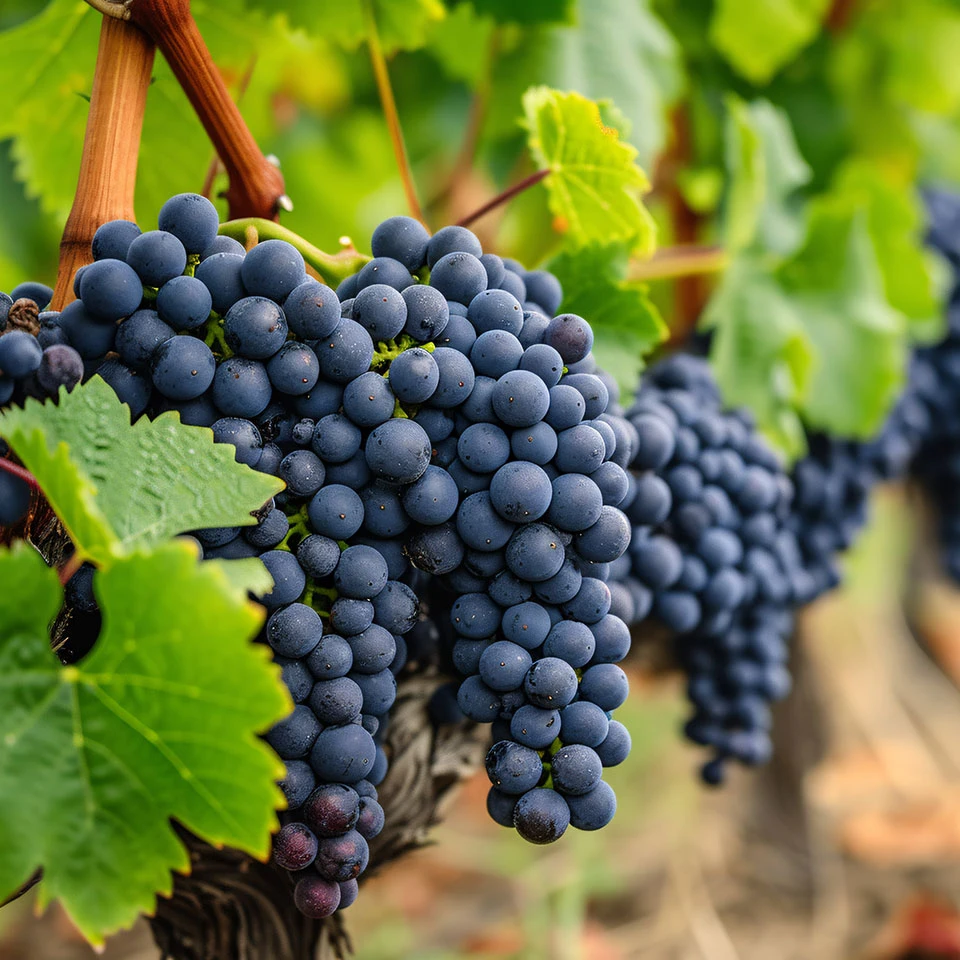
Petit Verdot is a red grape variety that originates from Bordeaux, but is now mainly cultivated in Australia and South America due to its high climatic requirements. The wines are full-bodied, with high tannins and high acidity. Petit Verdot wines typically show aromas of dark fruits such as blackcurrant and plum, complemented by notes of spice and tobacco. The grape is traditionally used in cuvees to give wines a deeper colour and structure. However, it is rarely found as a single variety. Blends with Petit Verdot are suitable accompaniments to strong meat and game dishes due to their strong, intense flavour. However, the wines often require a long ageing period to round off the tannins and become more accessible.
Frequently asked questions (FAQ) about Petit Verdot wine

How can the typical flavour profile of Petit Verdot be described?

Petit Verdot is famous for its deep dark, almost purple colour and intense bouquet. Flavours of black fruits such as blackberry, plum and blueberry are typical. What makes it special, however, are its floral notes, especially violet and lilac, paired with spicy accents of graphite, dark chocolate and sage.

What is the structure of Petit Verdot in terms of tannins and acidity?

This grape variety is not for the faint-hearted! Petit Verdot has a considerable tannin structure (tannins) and a surprisingly lively acidity. This makes it very present in the mouth and gives it a powerful, almost muscular backbone. When harvested fully ripe, however, the tannins appear ripe and grainy rather than aggressive.

Is a Petit Verdot wine dry or sweet?

A Petit Verdot is almost exclusively vinified bone-dry. However, due to the intense fruit concentration and the often higher alcohol content (due to the late ripening), it can suggest a certain "sweetness" or fullness on the palate, although the residual sugar content is minimal.

In which wine regions worldwide does Petit Verdot grow best?

The vine originally comes from Bordeaux(France), where it often has difficulties reaching full maturity. This is why it now shines in sun-drenched regions such as Spain (Toledo/La Mancha), Australia, California, South Africa and the Maremma in Tuscany. There it gets the warmth it needs to develop its full potential.

What influence does the climate have on the maturation of Petit Verdot?

The name says it all: "Petit Verdot" means "the little green one". This is because the variety ripens very late. In cool years, it often remains green and unripe. It needs a long, warm autumn to transform the hard acids into sugar and the green tannins into silky structures.

What food pairing is recommended for a strong Petit Verdot?

Due to its high tannins, Petit Verdot needs a partner with fat and protein to buffer its structure. Braised lamb shanks, grilled beef steak or game dishes with dark sauces are perfect. Spicy hard cheeses (such as old Manchego or Cheddar) also harmonise excellently.

How does Petit Verdot differ in flavour from Cabernet Sauvignon?

Although both are powerful, Petit Verdot is often darker in colour and shows more floral nuances (violets) than Cabernet, which is more focused on cassis and peppers. In addition, Petit Verdot often appears "heavier" on the palate and has a more pronounced acidity.

Discover more grape varieties for red wines.

Gamay

Gamay is a red grape variety that is mainly cultivated in the French region of Beaujolais. The wines are light to medium-bodied, with low tannins and lively acidity. Gamay wines show flavours of red fruits such as strawberry, red cherry or raspberry, complemented by floral notes.

Read more

Grenache

Grenache is a red grape variety grown mainly in southern France and Spain (where it is known as Garnacha). The wines are typically medium to full-bodied, with low tannins and high acidity.

Read more

Lagrein

Lagrein is the oldest documented grape variety in South Tyrol - first mentioned in 1318. Its name is probably derived from Vallagarina, the southern Adige Valley.

Read more

Mourvèdre/Monastrell

Mourvèdre is a red grape variety that is mainly grown in the south of France and Spain, where it is known as Monastrell. The wines are deep-coloured, medium to full-bodied, with high, often rough tannins when young and moderate to high acidity.

Read more

Pinot Noir

Pinot Noir, or Pinot Noir, is a red grape variety that is widely grown around the world today and is also the basis for some of the rarest and most exquisite wines in the world. The variety has a very long tradition of excellence, particularly in France (especially in Burgundy) and Germany (in the Ahr and Baden regions).

Read more

Schwarzriesling

Schwarzriesling, also known as Pinot Meunier or Müllerrebe, is a red grape variety that is mainly native to France and Germany. In France, it plays an important role as a traditional component of the cuvée in Champagne in particular, while in southern Germany it is also often found as a rather simple, single-varietal still wine.

Read more

Discover more grape varieties for white wines.

Aligoté

In Burgundy, Aligoté was overshadowed by its "siblings" Chardonnay and Pinot Noir for centuries.

Read more

Garganega

Garganega is a white grape variety that is mainly grown in the Italian region of Veneto. As little known as the variety is, as famous is the wine made from it: Soave. It is usually light to medium-bodied, with moderate acidity and plenty of finesse. The wines show flavours of citrus fruits, green apples, pears and flowers, complemented by almond and mineral notes that come from the volcanic terroir.

Read more

Müller-Thurgau)

Müller-Thurgau is a white variety that is mainly cultivated in Germany and Austria. The wines are light to medium-bodied, with moderate acidity and a strong flavour, usually with a typical muscat tone. Müller-Thurgau wines are usually dry or semi-dry and vinified in steel tanks.

Read more

Riesling

Riesling is one of the best-known white grape varieties and is cultivated all over the world - first and foremost in Germany, of course. It is more flexible and versatile than almost any other grape.

Read more

Verdicchio

Verdicchio is a very old white grape variety from Italy, which is mainly cultivated in central Italy. The grapes produce dry to semi-dry white wines with a light yellow colour and a fresh, fruity taste. The flavours are reminiscent of green apples, pears, citrus fruits and hay meadows.

Read more

Weißburgunder

The Pinot Blanc grape - called Pinot Blanc in France and Pinot Bianco in Italy - is the lightest-coloured member of the large Burgundy family. The variety produces fresh, fruity wines whose acidity can vary from moderate to strong depending on the style and which develop delicate fruit flavours such as apples, pears or citrus fruits, often complemented by nutty notes such as almonds.

Read more

You can find information on other grape varieties here.

Yout cart is empty.

Added to shopping cart
Subtotal
Go to shopping cart

Prices incl. VAT plus shipping costs.