Regent grape variety

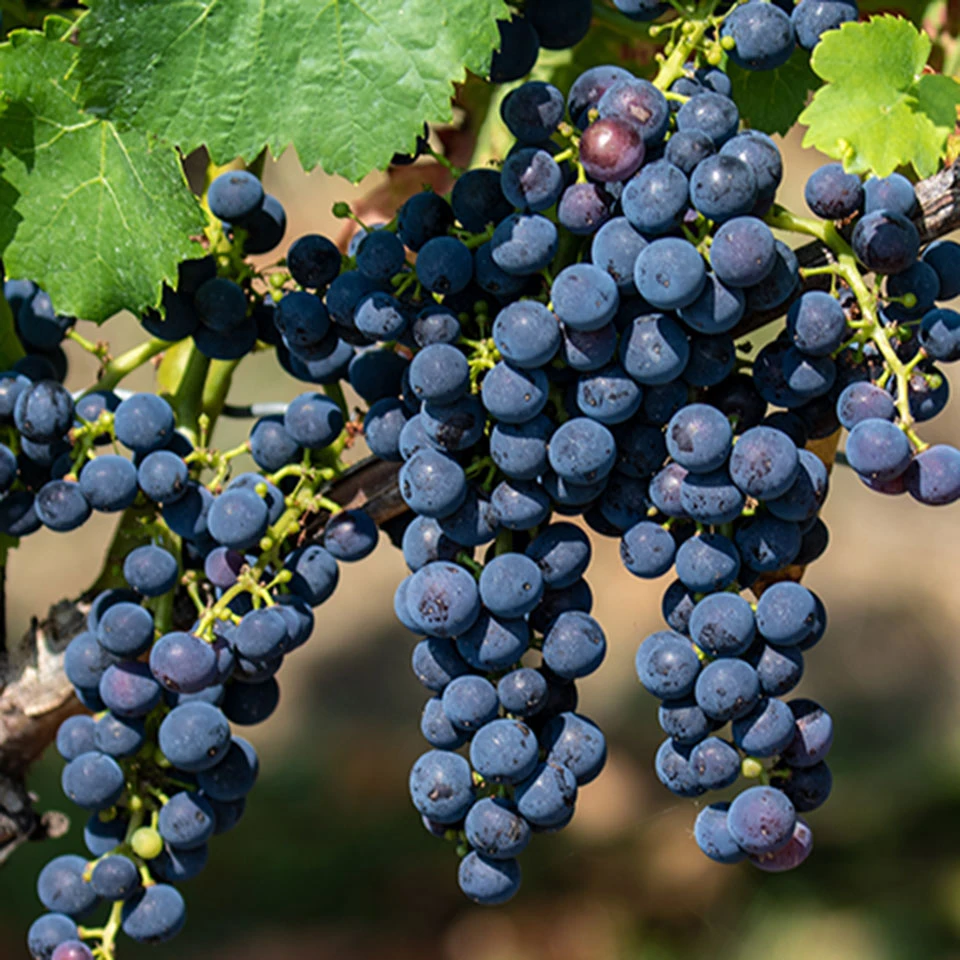
Regent is a new red variety from Germany. It was developed in the late 1960s, primarily with the aim of creating a high-yielding and disease-resistant red variety - and it was quite successful. Regent ripens early - and can therefore also be cultivated on the northern border of winegrowing - and is also relatively resistant to frost and the three most common vine diseases (powdery mildew, downy mildew and botrytis). It produces accessible and uncomplicated, yet full-bodied wines with velvety, soft tannins and intense fruit (cherry, redcurrant), deep colour and moderate acidity. Due to its not overly demanding tannin structure, it is usually ready to drink early and cannot be stored indefinitely - even if more ambitious winemakers are increasingly experimenting with ageing in barriques. Either way, it is currently still the most important fungus-resistant red variety in German viticulture. Its uncomplicated nature makes it a good accompaniment to a variety of dishes. However, it should not be too delicate or elegant.
Frequently asked questions (FAQ) about Regent wine

How can the typical flavour profile of the Regent grape variety be described?

Regent is a real fruit bomb for lovers of dark berries. Typical flavours are intense aromas of ripe cherry, blackberry, redcurrant and plum. Spicy components such as peppery notes or hints of cloves are often added, giving it a very charming and full-bodied bouquet.

What is the structure of the Regent grape variety in terms of acidity and tannin?

The Regent grape variety is characterised by its mild nature. It has a rather low acidity, which makes it very digestible. The tannins (tannins) are usually soft, velvety and well integrated, making the wine taste very harmonious and "round" even when young.

Where does the Regent grape variety originally come from?

Regent was bred in Germany in 1967 at the Geilweilerhof Institute for Vine Breeding in the Palatinate from a cross between the varieties (Diana x Chambourcin). However, it was not until the 1990s that it was officially authorised for quality viticulture.

Why is the Regent grape variety often referred to as the "vine of the future" or "PIWI"?

The Regent grape variety is a pioneer of sustainability. As a fungus-resistant variety, it has a natural resistance to mildew diseases. This enables winegrowers to massively reduce the use of pesticides, which makes Regent extremely popular in organic viticulture in particular.

In which regions is the Regent grape variety grown most successfully?

As Regent ripens very early and has good frost hardiness, it can be found almost all over Germany. It is particularly well represented in the Palatinate, Rheinhessen and Baden. However, the Regent grape variety also reliably delivers good quality in cooler regions such as the Moselle or even Schleswig-Holstein.

What food pairing does a sommelier recommend for the Regent grape variety?

Regent is a fantastic accompaniment to savoury, spicy dishes. Due to its velvety structure, it goes perfectly with braised dishes (such as roast beef or goulash), game dishes or a classic snack platter with hearty salami and ham. The Regent grape variety is also a real insider tip for BBQs.

How does the Regent grape variety differ from the classic Pinot Noir?

Compared to the elegant, rather light-coloured and delicate Pinot Noir, Regent is significantly darker, stronger and less acidic. While Pinot Noir often displays red fruits such as raspberry, the Regent grape variety is more at home on the dark side (blackberry/cherry) and has an overall "fuller" flavour on the palate.

What is the difference between the Regent and Dornfelder grape varieties?

Both are intensely coloured, but the Regent often has a spicier, more rustic note and a little more body than an average Dornfelder. In terms of structure, the Regent grape variety is usually even softer in acidity, which makes it the ideal wine for beginners who are looking for strong but uncomplicated red wines.

Discover more grape varieties for red wines.

Dornfelder

The Dornfelder grape variety is the most successful new red variety from Germany. Dornfelder is known for its medium body and soft tannins - as well as its deep dark colour. However, it should not be confused with the similar-sounding Dunkelfelder variety.

Read more

Pinot Noir

Pinot Noir, or Pinot Noir, is a red grape variety that is widely grown around the world today and is also the basis for some of the rarest and most exquisite wines in the world. The variety has a very long tradition of excellence, particularly in France (especially in Burgundy) and Germany (in the Ahr and Baden regions).

Read more

Syrah

The French Rhone Valley is the home of Syrah, a red grape variety that can also be found in the USA and especially in Australia, where it is usually known as Shiraz. The two names are as different as the respective styles with which the genetically identical grape varieties are vinified.

Read more

Nebbiolo

Nebbiolo is one of Italy's great noble grape varieties. It is mainly cultivated in Piedmont. The wines are medium to full-bodied, with extremely strong tannins, usually very rough when young, and high acidity. Nebbiolo wines typically show flavours of red fruits such as plum, cherry and red berries, accompanied by more edgy tones such as tobacco and leather.

Read more

Negroamaro

Negroamaro is a red grape variety from the south of Italy. The wines are usually powerful, full-bodied and tannic, with rich aromas of dark fruit such as blackcurrant or fully ripe cherry. The full-bodied aroma spectrum is often complemented by notes of spices and chocolate.

Read more

Saperavi

Saperavi means "dyer" - and it is indeed one of the few red wine varieties whose skin and flesh are coloured. This explains the almost inky black colour and the intense personality of its wines.

Read more

Discover more grape varieties for white wines.

Chenin Blanc

Chenin Blanc is a white grape variety that originated in the French Loire Valley and is known for its versatility. Chenin can be vinified both dry and sweet, still and sparkling. Its flavour is characterised by high acidity and lots of fruit such as green apple, pear or quince, often complemented by honey notes. Depending on the terroir and vinification, the grape can also show both mineral and floral tones.

Read more

Kisi

Kisi is one of the oldest indigenous grape varieties in Georgia - and yet it had almost disappeared. It was not until the 1990s that it was rediscovered and systematically recultivated in the Kakheti region. Today, it is regarded as a symbol of the renaissance of Georgian viticulture and combines tradition, originality and modern elegance.

Read more

Riesling

Riesling is one of the best-known white grape varieties and is cultivated all over the world - first and foremost in Germany, of course. It is more flexible and versatile than almost any other grape.

Read more

Traminer/Savagnin Blanc

Traminer, known in France as Savagnin Blanc, is a white aromatic grape variety characterised by its intense aromas. Floral aromas of flowers, spices and fruity notes result in a complex and sometimes almost disturbingly dense aroma and flavour.

Read more

Weißburgunder

The Pinot Blanc grape - called Pinot Blanc in France and Pinot Bianco in Italy - is the lightest-coloured member of the large Burgundy family. The variety produces fresh, fruity wines whose acidity can vary from moderate to strong depending on the style and which develop delicate fruit flavours such as apples, pears or citrus fruits, often complemented by nutty notes such as almonds.

Read more

Trebbiano/Ugni Blanc

The Italian Trebbiano is one of the most widely cultivated grape varieties in the world and is known for its lively acidity and freshness. The wines have a light, straw-yellow colour and a light, fresh aroma of citrus fruits and apples.

Read more

You can find information on other grape varieties here.

Yout cart is empty.

Added to shopping cart
Subtotal
Go to shopping cart

Prices incl. VAT plus shipping costs.