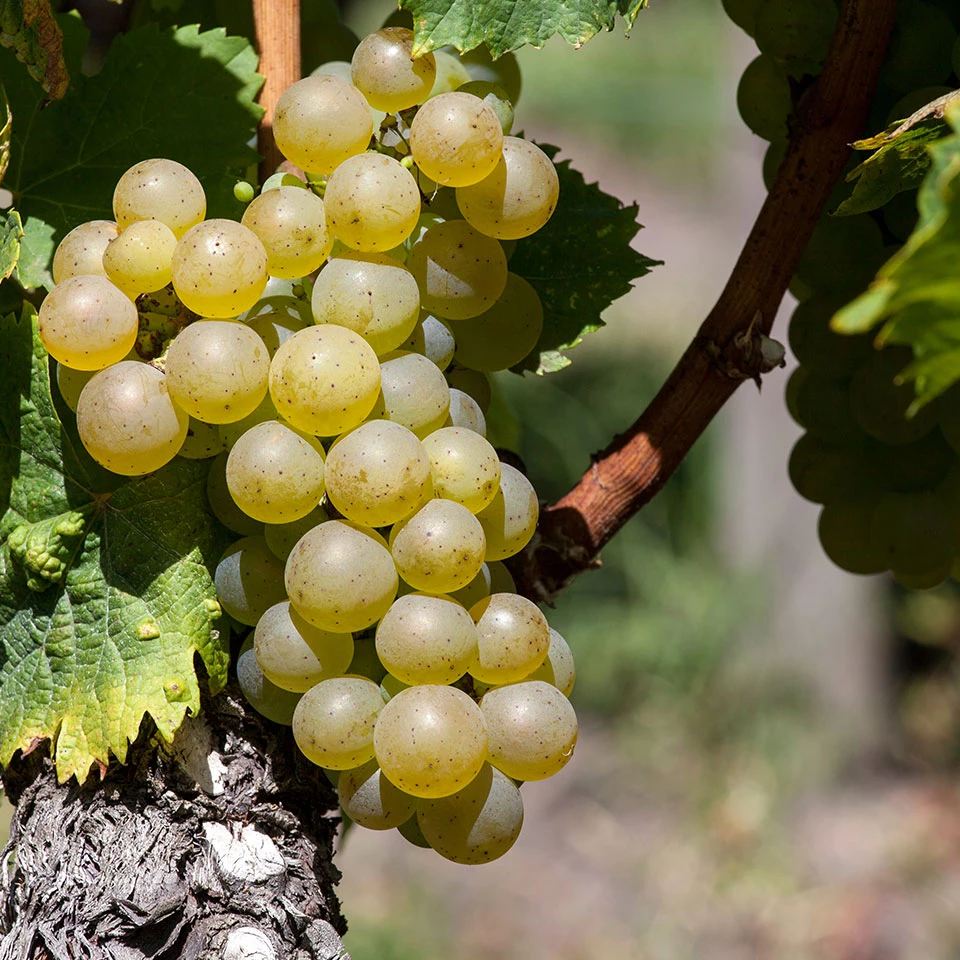
Sémillon grape variety

Sémillon is a noble white grape variety that originates from France, but has now also found a home in the New World. The wines are known for their fruity flavours and full body. Dry Sémillon wines typically show flavours of lemon or lime, while the sweet and noble sweet varieties have apricot, peach, honey, candied fruit or nutty tones. Sémillon is extremely susceptible to botrytis, which is why it is often found in sweet and noble sweet varieties. In the world's most legendary growing region for noble sweet wines, Sauternes, it usually dominates 80 per cent or more of the cuvée. While the dry Sèmillons tend to be drunk young, for example with seafood, the best examples of the noble sweet variety are almost immortal. As an accompaniment to food, they are particularly excellent with liver pâtés and blue cheese.
Order Sémillon wines online

Filter & Sort
Wine style
Country
Region
Winery
Vintage
Bottle size
Rating
Special features
Show results
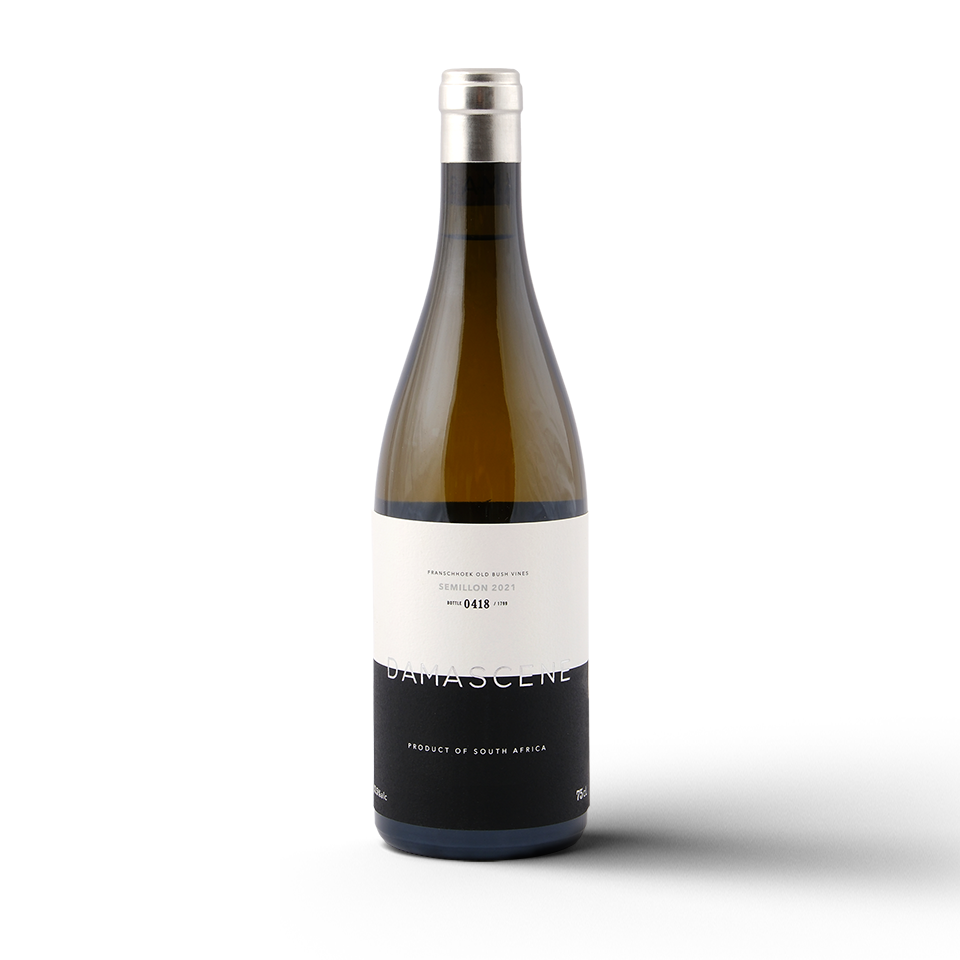
Winery Damascene Franschhoek Sémillon 2021
Coastal Region, South Afrika
49.90 €

incl. VAT plus shipping


0.75 l,  66.53 €/l
in stock
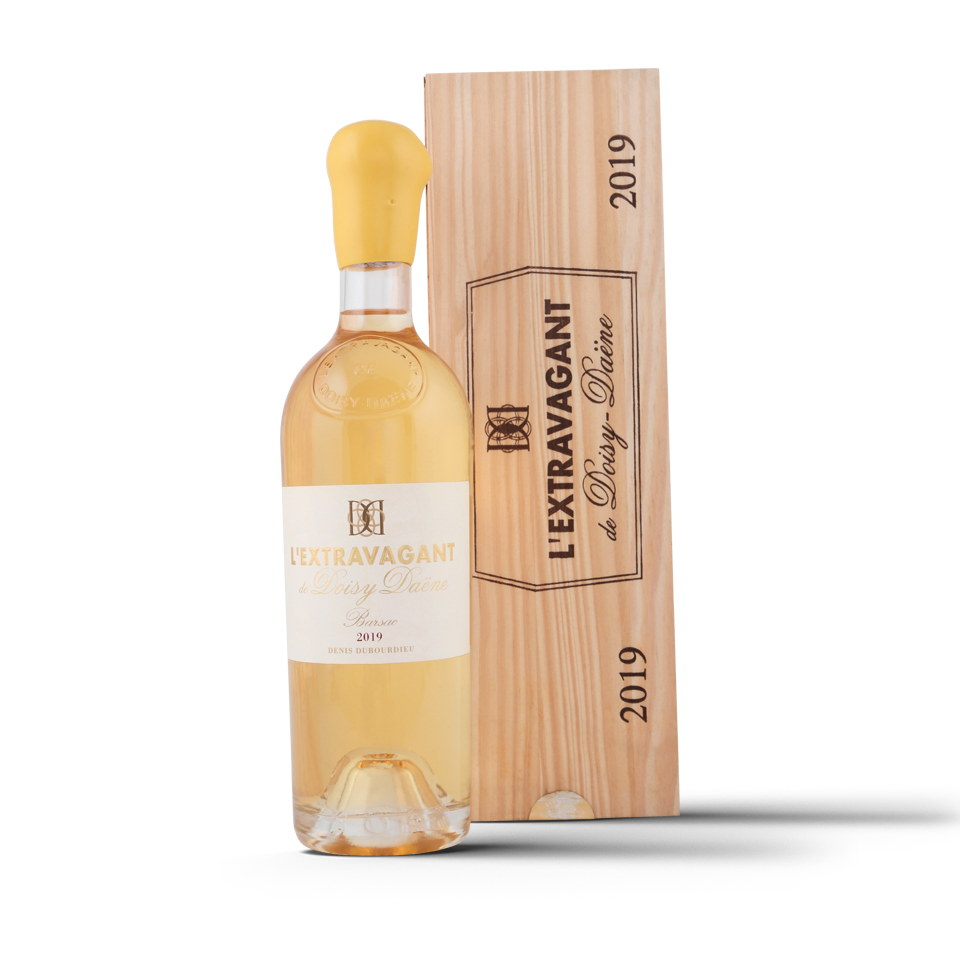
Château Doisy Daene L'Extravagant de Doisy Daene Sauternes 375ml 2019
Bordeaux, France
196.00 €

incl. VAT plus shipping


0.375 l,  522.67 €/l
in stock

Frequently asked questions (FAQ) about Sémillon wine

What does a classically dry white wine made from the Sémillon grape variety taste like?

When vinified dry, Sémillon often shows a rather subtle profile when young, which develops enormously over time. It is known for its viscous, almost oily texture on the palate. You can often taste notes of lemon, yellow apple and pear, accompanied by a characteristic wax or honey flavour.

What special flavours does the Sémillon grape variety develop in sweet wines?

When the Sémillon grape variety is attacked by noble mould (Botrytis cinerea), world-famous sweet wines such as Sauternes are produced. Here, the aroma spectrum literally explodes: it smells of apricot jam, saffron, candied ginger, honey and roasted nuts.

How can the acidity and body structure of the Sémillon grape variety be described?

Compared to Sauvignon Blanc, Sémillon has a rather moderate acidity. However, it has significantly more body, extract richness and alcohol potential. It feels "weightier" and more mellow in the mouth, which gives it an almost aristocratic elegance.

Are there any grape varieties that are similar in flavour to Sémillon?

A mature Sémillon can have similarities with a full-bodied Chenin Blanc (from the Loire Valley) or a Marsanne (from the Rhône) aged in wood, as both also develop this waxy, honeyed character and a certain oiliness.

Where does the Sémillon grape variety originally come from and where is it most important today?

Sémillon is native to Bordeaux in the south-west of France. Here, together with Sauvignon Blanc, it forms the backbone of the white Bordeaux cuvées. Another, completely independent centre for the Sémillon grape variety has established itself in Australia's Hunter Valley.

Why is the Sémillon grape variety considered perfect for the production of sweet wines?

The Sémillon grape variety has a very thin skin, which makes it susceptible to the beneficial noble mould. In regions such as Sauternes, where morning mists meet sunny afternoons, the fungus perforates the skin of the Sémillon, the water evaporates and sugar and flavours become extremely concentrated.

What dishes go best with a dry white wine made from the Sémillon grape variety?

Thanks to its smoothness and body, a dry Sémillon is an ingenious accompaniment to richer fish dishes or seafood. Think of pan-fried scallops, lobster with butter sauce or fish in a creamy beurre blanc. Sémillon also harmonises perfectly with poultry in cream sauces.

What is the ideal accompaniment to a sweet Sémillon from Sauternes?

A classic Sauternes (based on Sémillon) is the perfect partner for savoury or fatty contrasts. The combination with foie gras or strong blue cheese (such as Roquefort) is world-famous. But Sémillon is also a revelation with a peach dessert or crème brûlée.

What is the biggest difference between the Sémillon grape variety and Sauvignon Blanc?

You can imagine it like a puzzle: Sauvignon Blanc provides the "loud" flavours (grass, gooseberry) and the fresh acidity, while Sémillon contributes the "weight", texture and longevity. Pure Sémillon is often quieter, but more profound and mouth-filling.

Discover more grape varieties for white wines.

Furmint

Hardly any other grape variety is as closely associated with a country and its most famous wine as Furmint is with Hungary and Tokaj. The white variety is considered the heart and soul of the legendary sweet wine - and is also experiencing a remarkable renaissance as a dry wine.

Read more

Airén

The Spanish grape variety Airén is one of the most widely cultivated white grapes in the world. It is particularly adaptable and resistant to drought, robust against most vine diseases and is considered to be high-yielding even on poor soils.

Read more

Chasselas

Chasselas is a white grape variety that is mainly cultivated in Switzerland, particularly in the Vaud region. It is also found in France and in Germany and Austria under the name Chasselas.

Read more

Grüner Veltliner

Grüner Veltliner is a white grape variety grown mainly in Austria and is the country's best-known grape. The wines are light to medium-bodied, with moderate acidity and a characteristic pepper aroma that is often compared to white peppercorns or radishes.

Read more

Muscat/Muskateller

Muscat, also known as Muscat or Moscato, is not so much a single grape variety as a fairly large family of grape varieties that is widespread throughout the world and includes both wine grapes and table grapes.

Read more

Sauvignon Blanc

Sauvignon Blanc is one of the best-known white grape varieties in France. It actually originated in the Loire - but is now cultivated worldwide as the second most important noble variety after Chardonnay. New Zealand in particular has become the second home of Sauvignon Blanc.

Read more

Discover more grape varieties for red wines.

Barbera

Barbera is the most widely cultivated red grape variety in the northern Italian region of Piedmont - but is also widespread in Lombardy and Emilia-Romagna. It produces fruity, accessible red wines with an intense ruby red colour and aromas of red fruits, cherries, plums and spices. They are medium-bodied on the palate, with moderate tannins and lively acidity even when fully ripe.

Read more

Caberlot

Caberlot promises to be exactly what its name suggests and is one of the most unusual grape varieties in Italy - and perhaps also one of the most exclusive.

Read more

Carmenère

Carmenère gilt als die "Signature Grape" Chiles. Fast die Hälfte der weltweiten Bestände wachsen dort. Ursprünglich stammt die Sorte aber aus Bordeaux, wo vor der Reblauskatastrophe weit verbreitet war. 

Read more

Lagrein

Lagrein is the oldest documented grape variety in South Tyrol - first mentioned in 1318. Its name is probably derived from Vallagarina, the southern Adige Valley.

Read more

Merlot

Merlot is a red grape that is one of the three major Bordeaux varieties. It is cultivated worldwide, but is particularly widespread in France and California. The wines are medium to full-bodied, with rather soft tannins and moderate acidity. Merlot wines typically show aromas of red and black fruits such as cherry, plum and blackcurrant, complemented by notes of vanilla, chocolate and spices. The grape is often used in cuvees such as Bordeaux wine.

Read more

Syrah

The French Rhone Valley is the home of Syrah, a red grape variety that can also be found in the USA and especially in Australia, where it is usually known as Shiraz. The two names are as different as the respective styles with which the genetically identical grape varieties are vinified.

Read more

You can find information on other grape varieties here.

Yout cart is empty.

Added to shopping cart
Subtotal
Go to shopping cart

Prices incl. VAT plus shipping costs.