Grape variety Traminer /
Savagnin Blanc

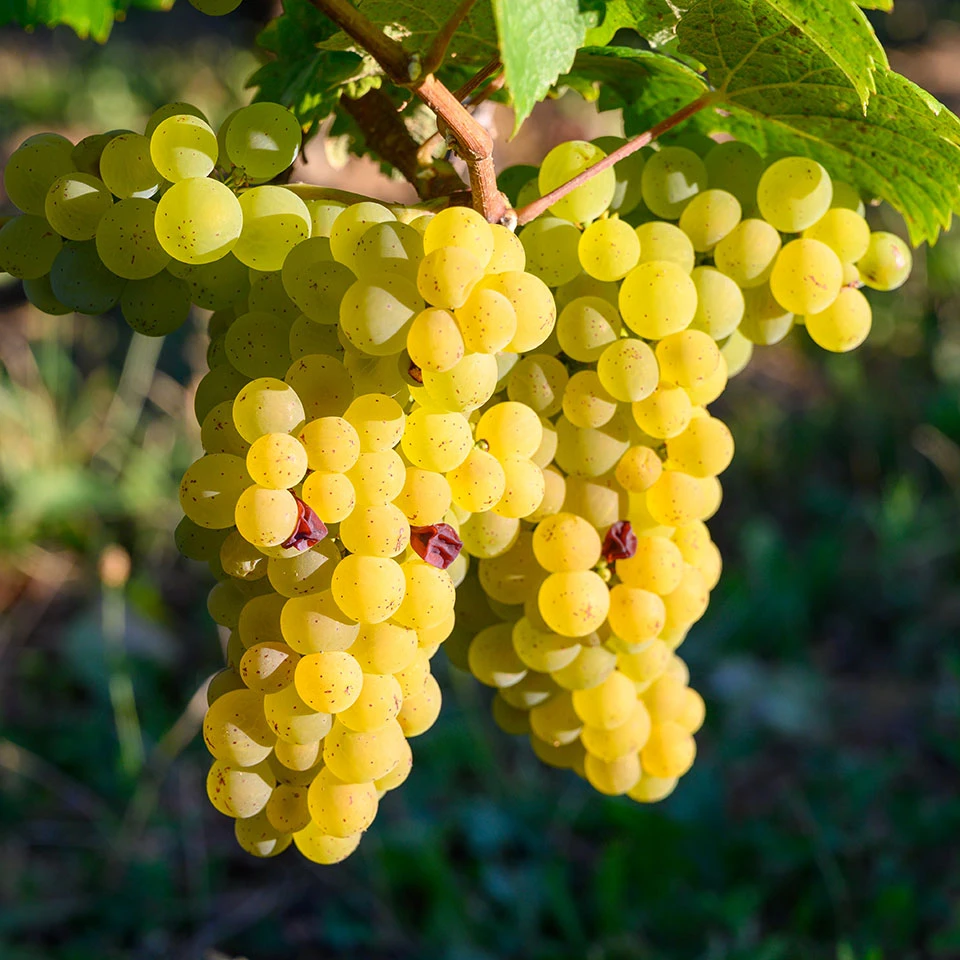
Traminer, known in France as Savagnin Blanc, is a white aromatic grape variety characterised by its intense aromas. Floral aromas of flowers, spices and fruity notes create a complex and sometimes almost disturbingly dense aroma and flavour. Rose, lychee and peach flavours are particularly typical. Traminers are light to golden yellow in colour and usually deliver on the palate what the nose promises, namely full-bodied and aromatic intensity. This is why they are often recommended as dessert wines or as an accompaniment to particularly flavoursome dishes. They often have a low acidity and a high alcohol content, which gives them a certain warmth but also a sluggishness. The grape variety is known in many countries around the world, including Germany, France, Italy, Austria and the USA. The somewhat darker Gewürztraminer plays a special role; although its genetics are almost identical, its flavour is even more extreme with dense rose and lychee aromas.
Frequently asked questions (FAQ) about Traminer / Savagnin Blanc

What does Savagnin Blanc (Traminer) actually taste like?

That depends very much on the style of vinification! There are two different worlds here:
The "Ouillé" style (topped up/floral): If it is matured reductively (without much oxygen) like a modern white wine, it tastes fresh, citrusy, of white flowers, green apple and often has a distinctive, stony minerality. The oxidative style (sous voile/vin jaune): Here the wine matures under a layer of yeast flor. The result is spectacular: aromas of walnut, curry, saffron, dried fruit and salted lemon.

Is Savagnin Blanc as aromatic as a Gewürztraminer?

No, and that is the most important misunderstanding! Savagnin Blanc is not perfumed (no roses or lychees). It is rather "sparse" in the fruit, but enormously structured, with a lot of pull on the palate and a vibrant acidity. It impresses with its mouthfeel and depth, not with superficial fruit bombs.

How are acidity and body characterised in Traminer / Savagnin Blanc?

Savagnin is one of the grape varieties with a very high natural acidity. This gives it an enormous backbone ("nerve"). The body is usually medium to full-bodied, but never appears fat due to the acidity, but rather wiry and athletic.

In which regions does the Savagnin Blanc grape variety grow best?

The undisputed home of world-class quality is the Jura in France.
The grape variety is celebrated here. Historically, the variety (probably) originates from the area around Tramin (South Tyrol), hence the name. In Germany (Baden/Palatinate), Switzerland (Heida/Païen in Valais) and Austria, too, there are more and more winegrowers who are cultivating the "original Traminer".

Why is there so much confusion about the name "Traminer" or "Savagnin"?

Because Traminer is one of the oldest cultivated vines (it is a parent of Pinot Noir and Sauvignon Blanc, for example!). Over the centuries, countless mutations have been created:

  • Savagnin Blanc: The original form (white, acidic).
  • Gewürztraminer: The aromatic mutation (reddish berries, intensely fragrant).
  • Gelber Traminer: An intermediate form.
    Today, if a label (outside the Jura) only says "Traminer", you have to look closely to see which clone is meant.

What climate does Traminer / Savagnin Blanc need for optimum results?

It loves a cool climate. As Savagnin ripens late, it needs a long autumn to achieve full physiological ripeness without the acidity dropping. It likes cool nights to retain its tension.

What is the ultimate food pairing for a Savagnin Blanc?

For the oxidative style (Jura style), there is a legendary combination: Comté cheese (ideally matured for 24 months). The nutty flavours of the wine blend perfectly with the cheese.
Savagnin is also the perfect partner for:

  • Chicken in morel cream sauce (Coq au Vin Jaune).
  • Dishes with curry or Asian spices.
  • Classic, floral Savagnin goes perfectly with freshwater fish (trout) or cheese fondue.

Which glass should I use for a Traminer / Savagnin Blanc?

Put away the narrow Riesling goblets. Savagnin needs air!

  • For the fresh style: a medium-sized universal glass or Chardonnay glass.
  • For the oxidative style / Vin Jaune: A large-volume Burgundy glass. The complex flavours must be allowed to develop.

What is the ideal drinking temperature for a Savagnin Blanc?

Please do not serve ice cold!

  • 10-12 °C for the fresh varieties.
  • 13-15 °C for mature or oxidised wines (Vin Jaune). Too cold and the nutty nuances are lost.

How does Savagnin Blanc differ from Chardonnay?

Both often grow side by side in the Jura. Chardonnay is usually rounder, smoother and more fruity (peach, melon). Savagnin is edgier, wilder, more acidic and often has a more savoury, almost salty component that Chardonnay lacks.

Do you have to decant a Traminer / Savagnin Blanc?

Young, fresh Savagnins benefit from a little air (carafe: 30 minutes).
A Vin Jaune from the Savagnin grape variety should - and this is no joke - ideally be opened a day before drinking. It is used to oxygen and does not collapse but blossoms.

You can find information on other grape varieties here.

Yout cart is empty.
Added to shopping cart
Subtotal
Go to shopping cart

Prices incl. VAT plus shipping costs.