Verdicchio grape variety

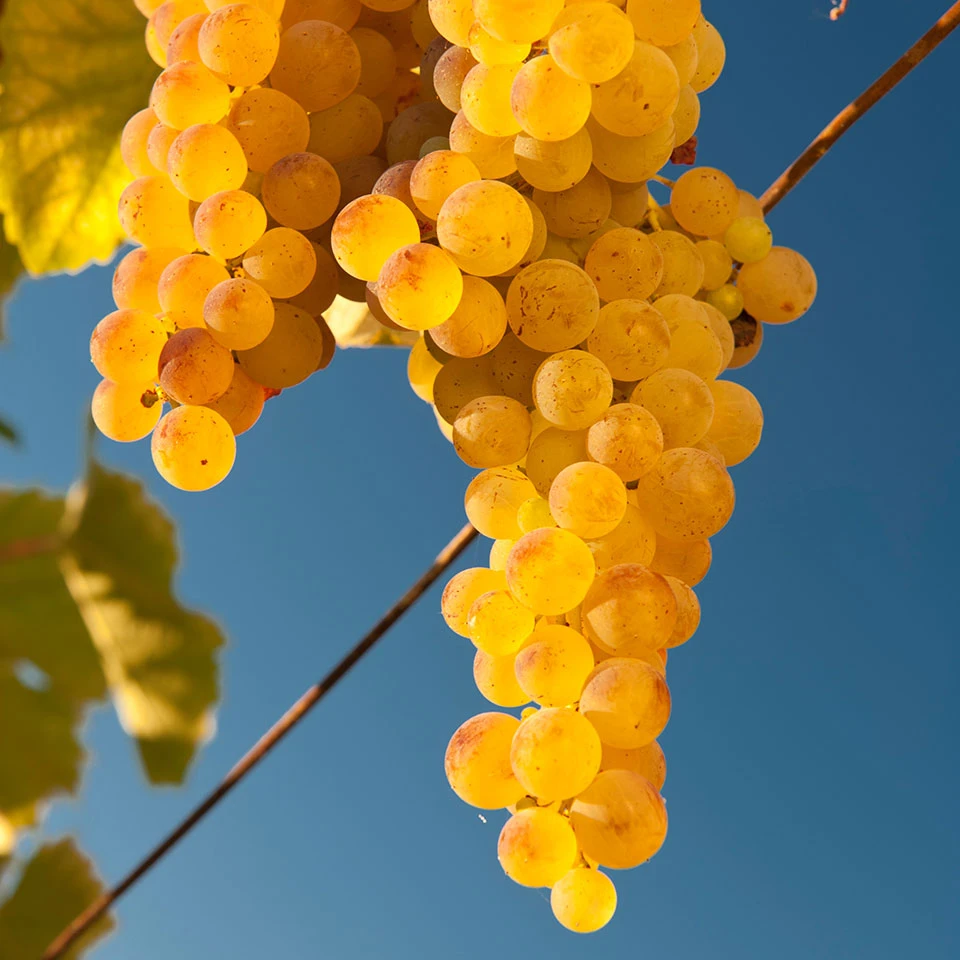
Verdicchio is a very old white grape variety from Italy, which is mainly grown in central Italy. The grapes produce dry to semi-dry white wines with a light yellow colour and a fresh, fruity taste. The flavours are reminiscent of green apples, pears, citrus fruits and hay meadows. Depending on the ageing process, notes of almonds, honey and minerals can also be added. Verdicchio wines often have a distinctly strong acidity and are also suitable for sparkling wines. They are ideal as an accompaniment to fish dishes, seafood, salads and light starters. Verdicchio wines have become increasingly well-known and popular in recent years and are among the top white wines in Italy.
Frequently asked questions (FAQ) about Verdicchio wine

How can the typical flavour profile of the Verdicchio grape variety be described?

Verdicchio is famous for its freshness and elegance. Typical flavours include citrus fruit, green apple and white peach. What makes it unmistakable, however, is a fine herbal note (often reminiscent of sage or thyme) and a very characteristic aftertaste of bitter almonds.

What is the structure of the Verdicchio grape variety in terms of acidity and body?

A wine made from the Verdicchio grape has a pronounced, racy acidity that gives it enormous freshness. At the same time, the variety has a high proportion of extract, which means that the wine can have an amazing amount of body, structure and an almost oily texture on the palate. It never seems thin, but always present.

Is the Verdicchio grape variety more of a light summer wine or a powerful accompaniment to food?

Verdicchio can do both! As a young wine from the stainless steel tank, it is a wonderfully sparkling aperitif. As a "Riserva" or aged in wooden barrels, however, Verdicchio develops a strength and depth that makes it one of the most serious white wines for fine dining.

Where in Italy does the Verdicchio grape variety find its ideal conditions?

Verdicchio is native to the Marche region on the Italian Adriatic coast. There are two main areas here: The better-known Verdicchio dei Castelli di Jesi, which is closer to the sea, and the smaller, higher Verdicchio di Matelica, which is characterised by a more continental climate.

What food pairing does a sommelier recommend for the Verdicchio grape variety?

Verdicchio is the ultimate fish wine! It goes perfectly with seafood, grilled fish or the classic Marche fish soup, brodetto. Thanks to its structure, a mature Verdicchio also harmonises fantastically with white meat (veal, poultry) or dishes with truffles and mushrooms.

How does the Verdicchio grape variety differ from a typical Pinot Grigio?

Compared to the usually rather light and neutral Pinot Grigio, Verdicchio has a much stronger character, is richer in acidity and more complex. While Pinot Grigio is often "simply refreshing", Verdicchio offers a real flavour experience with rough edges.

Is there a relationship between the Verdicchio grape variety and other grape varieties?

This is an exciting fact for connoisseurs: DNA analyses have shown that Verdicchio is identical to the Trebbiano di Lugana (also known as Turbiana) variety from Lake Garda. Nevertheless, the wines taste completely different due to the different terroir - the Verdicchio from the Marche region usually has a firmer and more mineral flavour.

What's the story behind the famous ampoule bottle of the Verdicchio grape variety?

In the 1950s, Verdicchio was often bottled in bottles shaped like an antique amphora. Today, this style has become rather rare, as most quality winemakers prefer classic mallet bottles or Burgundy bottles to signal that the contents of the Verdicchio are a serious terroir wine and not just a holiday souvenir.

Discover more grape varieties for white wines.

Chasselas

Chasselas is a white grape variety that is mainly cultivated in Switzerland, particularly in the Vaud region. It is also found in France and in Germany and Austria under the name Chasselas.

Read more

Chenin Blanc

Chenin Blanc is a white grape variety that originated in the French Loire Valley and is known for its versatility. Chenin can be vinified both dry and sweet, still and sparkling. Its flavour is characterised by high acidity and lots of fruit such as green apple, pear or quince, often complemented by honey notes. Depending on the terroir and vinification, the grape can also show both mineral and floral tones.

Read more

Elbling

Elbling is a very old white grape variety with a long history that is mainly cultivated in Germany, particularly along the upper Moselle. The wines are light, fresh and sparkling, with a strong, marked acidity and low alcohol content - which makes Elbling particularly interesting as a base wine for sparkling wines.

Read more

Furmint

Hardly any other grape variety is as closely associated with a country and its most famous wine as Furmint is with Hungary and Tokaj. The white variety is considered the heart and soul of the legendary sweet wine - and is also experiencing a remarkable renaissance as a dry wine.

Read more

Gewürztraminer

Hardly any other grape variety polarises as much as Gewürztraminer. Its name alone reveals what it is all about: intensity, spice and an unmistakable spectrum of flavours ranging from lychee, bitter orange and rose petals to marzipan. It is not a subtle wine, nor is it meant to be. Some like it, others reject the cloud of flavours.

Read more

Kisi

Kisi is one of the oldest indigenous grape varieties in Georgia - and yet it had almost disappeared. It was not until the 1990s that it was rediscovered and systematically recultivated in the Kakheti region. Today, it is regarded as a symbol of the renaissance of Georgian viticulture and combines tradition, originality and modern elegance.

Read more

Discover more grape varieties for red wines.

Aglianico

Aglianico is one of the oldest grape varieties from southern Italy. The first written evidence of its cultivation dates back to the 16th century. It produces high-quality wines with a deep ruby to garnet red colour and a rich, multi-layered bouquet.

Read more

Barbera

Barbera is the most widely cultivated red grape variety in the northern Italian region of Piedmont - but is also widespread in Lombardy and Emilia-Romagna. It produces fruity, accessible red wines with an intense ruby red colour and aromas of red fruits, cherries, plums and spices. They are medium-bodied on the palate, with moderate tannins and lively acidity even when fully ripe.

Read more

Carmenère

Carmenère gilt als die "Signature Grape" Chiles. Fast die Hälfte der weltweiten Bestände wachsen dort. Ursprünglich stammt die Sorte aber aus Bordeaux, wo vor der Reblauskatastrophe weit verbreitet war. 

Read more

Gamaret

Gamaret is a new Swiss variety from the 1970s. The red variety is mainly cultivated in Valais and Vaud. The grape is a cross between Gamay and Reichensteiner and was developed for the particular challenges of the Swiss climate.

Read more

Lagrein

Lagrein is the oldest documented grape variety in South Tyrol - first mentioned in 1318. Its name is probably derived from Vallagarina, the southern Adige Valley.

Read more

Mourvèdre/Monastrell

Mourvèdre is a red grape variety that is mainly grown in the south of France and Spain, where it is known as Monastrell. The wines are deep-coloured, medium to full-bodied, with high, often rough tannins when young and moderate to high acidity.

Read more

You can find information on other grape varieties here.

Yout cart is empty.

Added to shopping cart
Subtotal
Go to shopping cart

Prices incl. VAT plus shipping costs.