Grape variety
Saperavi

Saperavi means "dyer" - and it is indeed one of the few red wine varieties whose skin and flesh are coloured. This explains the almost inky black colour and intense personality of its wines. According to legend, its history could go back more than 2,500 years, but it is certain that it was already widespread in the 17th century. Originally from Kakheti in eastern Georgia, it is still vinified there in the traditional qvevri - large clay vessels that are buried in the ground. This ancient method gives the wines density, strength and an unmistakable flavour. Typical flavours include black cherry, blackberry and plum, accompanied by dark chocolate, smoke and spices. The wines are deep, tannic and surprisingly long-lasting thanks to their fresh acidity. In good years, they mature for decades. In addition to the archaic Qvevri wines, modern vinified variants are increasingly being produced today, often matured in wood, softer and more international in style - but always with an unmistakable origin.

Order Saperavi wines online

Filter & Sort
Wine style
Country
Region
Winery
Vintage
Bottle size
Rating
Special features
Show results
Teliani Valley Winery 97 Saperavi Unfiltered 2022
Georgia
15.25 €
0.75 l,  20.33 €/l
in stock
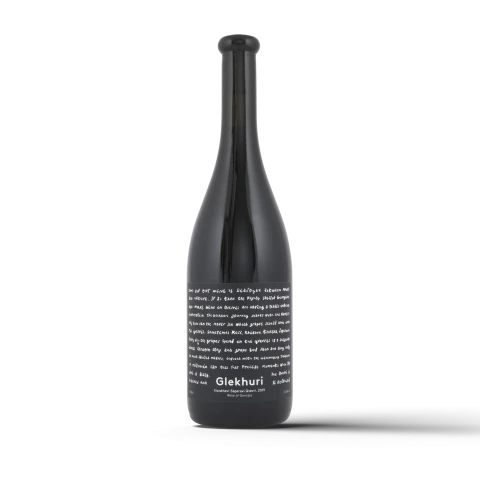
Teliani Valley Glekhuri Kisiskhevi Saperavi Qvevri 2019
Georgia
19.95 €
0.75 l,  26.60 €/l
in stock

Frequently asked questions (FAQ) about Saperavi wine

What does a classic Saperavi taste like and what flavours are typical?

A Saperavi is a powerhouse. The nose is dominated by intense notes of dark berries such as blackberries and blackcurrants. These are often accompanied by spicy hints of liquorice, tobacco, leather and sometimes a hint of dark chocolate or smoky notes.

What structure in terms of tannin and acidity characterises Saperavi?

Saperavi has an impressive structure. It has a high tannin content (tannins), which provides plenty of "grip" on the palate. What makes it special, however, is its lively acidity. Despite its fullness and power, this combination never makes the wine clumsy, but gives it a fascinating freshness and enormous elegance.

Why is the colour of Saperavi so exceptionally dark?

This is due to the nature of the Saperavi grape. As it is one of the few teinturier varieties, the colour pigments (anthocanes) are found in both the skin and the juice. If you hold a glass of Saperavi up to the light, you will notice that it is almost opaque purple to deep black in colour.

How does Saperavi differ from international varieties such as Cabernet Sauvignon or Syrah?

Although it has the vigour of Cabernet Sauvignon and the spiciness of Syrah, Saperavi has its own identity. It often appears "wilder" and more original. Its distinctive acidity structure clearly distinguishes it from many overseas wines, which makes Saperavi very drinkable despite its opulence.

What is the difference between a Saperavi from a steel tank and one from a Qvevri?

That is a question of style. Saperavi matured in stainless steel tanks often appears more modern, fruity and clean. A Saperavi aged in qvevri (the traditional Georgian amphora), on the other hand, is more original, earthier and often has even more massive tannins, as the wine is left on the skins (the skins and seeds) for a long time.

Where does the Saperavi grape variety originally come from?

The home of Saperavi is Georgia, the "cradle of viticulture". The variety finds its perfect form particularly in the Kakheti region in the east of the country. It has been cultivated and appreciated there for thousands of years.

What influence do the climate and soil have on the character of Saperavi?

Saperavi is a very hardy variety that can even withstand extreme frost. However, it thrives best in regions with warm summers, where it reaches its full phenolic ripeness (the ripeness of the seeds and skins). The calcareous and iron-rich clay soils of Kakheti give the Saperavi a mineral depth and concentration.

Which dishes harmonise particularly well with a strong Saperavi?

Due to its structure, Saperavi requires equal partners on the plate. It is the perfect accompaniment to grilled dark meat (lamb, beef), game dishes or hearty stews. Saperavi is also a revelation with spicy mountain cheese or traditional Georgian dishes with walnut sauces.

What is the ideal drinking temperature for a wine from Saperavi?

To tame the power and complex flavours, I recommend a temperature of 16 to 18 °C for Saperavi. Served too warm, the alcohol could be too dominant; too cold and the tannins appear brittle.

Should a Saperavi be decanted before drinking?

Absolutely! Young, powerful Saperavi wines in particular benefit enormously from air. I recommend decanting the wine into a carafe at least one to two hours before drinking. This makes it rounder and more accessible.

Discover more grape varieties for red wines.

Carmenère

Carmenère gilt als die "Signature Grape" Chiles. Fast die Hälfte der weltweiten Bestände wachsen dort. Ursprünglich stammt die Sorte aber aus Bordeaux, wo vor der Reblauskatastrophe weit verbreitet war. 

Read more

Aglianico

Aglianico is one of the oldest grape varieties from southern Italy. The first written evidence of its cultivation dates back to the 16th century. It produces high-quality wines with a deep ruby to garnet red colour and a rich, multi-layered bouquet.

Read more

Grenache

Grenache is a red grape variety grown mainly in southern France and Spain (where it is known as Garnacha). The wines are typically medium to full-bodied, with low tannins and high acidity.

Read more

Montepulciano

Montepulciano is a red grape variety that is mainly grown in central Italy. Its wines are full-bodied, rich in extract, with strong alcohol and moderate acidity. They typically show flavours of dark fruits such as plums and cherries, often complemented by spicy or tobacco notes.

Read more

Mourvèdre/Monastrell

Mourvèdre is a red grape variety that is mainly grown in the south of France and Spain, where it is known as Monastrell. The wines are deep-coloured, medium to full-bodied, with high, often rough tannins when young and moderate to high acidity.

Read more

Pinotage

Pinotage is a cross between Hermitage (a synonym for Cinsault) and Pinot Noir, which originated in South Africa in the 1920s. The red grape variety produces powerful wines with high tannins and moderate acidity. It is early-ripening and typically displays red berry fruit flavours, which are complemented by spicy notes and often an unmistakable smoky or smoked bacon aroma.

Read more

Discover more grape varieties for white wines.

Macabeo

Macabeo, also known as Viura in the Rioja region, is a white grape variety that is mainly grown in northern Spain. The wines are generally light to medium-bodied, with moderate acidity and a fresh, fruity flavour with floral notes.

Read more

Muscat/Muskateller

Muscat, also known as Muscat or Moscato, is not so much a single grape variety as a fairly large family of grape varieties that is widespread throughout the world and includes both wine grapes and table grapes.

Read more

Riesling

Riesling is one of the best-known white grape varieties and is cultivated all over the world - first and foremost in Germany, of course. It is more flexible and versatile than almost any other grape.

Read more

Silvaner

Silvaner is a white grape variety that originated in Austria, but is now most widespread in Germany, where it plays an important role alongside Riesling. Other noteworthy stocks can still be found in Alsace in France. The wines are known for their freshness, minerality and sometimes strong, earthy character.

Read more

Traminer/Savagnin Blanc

Traminer, known in France as Savagnin Blanc, is a white aromatic grape variety characterised by its intense aromas. Floral aromas of flowers, spices and fruity notes result in a complex and sometimes almost disturbingly dense aroma and flavour.

Read more

Trebbiano/Ugni Blanc

The Italian Trebbiano is one of the most widely cultivated grape varieties in the world and is known for its lively acidity and freshness. The wines have a light, straw-yellow colour and a light, fresh aroma of citrus fruits and apples.

Read more

Here you can find information on other grape varieties.

Yout cart is empty.

Added to shopping cart
Subtotal
Go to shopping cart

Prices incl. VAT plus shipping costs.