Müller-Thurgau grape variety

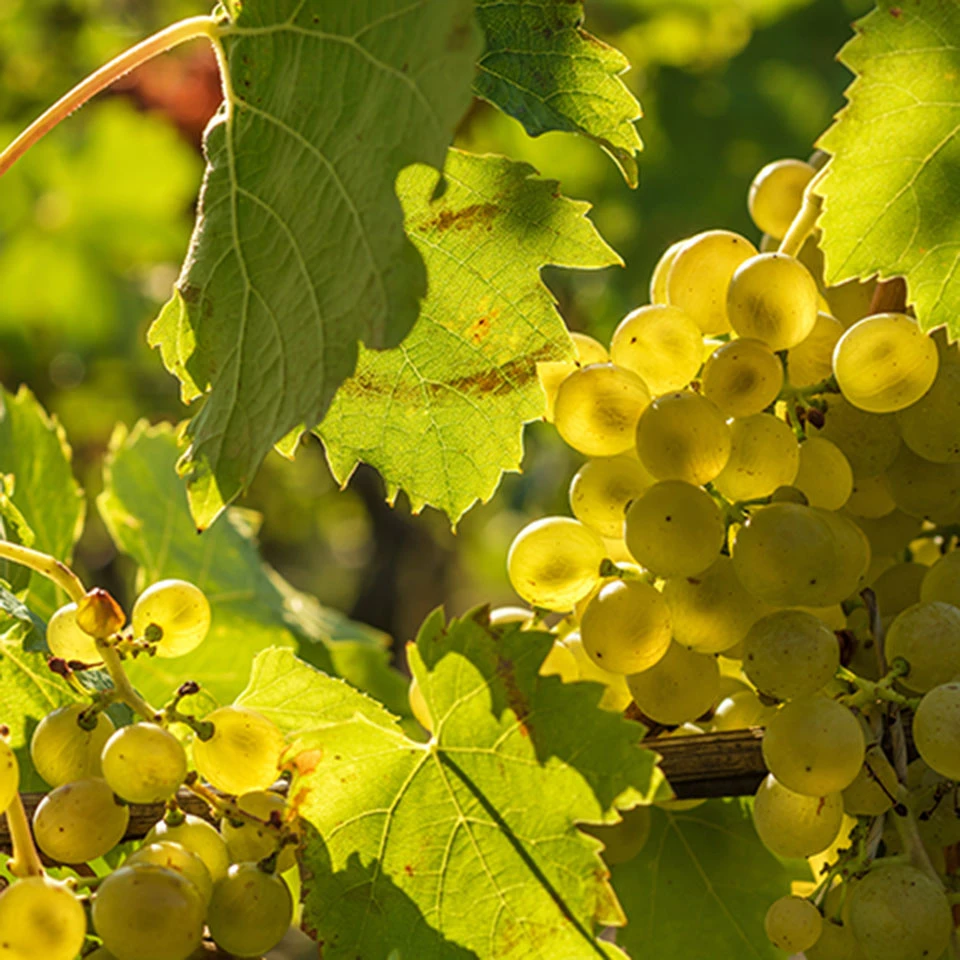
Müller-Thurgau is a white variety that is mainly cultivated in Germany and Austria. The wines are light to medium-bodied, with moderate acidity and a strong flavour, usually with a typical muscat note. Müller-Thurgau wines are usually dry or semi-dry and vinified in steel tanks. The variety is extremely high-yielding, but produces rather insignificant wines if yields are too high. If it is given a little more attention, however, it can produce interesting qualities. For a long time, it was assumed that the parents of the variety were Riesling and Silvaner - hence the synonym Rivaner, which is still sometimes used. Today, the true origin is clear: Riesling x Madeleine Royal.
Frequently asked questions (FAQ) about Müller-Thurgau wine

How can the typical flavour of the Müller-Thurgau grape variety be described?

Müller-Thurgau is a very accessible grape variety. It usually has a delicate flavour of green apple, lemon and fresh herbs. However, its most distinctive feature is its fine muscat note (a slightly spicy, floral fragrance), which gives it a very charming and inviting character.

What is the structure of the Müller-Thurgau grape variety in terms of acidity?

Compared to Riesling, Müller-Thurgau has a much milder acidity. This makes it soft and supple on the palate. It is often the first choice for wine lovers who are sensitive to too much acidity, as it is very digestible and harmonious.

Does the Müller-Thurgau grape variety tend to be vinified dry or sweet?

Müller-Thurgau can be found in all flavours. While it was often marketed as semi-sweet in the past, the trend today is strongly in favour of dry wines. Under the name "Rivaner", it is usually vinified in a particularly fresh, dry and tangy flavour.

Which parent grape varieties are found in the Müller-Thurgau grape variety?

For a long time, it was thought to be a cross between Riesling and Silvaner (hence the name Rivaner). However, modern genetic analyses have shown that Müller-Thurgau is a cross between Riesling and the Madeleine Royale variety.

Who actually bred the Müller-Thurgau grape variety?

The vine was bred in 1882 by Professor Hermann Müller from the Swiss canton of Thurgau at the Geisenheim Research Centre. He wanted to combine the aromatic advantages of Riesling with the early ripeness and yield security of other varieties.

What food pairing is recommended for a wine made from the Müller-Thurgau grape variety?

Müller-Thurgau is an all-rounder for light cuisine. It goes perfectly with snack platters, summer salads, steamed fish or light-coloured poultry. It is also a great accompaniment to moderately flavoured Asian dishes.

What is the difference between Müller-Thurgau and Rivaner?

There is no difference in purely biological terms - they are the same grape variety. However, the name Rivaner is often used for wines that are particularly dry, young and lively, to distinguish them from the image of the more sedate, classic Müller-Thurgau.

How does the Müller-Thurgau grape variety differ from Riesling in terms of flavour?

The main difference lies in the acidity and the ripening time. Müller-Thurgau ripens much earlier than Riesling, has less acidity and shows this typical Muscat-like spiciness, while Riesling is more characterised by peach aromas and a steely freshness.

Discover more grape varieties for white wines.

Riesling

Riesling is one of the best-known white grape varieties and is cultivated all over the world - first and foremost in Germany, of course. It is more flexible and versatile than almost any other grape.

Read more

Silvaner

Silvaner is a white grape variety that originated in Austria, but is now most widespread in Germany, where it plays an important role alongside Riesling. Other noteworthy stocks can still be found in Alsace in France. The wines are known for their freshness, minerality and sometimes strong, earthy character.

Read more

Verdicchio

Verdicchio is a very old white grape variety from Italy, which is mainly cultivated in central Italy. The grapes produce dry to semi-dry white wines with a light yellow colour and a fresh, fruity taste. The flavours are reminiscent of green apples, pears, citrus fruits and hay meadows.

Read more

Welschriesling

Welschriesling is a white grape variety that is mainly cultivated in Austria and the wider Danube region of the former Austro-Hungarian Empire. Despite its name, it is not related to Riesling.

Read more

Gewürztraminer

Hardly any other grape variety polarises as much as Gewürztraminer. Its name alone reveals what it is all about: intensity, spice and an unmistakable spectrum of flavours ranging from lychee, bitter orange and rose petals to marzipan. It is not a subtle wine, nor is it meant to be. Some like it, others reject the cloud of flavours.

Read more

Pinot Gris

Pinot Gris, also known as Pinot Gris or Pinot Grigio, is a white grape variety grown in many wine regions such as France, Italy and Germany.

Read more

Discover more grape varieties for red wines.

Barbera

Barbera is the most widely cultivated red grape variety in the northern Italian region of Piedmont - but is also widespread in Lombardy and Emilia-Romagna. It produces fruity, accessible red wines with an intense ruby red colour and aromas of red fruits, cherries, plums and spices. They are medium-bodied on the palate, with moderate tannins and lively acidity even when fully ripe.

Read more

Portugieser

Portugieser, also known as Blauer Portugieser, is a red grape variety that originates from former Austro-Hungarian territories in north-west Slovenia and is now mainly cultivated in Germany and Austria. However, it has nothing to do with the country it bears in its name.

Read more

Schwarzriesling

Schwarzriesling, also known as Pinot Meunier or Müllerrebe, is a red grape variety that is mainly native to France and Germany. In France, it plays an important role as a traditional component of the cuvée in Champagne in particular, while in southern Germany it is also often found as a rather simple, single-varietal still wine.

Read more

Trousseau Noir/Bastardo

Trousseau Noir is a red grape variety originating from the French Jura. While it only covers small areas there today, it now plays a much more relevant role on the Iberian Peninsula under its synonym Bastardo.

Read more

Zinfandel

The Zinfandel grape variety is mainly grown in California and produces powerful, extremely powerful and dense red wines, usually with a high alcohol content. The flavour is characterised by aromas of ripe, dark berries and fruits such as blackberry, cherry and plum as well as spicy notes of cinnamon, cloves, chocolate and pepper.

Read more

Zweigelt

Zweigelt is a highly successful new red variety from Austria, whose parents are Blaufränkisch and St. Laurent. It produces violet/red wines with a deep colour and intense aromas such as cherry, red and blackcurrant or blackberry, as well as spicy notes such as vanilla or cinnamon.

Read more

Here you will find information on other grape varieties.

Yout cart is empty.

Added to shopping cart
Subtotal
Go to shopping cart

Prices incl. VAT plus shipping costs.