Home Watch Compare Cart Account

Trousseau Noir / Bastardo grape variety

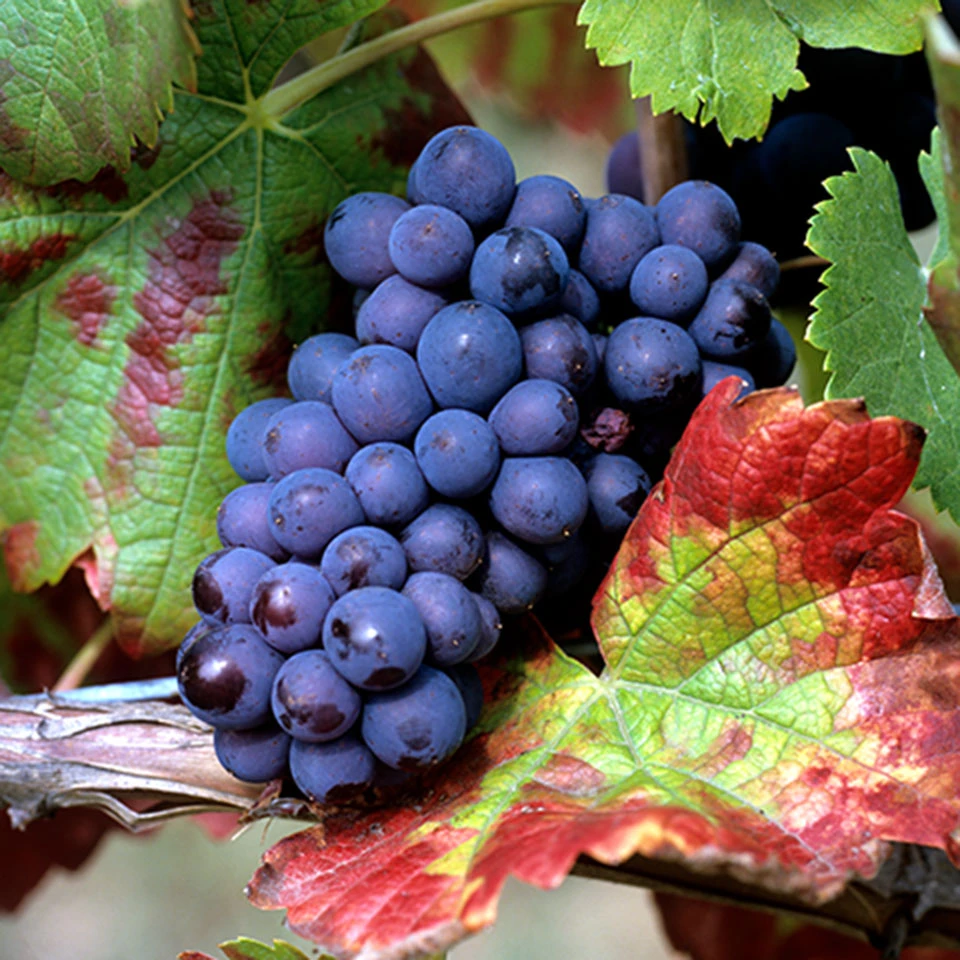
Trousseau Noir is a red grape variety originating from the French Jura. While it only covers small areas there today, it now plays a much more relevant role on the Iberian Peninsula - under its synonym Bastardo. Especially in Portugal, where it is cultivated on over a thousand hectares and can be found in port wine and Madeira cuvees as well as in the famous Marche rosé Mateus.
Frequently asked questions (FAQ) about Trousseau Noir / Bastardo wine

How can the typical flavour profile of the Trousseau Noir / Bastardo grape variety be described?

Trousseau Noir / Bastardo is characterised by a very distinctive aroma. You will primarily find notes of red forest berries, wild strawberries and sour cherries. What makes it really exciting, however, are the secondary notes: Forest floor, damp leaves, white pepper and often a very subtle, noble bitter note reminiscent of tea leaves.

What is the structure of Trousseau Noir / Bastardo in terms of tannin, acidity and alcohol?

This grape variety is a bit of a paradox. Trousseau Noir / Bastardo has a high natural acidity and considerable alcohol potential, as it concentrates a lot of sugar in the berries. The tannins are rather fine-grained and present, but rarely aggressive. Despite its often light colour, it is powerful and structured on the palate.

Why is the colour of the Trousseau Noir / Bastardo grape variety often so light?

The skins of the Trousseau Noir / Bastardo are rather thick, but contain comparatively little colouring (anthocyanins). This is why the wine often looks more like a strong rosé or a mature Pinot Noir in the glass - but don't let this fool you, the aromatic intensity is enormous!

Where does the Trousseau Noir / Bastardo grape variety originally come from?

The cradle of Trousseau Noir lies in the east of France, in the picturesque Jura region. However, under the name Bastardo, it also has a centuries-old tradition on the Iberian Peninsula, particularly in Portugal (Douro and Madeira) and in Spain (under the name Merenzao in Galicia).

What demands does the Trousseau Noir / Bastardo grape variety place on the climate?

In contrast to its Jura neighbour Poulsard, Trousseau Noir / Bastardo needs a lot of warmth and sun to fully ripen. It sprouts early and is therefore susceptible to frost, but needs a warm, gravelly or chalky soil that retains heat so that it can develop its complex flavour.

Is the Trousseau Noir / Bastardo grape variety also grown in the "New World"?

Yes, and with growing success! Especially in California (e.g. in the Russian River Valley), young, innovative winegrowers have discovered Trousseau Noir / Bastardo for themselves. They appreciate the vine's ability to retain its freshness and elegance even in warm weather.

What food goes best with a Trousseau Noir / Bastardo wine?

Trousseau Noir / Bastardo is an absolute favourite in gastronomy. It harmonises fantastically with earthy dishes: Mushroom risotto, game birds, pâtés or lightly smoked ham. Its acidity also makes it a brilliant partner for the famous Comté cheese from its native Jura.

What is the ideal drinking temperature for the Trousseau Noir / Bastardo grape variety?

I recommend serving this wine a little cooler than a heavy powerhouse. At 14 to 16 degrees Celsius, the fine fruit and spice flavours of Trousseau Noir / Bastardo come into their own without the alcohol being too dominant.

How does the Trousseau Noir / Bastardo grape variety differ from Pinot Noir?

Although both are bright and elegant, Trousseau Noir / Bastardo is usually spicier, wilder and often higher in alcohol than Pinot Noir. While Pinot Noir is often loved for its silky elegance, Trousseau has a more "rustic", original edge and often more grip on the palate.

Discover more grape varieties for red wines.

Discover more grape varieties for white wines.

Catarratto

Catarratto is an indigenous white grape from Sicily, Italy. It is one of the most widely cultivated grapes there. Catarratto wines are generally fresh and fruity, with a medium body and good acidity. Typical flavours are citrus fruit, green apple and floral notes, often accompanied by a hint of almond and minerality.

Read more

Elbling

Elbling is a very old white grape variety with a long history that is mainly cultivated in Germany, particularly along the upper Moselle. The wines are light, fresh and sparkling, with a strong, marked acidity and low alcohol content - which makes Elbling particularly interesting as a base wine for sparkling wines.

Read more

Furmint

Hardly any other grape variety is as closely associated with a country and its most famous wine as Furmint is with Hungary and Tokaj. The white variety is considered the heart and soul of the legendary sweet wine - and is also experiencing a remarkable renaissance as a dry wine.

Read more

Kisi

Kisi is one of the oldest indigenous grape varieties in Georgia - and yet it had almost disappeared. It was not until the 1990s that it was rediscovered and systematically recultivated in the Kakheti region. Today, it is regarded as a symbol of the renaissance of Georgian viticulture and combines tradition, originality and modern elegance.

Read more

Müller-Thurgau)

Müller-Thurgau is a white variety that is mainly cultivated in Germany and Austria. The wines are light to medium-bodied, with moderate acidity and a strong flavour, usually with a typical muscat tone. Müller-Thurgau wines are usually dry or semi-dry and vinified in steel tanks.

Read more

Sémillon

Sémillon is a noble white grape variety that originates from France, but has now also found a home in the New World. The wines are known for their fruity flavours and full body. Dry Sémillon wines typically show flavours of lemon or lime, while the sweet and noble sweet varieties have apricot, peach, honey, candied fruit or nutty tones.

Read more

You can find information on other grape varieties here.

Yout cart is empty.

Added to shopping cart
Subtotal
Shipping costs
Total
Go to shopping cart

Prices incl. VAT