Grape variety
Vernatsch

Vernatsch is a grape variety that is just as widespread in South Tyrol as it is in Württemberg, where it is called Trollinger. Its official name is Schiava, which goes back to a historical form of vine training (vineis sclavis) in the time of the Lombards. The original growing area was probably west of Lake Garda. The name Vernatsch is probably derived from Vernaccia, a white wine from Liguria that was highly prized in the Middle Ages. In Tyrol, Vernatsch was already mentioned in Tegernsee records in 1490; whether white or blue varieties were meant at that time is unclear. One thing is certain: Vernatsch has a long, complex history between language, culture and viticulture. Today, the so-called Großvernatsch is cultivated, which corresponds to Trollinger. This name is probably derived from "Tirolinger", as it was first mentioned in 1560. After a deep crisis, in which Vernatsch was cultivated with excess yields and "sold off" as tank goods at very favourable prices, the reputation of the wine, which is actually absolutely contemporary, is recovering. It has depth and structure when you want it to, it does not have strong tannins and the alcohol content also remains discreet. A red wine that is also suitable for white wine drinkers.

Order Vernatsch wines online

Filter & Sort
Wine style
Country
Region
Winery
Vintage
Bottle size
Rating
Special features
Show results
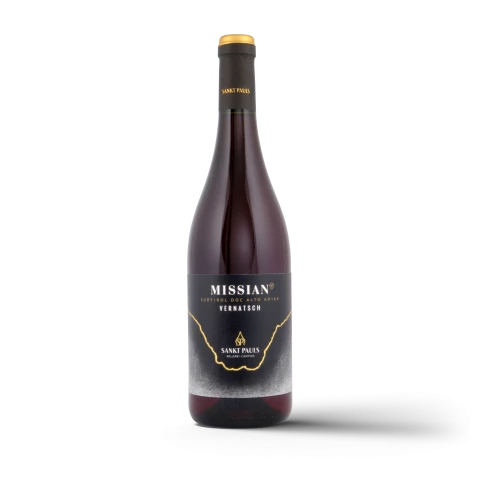
Kellerei Sankt Pauls Missian Vernatsch Südtirol 2024
92 Suckling
Kellerei Sankt Pauls Missian Vernatsch Südtirol 2024
Trentino and Southtirol, Italy
13.30 €
0.75 l,  17.73 €/l
in stock

Frequently asked questions (FAQ) about Vernatsch wine

How can the typical flavour of a Vernatsch wine be described?

A classic Vernatsch is a light-coloured, rather light red wine. It is characterised by its clear fruit, reminiscent of strawberries, raspberries and red cherries. However, the absolute trademark of the Vernatsch grape variety is a fine, delicate bitter almond note on the finish, which gives it its unmistakable character.

What is the structure of tannin and acidity in the Vernatsch grape variety?

Vernatsch is known for its very mild tannins. This makes it soft and supple on the palate. It has a lively but well-integrated acidity that provides freshness. As it also usually has a moderate alcohol content, Vernatsch is never heavy, but always lively.

What are the differences between Vernatsch appellations such as Kalterersee and St. Magdalener?

Kalterersee (from the Vernatsch grape variety) is considered the softest and lightest type, ideal as an aperitif or with a snack. St. Magdalener, on the other hand, is the "king of Vernatsch": it is fuller and more complex, as it is often blended with a small proportion (up to 5%) of the stronger Lagrein variety.

Why is the colour of the Vernatsch grape variety often so light?

This is due to the genetics of the grape. The skin of the Vernatsch grape has fewer colour pigments than Cabernet or Saperavi, for example. This is why a Vernatsch often shines in the glass in a light ruby red colour, sometimes almost reminiscent of a strong rosé.

Where does the Vernatsch grape variety grow best?

The absolute home of Vernatsch is South Tyrol (Italy). It has been grown here since the 16th century. It loves the sunny slopes of the Alpine region, especially around Lake Kaltern, in St. Magdalena near Bolzano and in the Merano region.

What influence does the terroir have on the quality of Vernatsch?

Vernatsch is a reflection of its soil. In St. Magdalena, it grows on loose porphyry and sandy soils, which makes it stronger and more structured. At Lake Kaltern, limestone and gravel soils ensure a particularly soft, silky and very drinkable style of the Vernatsch grape variety.

What is the perfect food pairing for a wine made from the Vernatsch grape variety?

Vernatsch is the ultimate accompaniment to Alpine cuisine! It goes perfectly with a South Tyrolean Marende (snack) with speck, Schüttelbrot and savoury cheese. But Vernatsch is also an excellent choice with light meat such as veal, poultry or even fried fish, as it does not overpower the food.

Is Vernatsch actually the same as the German Trollinger?

Yes, botanically speaking, the Vernatsch grape variety is identical to the Württemberg Trollinger. However, they often differ significantly in terms of style: while Trollinger in Germany is often very light and sometimes with a subtle residual sweetness, South Tyrolean Vernatsch is usually consistently dry, full of character and characterised by its terroir.

How does Vernatsch differ from Lagrein?

This is the South Tyrolean contrast programme! While Lagrein is dark, powerful, tannic and chocolaty, Vernatsch stands for lightness, bright fruit and elegance. If Lagrein is the "evening dress", then Vernatsch is the "comfortable linen shirt".

Discover more grape varieties for red wines.

Trollinger

Trollinger is a red grape variety from southern Germany, particularly from the Württemberg region. The wines have a light, fruity flavour and are usually light and sparkling.

Read more

Trousseau Noir/Bastardo

Trousseau Noir is a red grape variety originating from the French Jura. While it only covers small areas there today, it now plays a much more relevant role on the Iberian Peninsula under its synonym Bastardo.

Read more

Zinfandel

The Zinfandel grape variety is mainly grown in California and produces powerful, extremely powerful and dense red wines, usually with a high alcohol content. The flavour is characterised by aromas of ripe, dark berries and fruits such as blackberry, cherry and plum as well as spicy notes of cinnamon, cloves, chocolate and pepper.

Read more

Gamaret

Gamaret is a new Swiss variety from the 1970s. The red variety is mainly cultivated in Valais and Vaud. The grape is a cross between Gamay and Reichensteiner and was developed for the particular challenges of the Swiss climate.

Read more

Carmenère

Carmenère gilt als die "Signature Grape" Chiles. Fast die Hälfte der weltweiten Bestände wachsen dort. Ursprünglich stammt die Sorte aber aus Bordeaux, wo vor der Reblauskatastrophe weit verbreitet war. 

Read more

Barbera

Barbera is the most widely cultivated red grape variety in the northern Italian region of Piedmont - but is also widespread in Lombardy and Emilia-Romagna. It produces fruity, accessible red wines with an intense ruby red colour and aromas of red fruits, cherries, plums and spices. They are medium-bodied on the palate, with moderate tannins and lively acidity even when fully ripe.

Read more

Discover more grape varieties for white wines.

Verdicchio

Verdicchio is a very old white grape variety from Italy, which is mainly cultivated in central Italy. The grapes produce dry to semi-dry white wines with a light yellow colour and a fresh, fruity taste. The flavours are reminiscent of green apples, pears, citrus fruits and hay meadows.

Read more

Viognier

Viognier is a white grape variety that originally comes from the Rhône region in south-east France, but is now cultivated in many countries. It produces complex and aromatically dense wines with a strong alcohol content and moderate acidity.

Read more

Macabeo

Macabeo, also known as Viura in the Rioja region, is a white grape variety that is mainly grown in northern Spain. The wines are generally light to medium-bodied, with moderate acidity and a fresh, fruity flavour with floral notes.

Read more

Catarratto

Catarratto is an indigenous white grape from Sicily, Italy. It is one of the most widely cultivated grapes there. Catarratto wines are generally fresh and fruity, with a medium body and good acidity. Typical flavours are citrus fruit, green apple and floral notes, often accompanied by a hint of almond and minerality.

Read more

Elbling

Elbling is a very old white grape variety with a long history that is mainly cultivated in Germany, particularly along the upper Moselle. The wines are light, fresh and sparkling, with a strong, marked acidity and low alcohol content - which makes Elbling particularly interesting as a base wine for sparkling wines.

Read more

Garganega

Garganega is a white grape variety that is mainly grown in the Italian region of Veneto. As little known as the variety is, as famous is the wine made from it: Soave. It is usually light to medium-bodied, with moderate acidity and plenty of finesse. The wines show flavours of citrus fruits, green apples, pears and flowers, complemented by almond and mineral notes that come from the volcanic terroir.

Read more

Here you can find information on other grape varieties.

Yout cart is empty.

Added to shopping cart
Subtotal
Go to shopping cart

Prices incl. VAT plus shipping costs.