Buy wines from Brancaia Winery


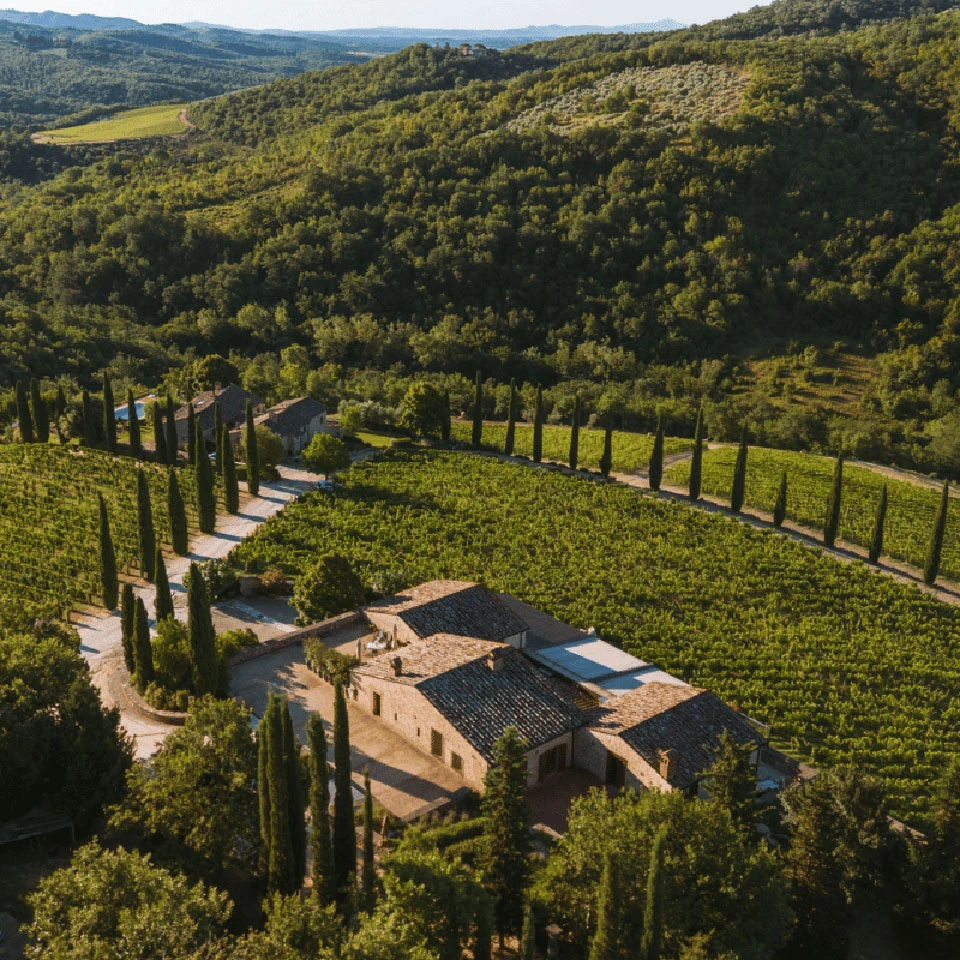
Brancaia was founded in 1981 by Bruno and Brigitte Widmer in Castellina in Chianti and is now led by their daughter, Barbara Widmer. Around 80 hectares of organic vineyards in Castellina, Radda and the Maremma bring together different facets of Tuscany – from the Sangiovese of ‘Chianti Classico’ to the great cuvées ‘Il Blu’ and ‘Ilatraia’.
The story of Brancaia began rather by chance. During a Christmas visit to Tuscany in 1980, Bruno and Brigitte Widmer discovered a hill near Castellina in Chianti, bathed in sunlight as it emerged from the morning mist. A year later, the Swiss couple bought the property: a house in need of renovation, 20 hectares of land and four hectares of vines. Within a few years, the property – originally intended as a holiday home – developed into an ambitious winery.
The 1983 ‘Chianti Classico’ attracted attention as early as 1986 when it won a blind tasting organised by the Swiss wine magazine ‘Vinum’. However, 1988 proved even more significant for the estate’s future development. That year saw the first release of ‘Il Blu’, a cuvée deliberately crafted to defy the then-current rules of ‘Chianti Classico’ and therefore initially marketed simply as ‘Vino da Tavola’, earning it a place amongst the so-called ‘Super Tuscans’. Brancaia was thus an early member of that generation of Tuscan producers who prioritised quality and provenance over existing conventions.
In 1989, a second estate was acquired in Radda in Chianti. The Poppi estate is situated at a higher altitude than the original vineyards in Castellina, at between 350 and 420 metres, and is surrounded by woodland. This is also where the winery for the Chianti wines was established. Today, Brancaia cultivates around 20 hectares each in Castellina and Radda. The varying altitudes, soils and microclimates give the Sangiovese and Merlot their own distinct character.
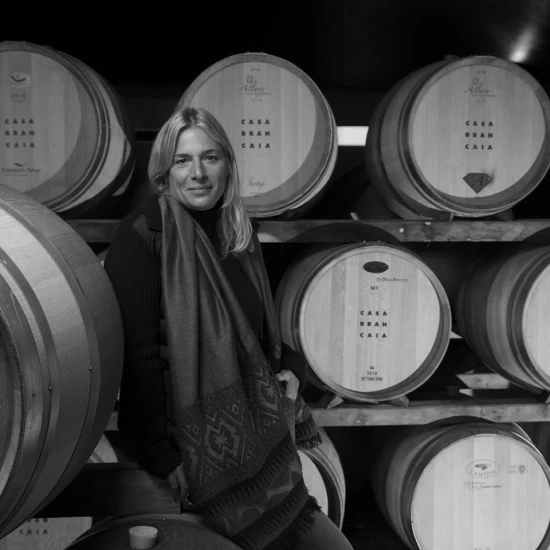
The key figure of the second generation is Barbara Widmer. She actually studied architecture, but after her first grape harvest at Brancaia in 1993, she changed course. She studied oenology at Wädenswil University of Applied Sciences and gained experience at the Domaine des Balisiers, at that time one of Switzerland’s leading organic wineries. Since the late 1990s, she has played a key role in shaping the wines and the development of the family business. The renowned oenologist Carlo Ferrini has been advising Brancaia since 1992.
In 1998, a second major chapter began for Brancaia. The family acquired 82 hectares of land in the Maremma, and Barbara Widmer made the development of the new vineyard the subject of her dissertation. Today, around 40 hectares of vines are planted there on sandy-loam soils with a distinct maritime influence. Cabernet Sauvignon, Cabernet Franc and Petit Verdot play a key role, alongside Sangiovese, Merlot and Sauvignon Blanc, amongst others. The Maremma thus brings a warmer, Mediterranean character to the portfolio, which Brancaia combines with its commitment to freshness and balance.
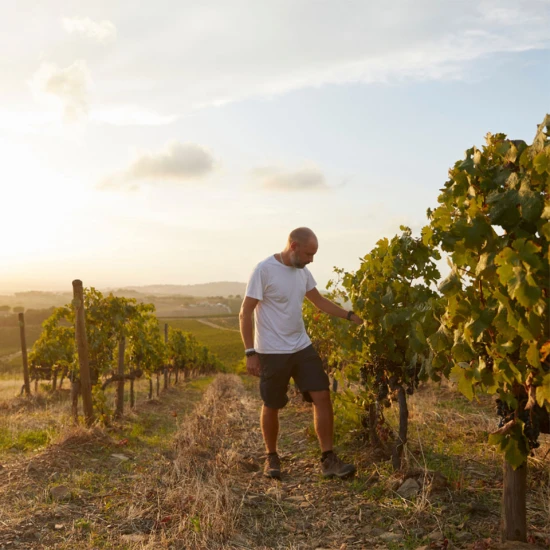
In total, Brancaia now cultivates around 80 hectares of vines across three different regions: Castellina in Chianti, Radda in Chianti and the coastal Maremma. All wines are produced organically. The work in the vineyard focuses more on terroir than on a fixed formula. Barbara Widmer and her agronomists monitor the individual plots closely; the grapes are harvested by hand and rigorously selected. Since 2017, the estate has also been using clonal selection to propagate particularly suitable old vines from the respective plots for new plantings.
This diversity is also reflected in the range. The Chianti Classico wines focus on Sangiovese, whilst ‘Il Blu’ has embodied the estate’s more modern side since 1988 and is now characterised primarily by Merlot. In the Maremma, ‘Ilatraia’ represents the interpretation of international grape varieties under Mediterranean conditions. ‘Tre’, in turn, blends grapes from all three estates, thus bringing together the estate’s diverse Tuscan origins in a single wine.
Despite this stylistic breadth, the house’s signature style is clear. Barbara Widmer describes Brancaia itself as “classical modernists”: tradition is respected, but not viewed as a rigid set of rules. The aim is not to produce wines of maximum concentration, but rather to achieve harmony between fruit, acidity, alcohol and tannins, combined with a clear sense of terroir.
Thus, what began as a spontaneous purchase of a Tuscan hill has evolved into a family-run winery that today brings together two very different facets of Tuscany. Chianti Classico and the Maremma, Sangiovese and international varieties, tradition and modernity combine at Brancaia to form an unmistakable style.
© Photos: Brancaia Winery