Buy wines from Domaine de Cébène


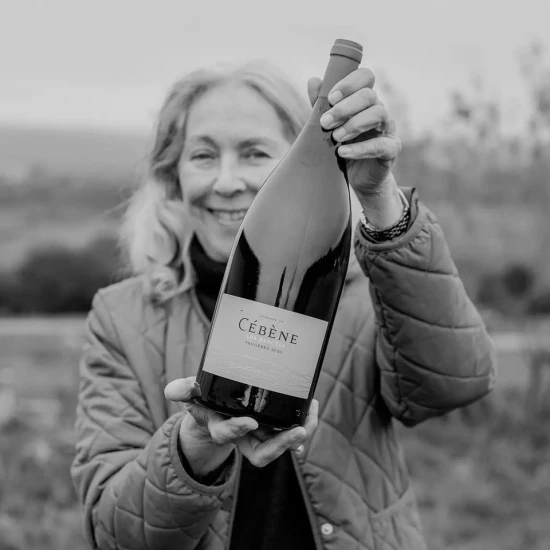
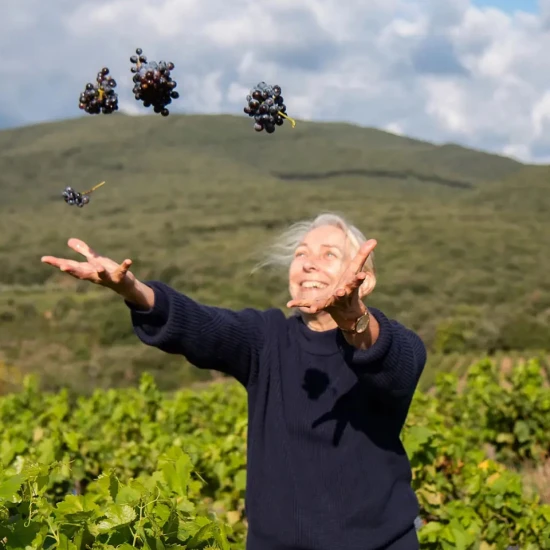
Domaine de Cébène is situated in northern Faugères. Brigitte Chevalier produces biodynamic wines on predominantly north-facing schist plots, combining Mediterranean ripeness with freshness, fine tannins and impressive precision.
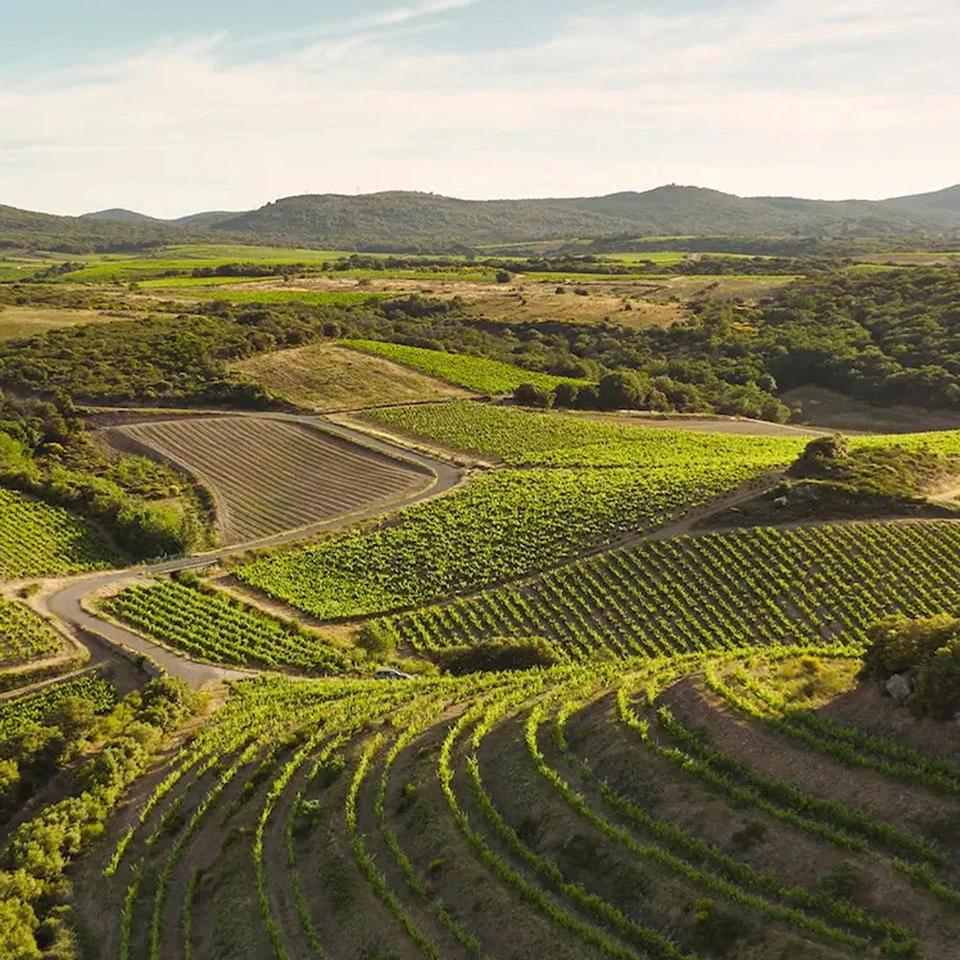
At the very northern edge of the Faugères appellation, where the Languedoc begins to rise towards the foothills of the Cévennes, lies Domaine de Cébène. Situated at an altitude of around 300 metres, dominated by the Caroux massif and constantly exposed to the cool northerly winds from the Parc Naturel Régional du Haut-Languedoc, Brigitte Chevalier has, since 2007, built up a vineyard here that stands for an unusually refined and fresh interpretation of southern French viticulture.
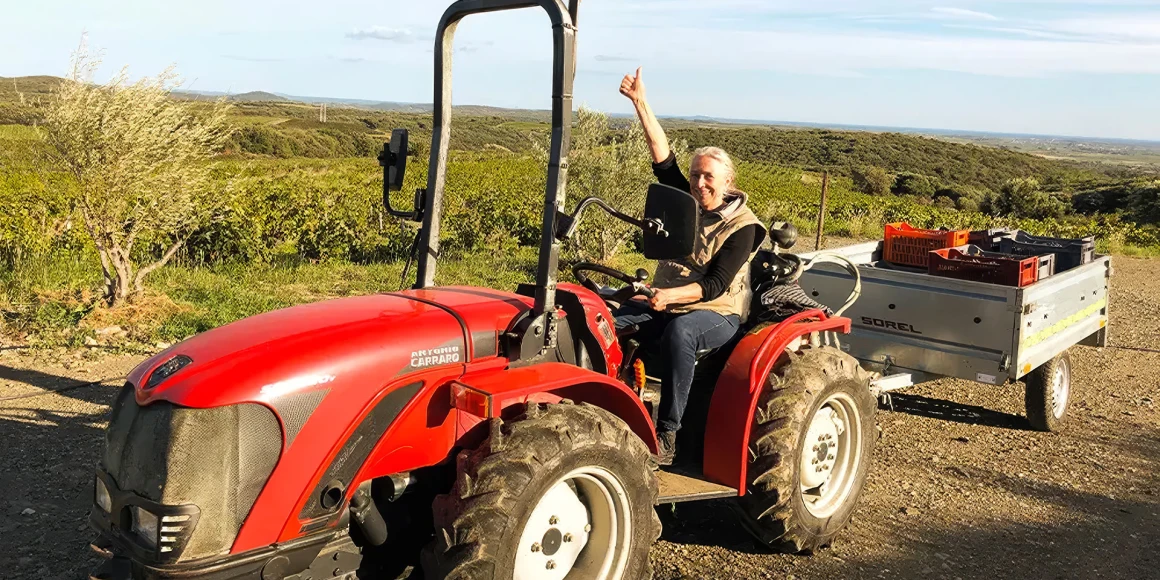
Chevalier is originally from Bordeaux; she studied foreign languages and worked, amongst other things, for the French Embassy in Germany before spending several years in Zimbabwe. Upon her return to France, she sought a location for her own project. She found it in Faugères. Little by little, she bought small plots of land, and the first vintage was produced in 2008. Today, the domaine covers around eleven hectares.
The location explains much of the style. Faugères is the only appellation in the Languedoc whose vineyards are situated entirely on slate. At Cébène, this is compounded by the fact that most of the plots face north. Grenache, Carignan and Syrah are thus spared the strongest midday sun, whilst Mourvèdre is planted in warmer, south-facing locations. The constant downdrafts from the mountains cool and dry the vines, whilst the deep-rooted vines find water reserves in the fissured slate even during the dry summers.
For Chevalier, the slate is the foundation of her style. It enables her to achieve that blend of Mediterranean ripeness, fine tannins, freshness and lightness that runs through her wines. Rather than power and extraction, she seeks tension and precision. La Revue du Vin de France now ranks Cébène amongst the elite of Faugères and describes her wines as light, almost ethereal in texture and aroma. Tamlin Currin, who writes such refreshing wine reviews for Jancis Robinson, is also a great fan of these wines.
Organic farming has been practised from the very beginning, with biodynamic methods introduced later; the domaine is now also Demeter-certified. For Chevalier, biodynamics means far more than just a method of cultivation. Hedgerows, cover crops, dry stone walls and native plants are intended to create as diverse an ecosystem as possible and regenerate the soils in the long term. She endeavours to put the concept of a circular economy – on which biodynamics is based – into practice as far as possible.
This approach continues in the cellar. Situated in the heart of the vineyards and partly dug into the slate, the cellar utilises the natural slope to allow the grapes to be transported gently by gravity. The plots are harvested and vinified separately, with fermentation taking place using the natural yeasts from the grapes themselves. During fermentation, Chevalier avoids adding sulphur and favours long, gentle infusions rather than vigorous extraction.
Since 2019, oak has played no part in the production of the wines. Chevalier became increasingly bothered by the fact that it introduced an additional aromatic element alongside the wine itself: “I want only the slate to speak.” For ageing, she now uses, amongst other things, Grès eggs from Limoges and terracotta vessels from Italy. The minimal exchange of oxygen allows the wines to develop over a long period without masking their terroir character.
The small range of wines demonstrates just how nuanced her understanding of the terroir is. “Les Bancèls” is perhaps the most complete expression of the domaine: a wine from high-altitude, precisely north-facing slate terraces, which blends different Syrah lots and, for Chevalier herself, embodies a sense of home.
“Belle Lurette”, on the other hand, focuses on very old Carignan vines and bridges the gap between the traditional Languedoc grape variety and a contemporary, juicy and refined style. “À la Venvole” deliberately showcases Faugères from its more immediate side and is “as fresh as a skylark high up in the vast, cool stillness of an early summer morning” (Tamlin Currin), whilst “Felgaria” is made almost entirely from Mourvèdre – a grape variety whose often powerful tannins can appear strikingly refined and deep on the schist soils of Cébène.
‘Ex Arena’ occupies a special place. Its vines do not grow on slate, but further south on the deep red sandy soils of Corneilhan. The name roughly translates as ‘from the sand’ and makes the wine a deliberate counterpoint to the Faugères cuvées: here, Grenache and Mourvèdre reveal an even more delicate, immediate side.
Brigitte Chevalier has chosen a remote location and, rather than trying to overcome its conditions, has made them the focal point of her work: slate, altitude, wind and north-facing slopes define the wines. In the cellar, anything that might obscure this expression is increasingly minimised. The result is a distinctive interpretation of the Languedoc – Mediterranean in its origins, yet cool, refined and precise in its expression.
Meta Description: Domaine de Cébène in Faugères: Brigitte Chevalier produces biodynamic wines full of finesse, freshness and terroir on cool, north-facing schist plots.
© Photos: Domaine de Cébène