Champagne Philipponnat
“Constantly evolving, quite naturally”
Pierre Philipponnat
Pierre Philipponnat
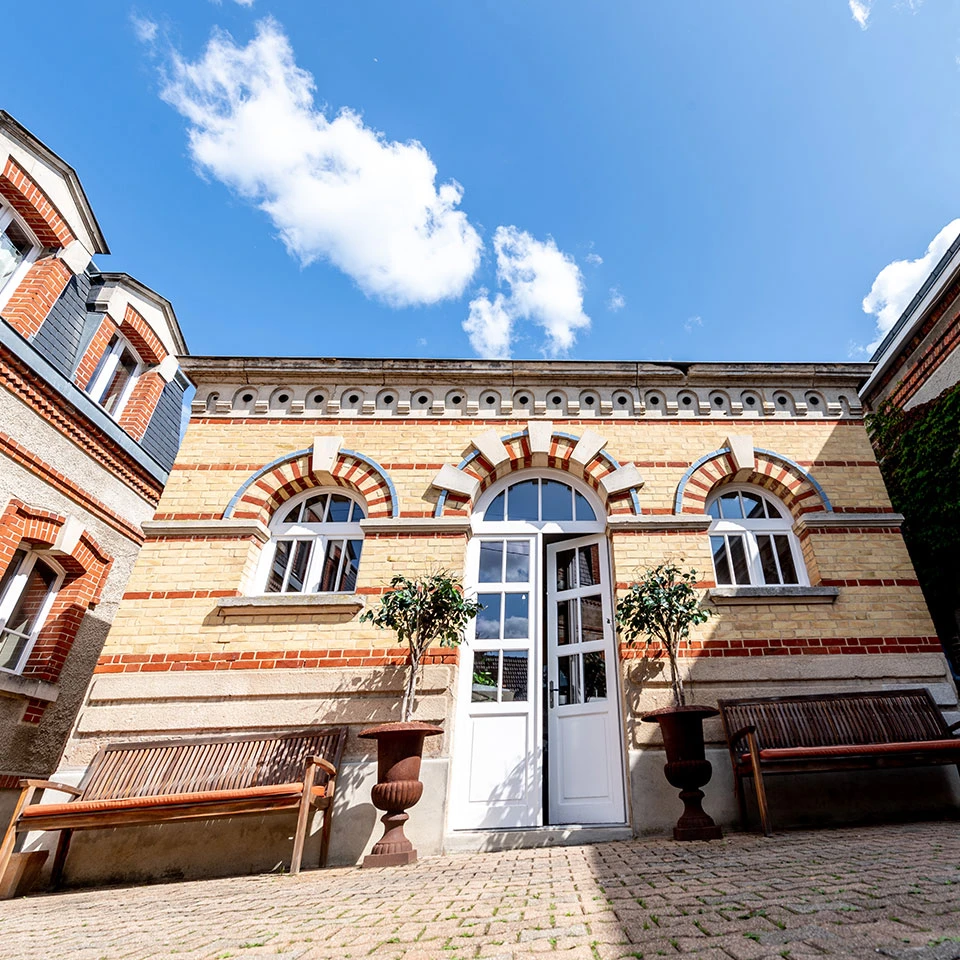
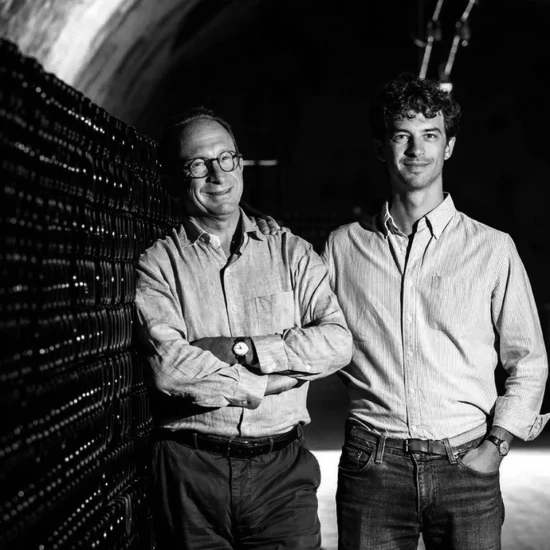
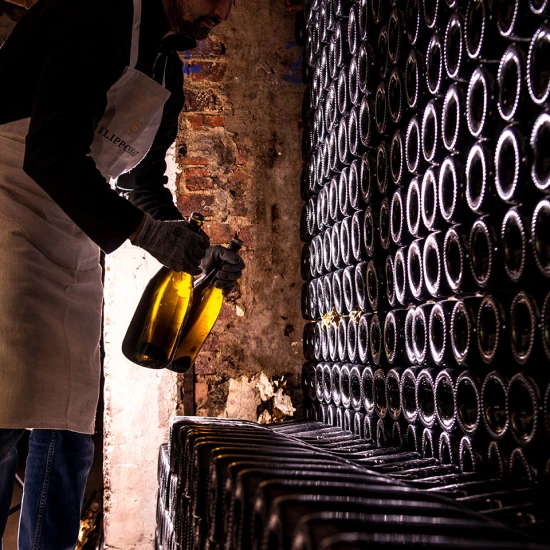
Few Champagne houses can trace their history as far back as Philipponnat. As early as 1522, Apvril Le Philipponnat is mentioned as the owner of vineyards near Aÿ. The family’s ancestor, who hailed from Fribourg in Switzerland, had settled in Champagne and, through marriage, acquired vineyards in Aÿ and Mareuil. Sixteen generations later, the name Philipponnat remains closely linked to these places. However, the actual Maison was not established until much later. In 1910, Auguste and Pierre Philipponnat reorganised the family business, founded their own company and acquired the historic cellars of the Château de Mareuil. From there, Philipponnat developed into a champagne house with a distinct, independent style. Today, the house cultivates around 20 hectares of its own vineyards, predominantly Premier Cru and Grand Cru sites in Aÿ, Mareuil-sur-Aÿ and Avenay-Val-d’Or. In addition, it maintains long-standing relationships with winegrowers who supply further grapes. Since 2000, Charles Philipponnat, a direct descendant of the family, has once again been at the helm of the house. The focus is on Pinot Noir. Whilst many large houses define their identity through the broadest possible blend of grapes from a wide variety of origins, Philipponnat is much more firmly rooted in the Grande Vallée de la Marne. In particular, the south-facing chalk slopes around Aÿ and Mareuil-sur-Aÿ produce a Pinot Noir that combines power and ripeness with a pronounced mineral tension.
The house itself describes its style in terms of three pillars: the intensity of this Pinot Noir, the minerality of the chalk soils, and vinification carried out with the utmost precision. The grapes are harvested at the appropriate stage of ripeness without losing their freshness. Only the juice from the first pressing, known as the ‘cuvée’, is used. Some of the wines ferment or mature in oak, and depending on the vintage and cuvée, malolactic fermentation is avoided either partially or entirely. This preserves the natural acidity, which balances the house’s rather powerful Pinot Noir style. The dosages for the high-quality vintage champagnes are also generally low; many cuvées are dosed as Extra Brut at around 4 g/l.
The ‘réserve perpétuelle’ plays a special role in this process.
Philipponnat has been preserving part of its reserve wines using a continuous system since 1946. Each year, wines from the new harvest are blended with a proportion of the existing reserve, a portion of which is in turn set aside for future years. Unlike a traditional solera system, the focus is not on oxidative ageing, but on continuity and complexity. The older wines impart depth and complexity without overshadowing the freshness of the younger vintages. This method characterises above all the ‘Réserve Perpétuelle’ – formerly the ‘Royale Réserve’ – and forms the stylistic foundation of the house.
Yet one wine stands head and shoulders above all others at Philipponnat: the ‘Clos des Goisses’.
It comes from the vineyard of the same name – a walled plot of just under six hectares – which rises directly above the River Marne near Mareuil-sur-Aÿ. Its slopes reach gradients of 35 to 45 degrees and face due south. In many places, the chalk lies directly beneath a thin layer of soil. This creates one of the warmest and sunniest microclimates in Champagne.
Pierre Philipponnat recognised the potential of this vineyard, which was partly neglected at the time, and acquired it in 1935. His decision was remarkable, as at that time the art of blending was considered the ideal in Champagne. Vinifying a single vineyard separately and bottling it as a stand-alone Champagne was almost revolutionary. ‘Clos des Goisses’ is therefore regarded as the region’s first major single-parcel Champagne and became the model for the many site-specific and single-parcel cuvées that play an important role today.
The name says it all: in the old local dialect, ‘Gois’ or ‘Goisse’ refers to an extremely steep slope that is difficult to cultivate. The almost vertical incidence of sunlight ensures exceptionally high ripeness, whilst the pure chalk preserves tension and freshness. Pinot Noir dominates, complemented by Chardonnay. The wine is vinified predominantly in wood, aged without malolactic fermentation and disgorged only after a long period of ageing on the lees. The combination of power, depth and mineral rigour sets it apart from many more classical Champagne styles.
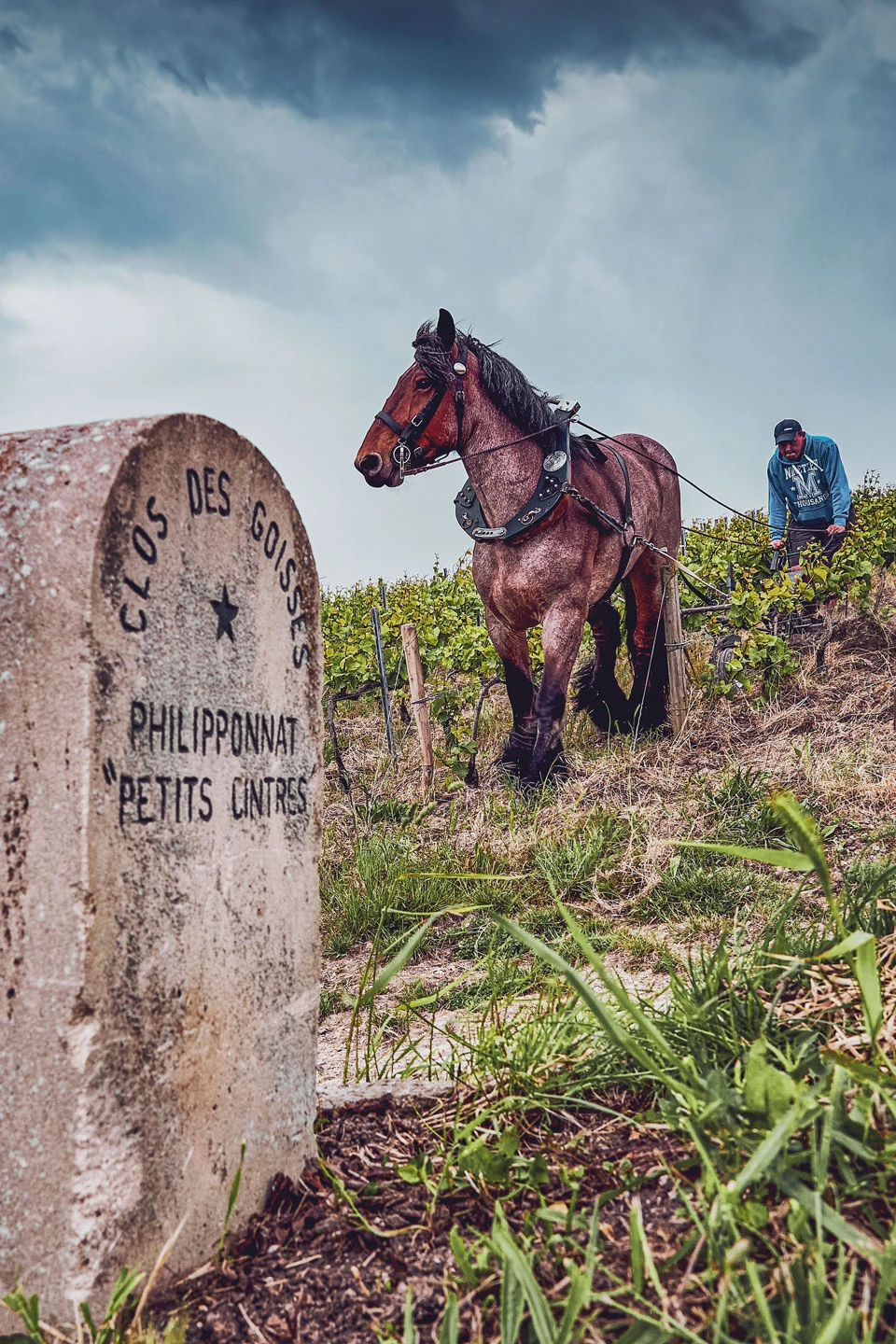
For the house, the “Clos des Goisses” means much more than simply the production of the prestige cuvée. It embodies the vision of Champagne that Charles Philipponnat pursues for the entire house: maturity without heaviness, the power of Pinot Noir without any loss of freshness, and the clearest possible expression of terroir. Meanwhile, further historic plots – ‘Les Cintres’ in the heart of the Clos, as well as ‘Le Léon’ in Aÿ and ‘La Rémissonne’ – are vinified separately.
The ‘Cuvée 1522’ also bridges the gap between history and terroir. Its name recalls the first documented mention of the family in Champagne. Once again, the focus is on Pinot Noir from historic plots in Aÿ, complemented by Grand Cru Chardonnay and other great Pinot Noir terroirs. A significant proportion is aged in wood without malolactic fermentation; extended ageing on the lees and a low dosage provide additional depth without masking the mineral character.
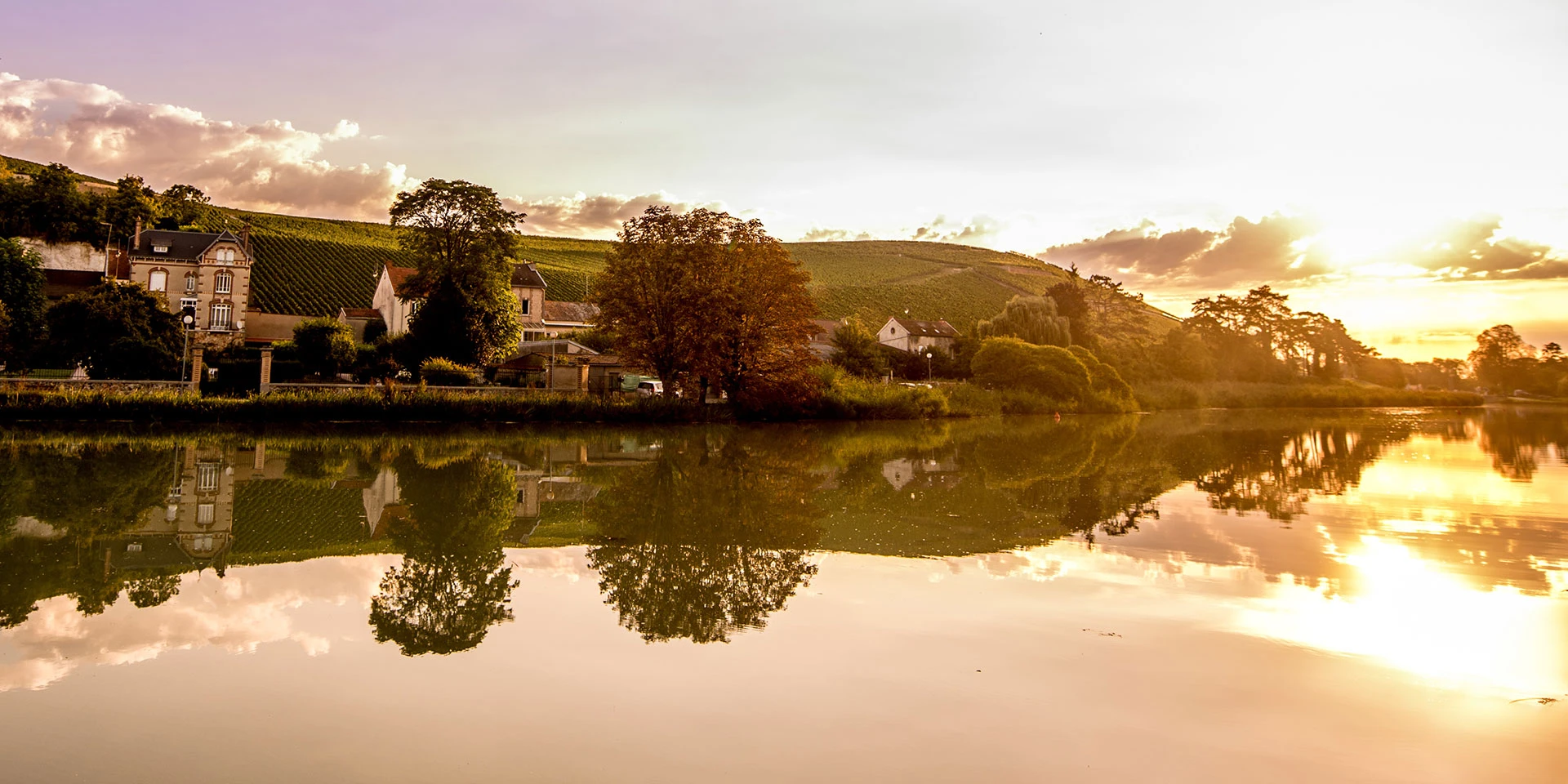
Today, no herbicides are used in the vineyards; the soil is tilled mechanically, whilst cover crops, hedgerows and beehives are intended to promote biodiversity. Charles Philipponnat describes this approach to the vineyards not so much as a fashionable sustainability concept but as a consequence of five centuries of family history: anyone who inherits such a legacy also bears the responsibility of passing it on to the next generation.
Perhaps this also explains the distinctive character of Philipponnat. The house possesses the history and reputation of a classic grande marque, yet in many respects thinks more like an ambitious winery. Individual plots, the ripeness of the grapes, varying soils and the character of a vintage are not concealed behind a house style that is as consistent as possible. The ‘Clos des Goisses’ in particular demonstrates where this approach can lead.
© Photos: Champagne Philipponnat
Prices incl. VAT


