Dönnhoff Winery
‘Championship in all categories’
Helmut Dönnhoff
Helmut Dönnhoff

Hardly any other winery has shaped the international image of the Nahe region as much as Dönnhoff. And hardly any other German wine region offers a winemaker such a variety of soils, exposures and microclimates within a comparatively small area. Schist can be found here, as can volcanic rock, porphyry and sandstone, loess and clay. Making these very differences visible and tangible to the palate has been the great strength of this family-run winery from Oberhausen an der Nahe for decades.
The Dönnhoff family has called Oberhausen home for more than 250 years. It was Helmut Dönnhoff who took the decisive step towards establishing the estate as an internationally renowned top-class winery. When he took over in the early 1970s, the estate comprised just a few hectares of vineyards. It was a time when high yields and new grape varieties were shaping German viticulture, and dry Riesling was not necessarily seen as the way forward. Nevertheless, Helmut Dönnhoff remained steadfastly committed to Riesling, low yields and the finest historic vineyards of the Middle Nahe. This gave rise to a winery that has played a key role in the renaissance of German Riesling.
Today, his son Cornelius Dönnhoff runs the estate. After completing his winemaking apprenticeship with Joachim Heger in the Kaiserstuhl region and gaining experience in Australia and New Zealand, he returned to the Nahe and gradually took on more responsibility. Stylistically, the generational change did not mark a break with tradition. The clarity and elegance for which Helmut Dönnhoff’s wines became famous have been preserved. At the same time, Cornelius has modernised working processes, further refined precision in the vineyard and is adding his own distinctive touches, for example with sparkling wine and, more recently, with Sauvignon Blanc.

The winery currently cultivates around 25 hectares, approximately 80 per cent of which are planted with Riesling. Pinot Blanc and Pinot Gris round off the range. Dönnhoff has been a member of the VDP since 1991, and the winery is also Fair’n Green certified. More decisive than the size of the estate, however, is the exceptional distribution of its vineyards: from Bad Kreuznach and Roxheim via Norheim and Niederhausen to Oberhausen and Schloßböckelheim, Dönnhoff owns plots in some of the Nahe region’s most famous vineyards.
This geographical diversity makes the estate a textbook example of the region. The Kahlenberg in Bad Kreuznach and the Krötenpfuhl exhibit different soils and characteristics to the Höllenpfad in Roxheim. Further upstream come the Norheimer Dellchen and Kirschheck, the Niederhäuser Klamm and Hermannshöhle, the Oberhäuser Leistenberg and the Brücke, as well as the volcanically shaped Schloßböckelheimer Felsenberg. Slate, volcanic igneous rock, porphyry, limestone and sandstone ensure that Riesling can take on completely different expressions here within just a few kilometres.
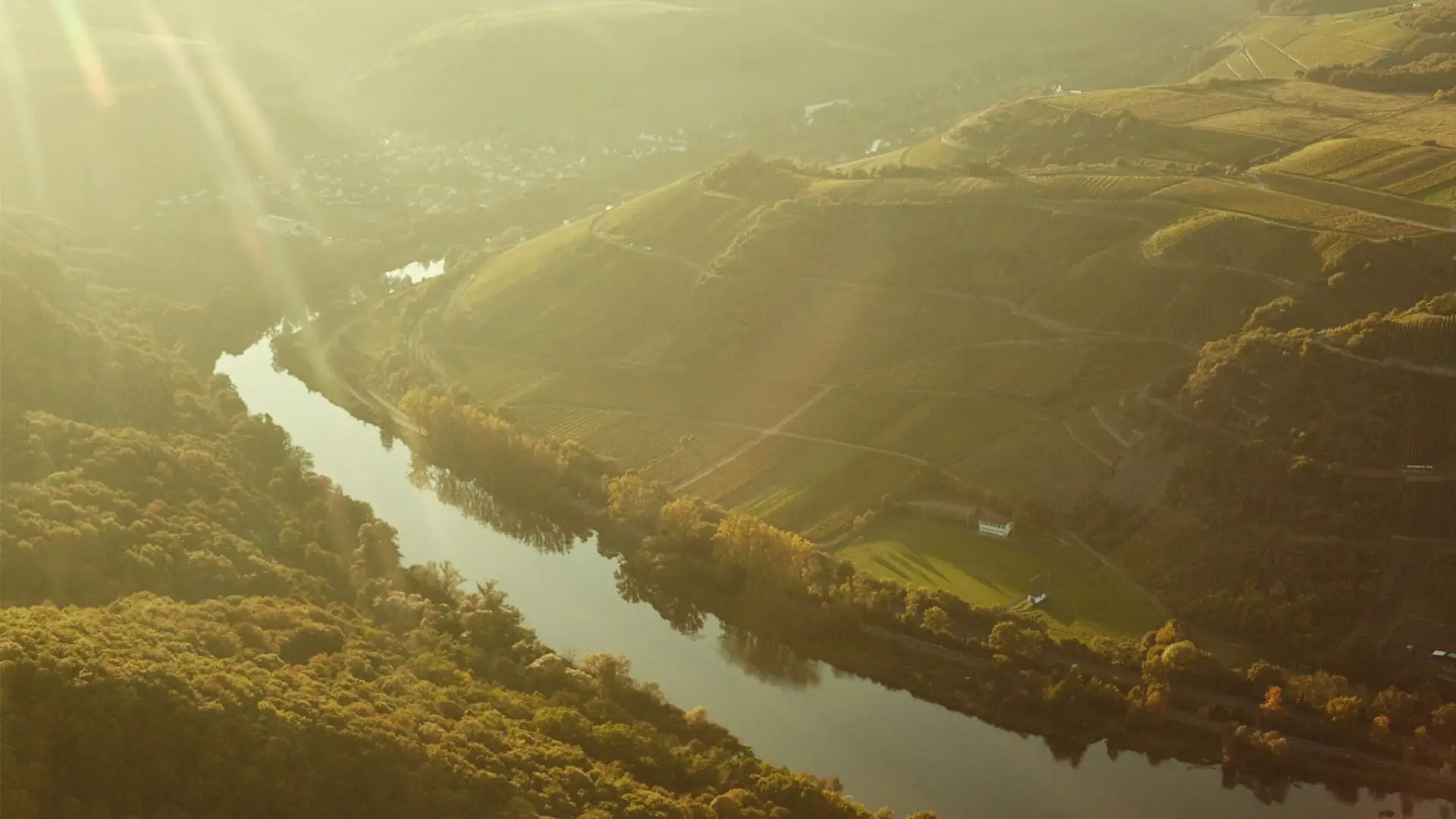
The most famous vineyard site is the Niederhäuser Hermannshöhle. The steep south-facing slope lies at an altitude of around 130 to 175 metres and is characterised by black-grey slate interlaced with volcanic igneous rock, porphyry and limestone. This site produces both ‘Große Gewächse’ and fruit-driven and noble-sweet Rieslings of exceptional depth and longevity. For the Dönnhoffs, the Hermannshöhle is the vineyard of which they are particularly proud – a vineyard that has contributed significantly to the international reputation of the estate and the entire Nahe region.
The Oberhäuser Brücke is quite different. It is the estate’s exclusive single-vineyard site and lies directly by the river. It is named after the Oberhäuser Bridge of the same name, which the Bavarian government built in the 19th century to make it easier for people to travel from Oberhausen in Bavaria to Niederhausen in Prussia on the other side of the Nahe. In 1901, an ancestor of the Dönnhoff family was able to acquire exactly 1.1 hectares of land, which he planted with Riesling. Here, primary rock and clay shale are overlain by loess loam. Cool air collects in the valley at night, whilst during the day it remains less hot than on the steep slopes. The grapes ripen slowly and retain a lively acidity. At the same time, in suitable years, the proximity to the Nahe favours the development of fine botrytis. This is why ‘Die Brücke’ ranks among the exceptional sites for Kabinett, Spätlese, Auslese and, in rare years, Eiswein – whilst also producing a Großes Gewächs.
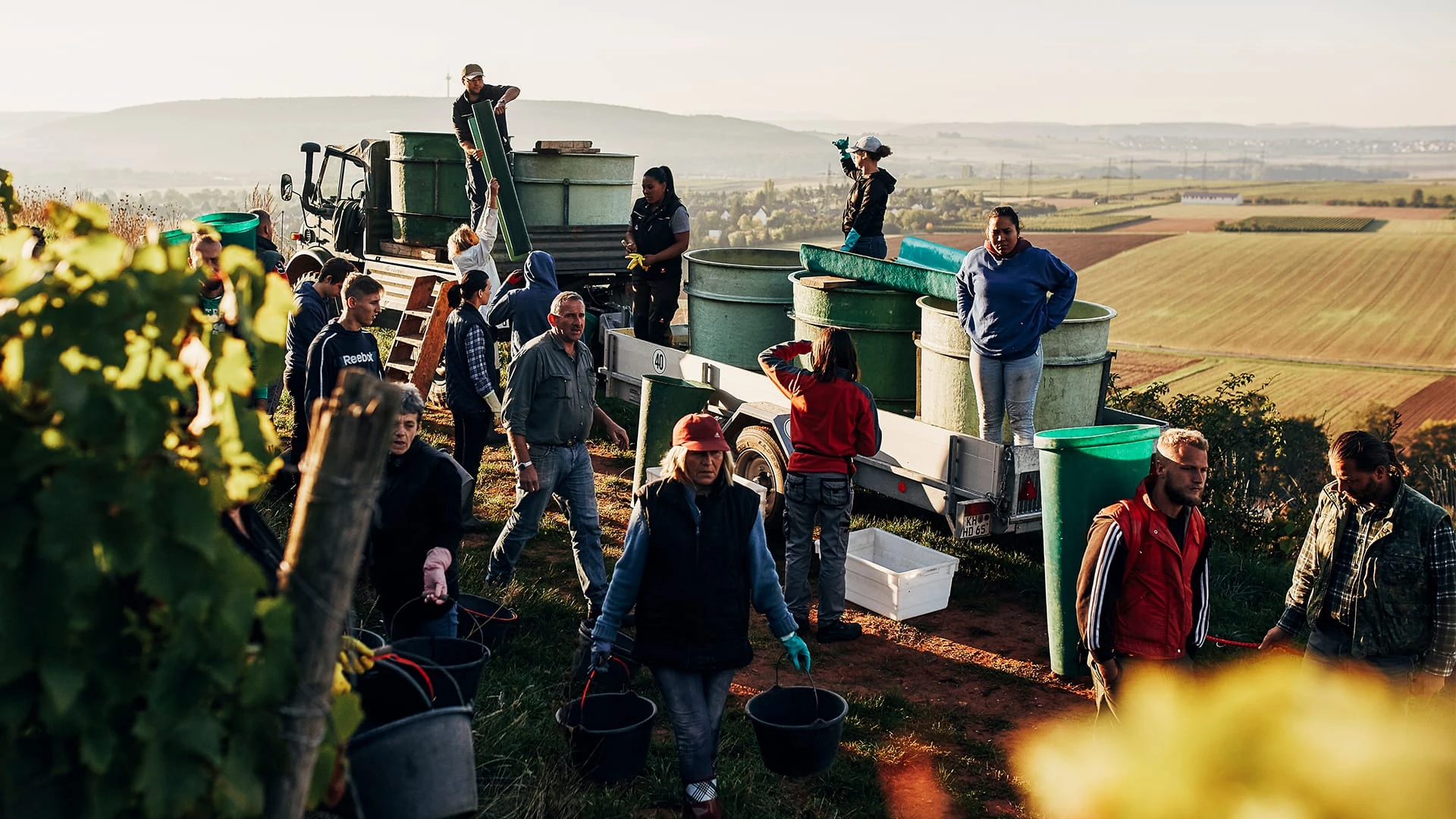

In the Norheimer Dellchen, meanwhile, porphyry and melaphyre meet slate. This extremely steep, precisely south-facing site has gradients of between 50 and 70 per cent. At Dönnhoff, such differences are not mere details in soil profiles, but determine the style of the wines. The Rieslings are therefore not intended to conform to a fixed ‘house style’. Rather, what they share is a signature characterised by clarity, precision and finesse, within which the individual terroirs are meant to express themselves as clearly as possible.
The wines possess substance; fruit is not sought to create volume, but as part of an interplay with acidity, minerality and extract. Even the great dry Rieslings generally remain cool and controlled. The Hermannshöhle can develop power and enormous depth, whilst the Felsenberg often comes across as darker and stonier, whereas other vineyards are more characterised by delicate fruit or salty tension.
That said, Dönnhoff by no means limits itself to dry Rieslings. Perhaps the quality of the estate is most clearly evident in the fact that Kabinett, Spätlese and Auslese are treated with the same seriousness as the Großes Gewächse. Leistenberg, Hermannshöhle and Brücke produce some of the Nahe’s most classic fruit-driven sweet Rieslings and some of the finest Prädikat wines available on the market. Here, acidity and sweetness do not clash, but are intended to complement one another. As a result, the finest wines can develop an almost weightless balance and mature over decades. Today, Dönnhoff is undoubtedly one of the leading estates in German viticulture.
© Photos: Dönnhoff Winery
Prices incl. VAT


